Fill Dirt for Florida Grading and Sitework
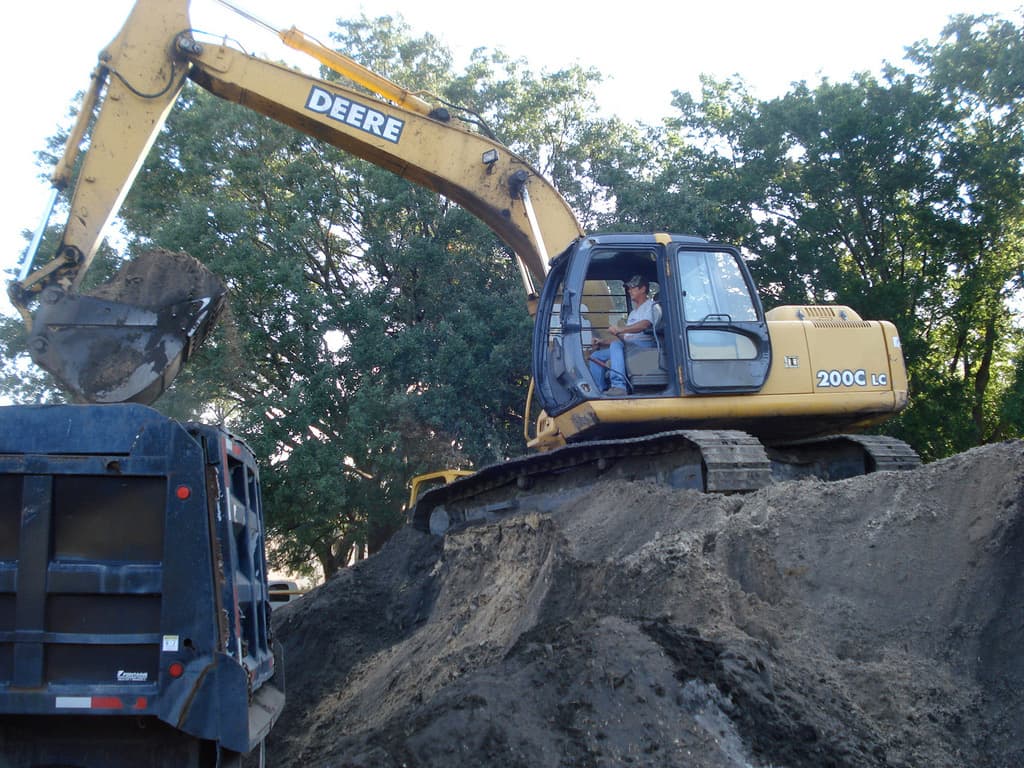
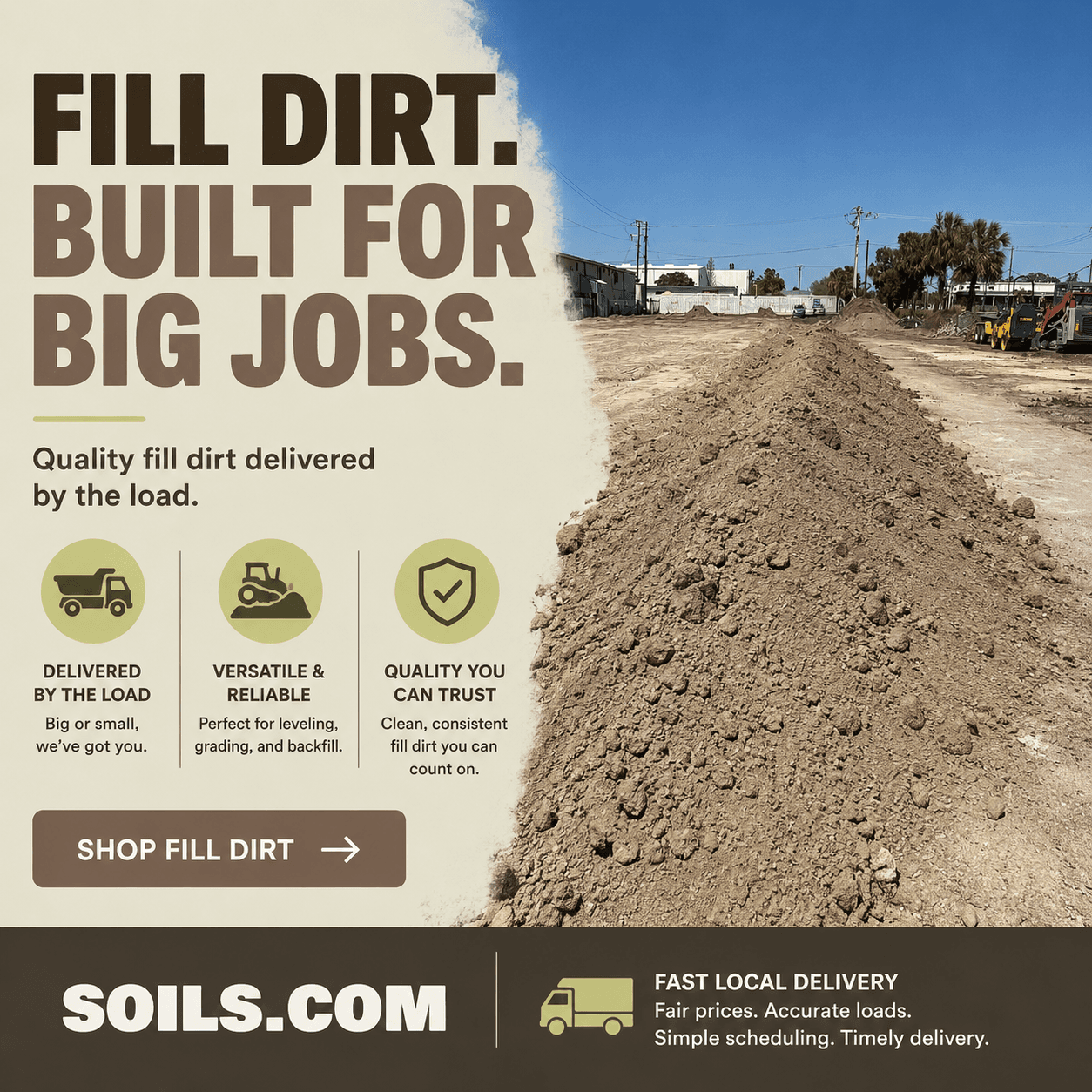
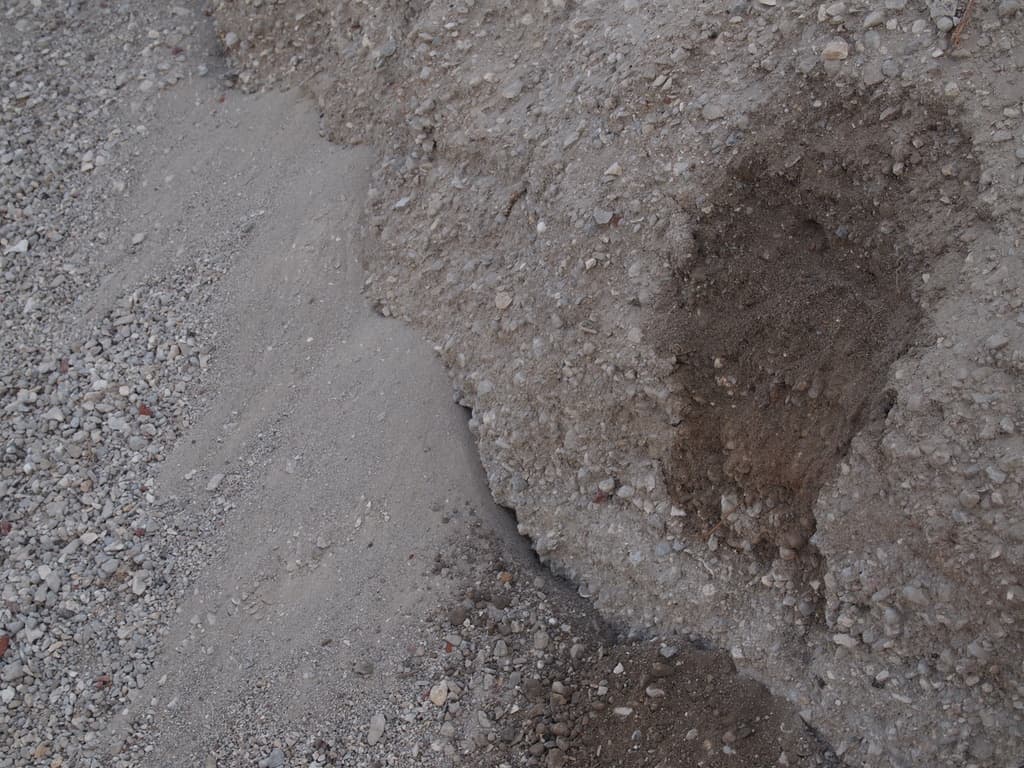
Fill dirt is commonly used in Florida grading and sitework projects to build elevation, establish or modify grade, fill low areas, and create an underlying soil layer before finished landscaping or other surface materials are installed.
Table of Contents
- TL;DR - Using Fill Dirt for Florida Grading
- What Is Fill Dirt Used for in Florida?
- Florida Site Conditions Matter
- Choosing Fill Dirt for a Grading Project
- Fill Dirt vs. Topsoil for Florida Grading
- Using Fill Dirt to Level Low Areas
- Grading and Drainage Need to Work Together
- Does Fill Dirt Need to Be Compacted?
- How Much Fill Dirt Do You Need for Grading?
- Fill Dirt for Construction and Sitework
- Ordering Bulk Fill Dirt in Florida
- Frequently Asked Questions About Fill Dirt for Florida Grading
- Need Fill Dirt Delivered in Florida?
The appropriate material, quantity, placement, and compaction requirements depend on the project, existing site conditions, drainage, and any applicable construction specifications.
Fill dirt is primarily a grading and earthwork material, not a replacement for topsoil where a growing layer is needed. A project may use fill dirt to establish the grade and topsoil above it for lawns or landscaping. For background on the material itself, see our guide to what fill dirt is and how it's used.
TL;DR - Using Fill Dirt for Florida Grading
- Fill dirt is commonly used to build elevation, establish grade, fill low areas, and support site preparation.
- The right fill material depends on the application and project requirements.
- Florida properties vary in soil, drainage, groundwater, and previous sitework, so there isn't one universal grading approach.
- Fill dirt and topsoil serve different purposes: fill dirt generally builds the grade, while topsoil provides the upper growing layer where needed.
- Drainage problems should be evaluated before simply adding material to a low area.
- Quantity should be calculated from the area and required depth or elevation change.
- Projects with engineering, structural, permitting, or compaction specifications should follow those requirements rather than generic guidance.
What Is Fill Dirt Used for in Florida?
Building or Changing Grade - Adding material where the finished elevation needs to be raised or reshaped.
Filling Low Areas - Adding material where depressions or uneven areas need correction, with an important caveat: the cause of recurring low or wet areas should be understood before simply filling them in.
Site Preparation - Creating or adjusting underlying elevations before landscaping, hardscaping, or other site improvements.
Restoring Disturbed Areas - Projects involving excavation, utility work, construction, or other disturbance may require material to restore elevations to a workable condition.
Underlying Layer for Landscaping - Fill dirt may establish the grade, with topsoil or another appropriate finished material placed above it where plant growth is intended.
See our broader guide to using fill dirt for grading and leveling for more on how these applications work in general.
Florida Site Conditions Matter
Florida soils vary by region and by property. Sandy soils are widespread, but that doesn't mean every site consists of identical sandy material - developed properties may contain imported fill or heavily disturbed soil from previous construction, and grading history can substantially alter what's actually under the surface today.
Florida's generally flat terrain and low-lying sites can make elevation and drainage particularly important considerations on some properties, and groundwater or seasonal water conditions can affect certain sites more than others. That doesn't mean every Florida property has a drainage problem, or that sandy soil automatically means a site needs fill dirt - those are property-specific questions. See our guide to Florida soil types and what they mean for landscaping for more on that variation.
Choosing Fill Dirt for a Grading Project
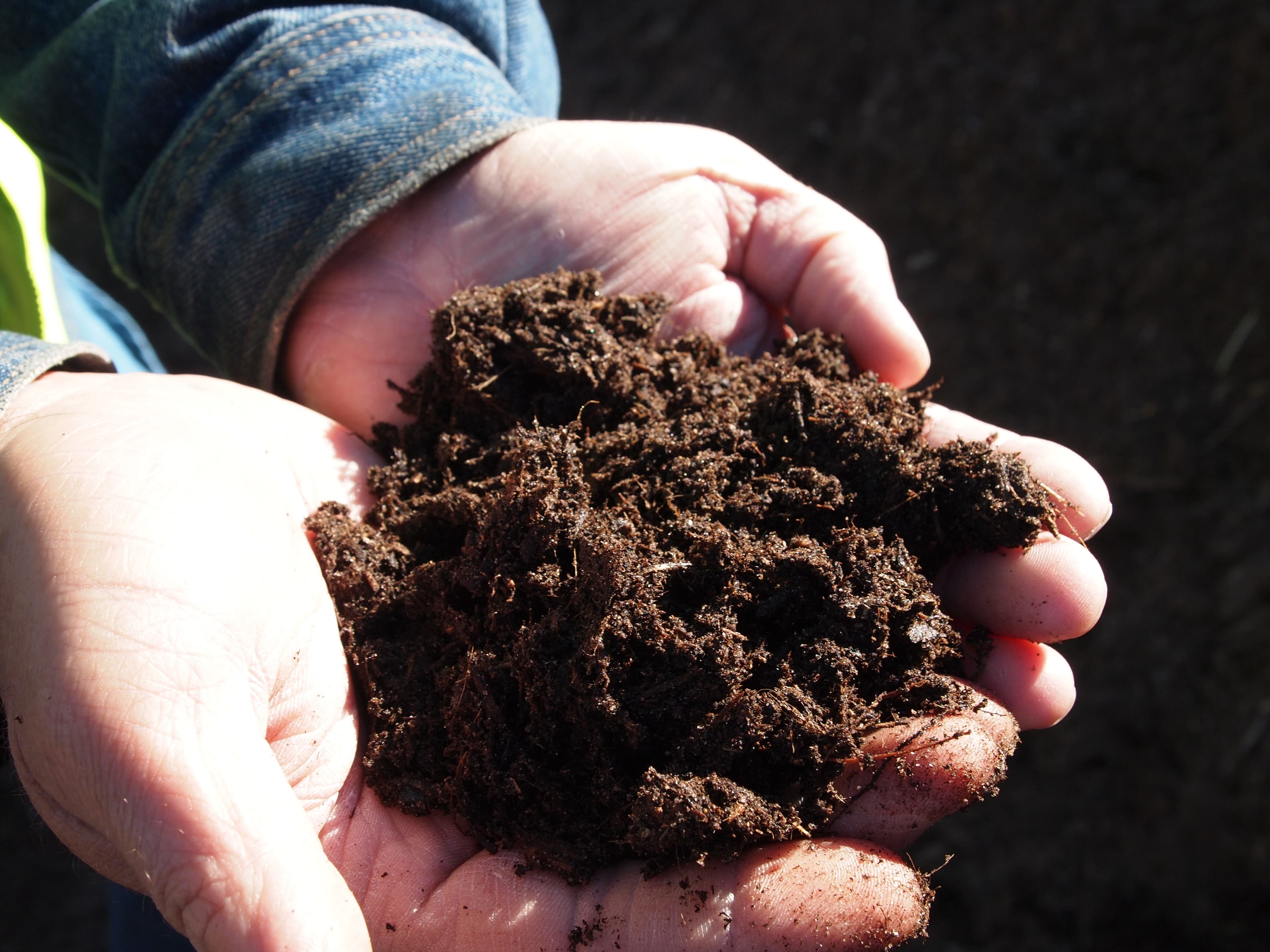
"Fill dirt" is a broad commercial and material category, and characteristics can vary considerably.
Material Composition - Fill material may contain varying proportions of sand, clay, silt, rock, and other mineral material depending on the source - there's no single universal composition to expect.
Organic Content - For applications where stability and settlement matter, fill material generally shouldn't be selected for high organic content because organic material can decompose and change over time. Acceptable material characteristics depend on the application and any applicable project specifications.
Debris and Unwanted Material - The material should be appropriate for its intended application and free of inappropriate construction debris or other unwanted content.
Project Specifications - For engineered, structural, roadway, foundation, permitted, or other specified work, the required material may be defined by project documents or applicable standards. A product sold as general-purpose fill dirt shouldn't automatically be assumed to satisfy an engineered fill specification.
Fill Dirt vs. Topsoil for Florida Grading
Fill dirt builds the grade. Topsoil can provide the finished growing layer where lawns or landscaping are planned. A typical landscaping sequence might conceptually look like: existing ground, then fill dirt where elevation is needed, then topsoil where a growing layer is required, then the lawn or landscaping on top - though this isn't a universal construction specification for every project.
See our guide to topsoil vs. fill dirt for the full comparison, and our guide to choosing topsoil for a Florida lawn for what typically goes in that upper layer.
Using Fill Dirt to Level Low Areas
Before filling a low area, determine why it's low, establish the intended finished elevation, and think through how water will move once the grade changes - the goal is to correct the area, not simply move a drainage problem somewhere else on the property. Large or recurring wet areas may call for a drainage evaluation rather than just additional fill, and finished landscaping above the fill may still require topsoil as its own layer. See our guide on how to fill low areas in a yard for more detail.
Grading and Drainage Need to Work Together
Changing grade changes how water moves across a property - surface runoff, structures, neighboring properties, swales, drainage systems, low areas, discharge or outlet locations, and existing site elevations can all be affected. Required slopes and drainage design depend on the property, project, local requirements, and any applicable plans or specifications - there's no single slope percentage that applies to every Florida yard. See our guide on choosing materials for Florida yard drainage for more on that side of the project.
Does Fill Dirt Need to Be Compacted?
Whether and how fill dirt needs to be compacted depends on the intended use and project requirements. Loose fill can settle after placement, and some grading or sitework applications call for material to be placed and compacted in controlled layers. Structural or engineered applications may have specified lift thickness, moisture, density, or testing requirements - but those come from the project specification or engineer, not from generic guidance, and there's no universal compaction percentage, lift thickness, or settlement rate that applies across every project.
For projects that also involve backfilling around structures or utilities, see our guide to fill dirt for backfill - grading and backfill are related but distinct applications.
How Much Fill Dirt Do You Need for Grading?
The same volume calculation applies to simple grading areas:
Length (ft) x Width (ft) x Depth (inches) / 324 = Cubic Yards
This works well for simple, uniform-depth areas, but real grading projects may involve varying depths, slopes, irregular shapes, or elevation transitions.
For those situations, quantity estimation may require breaking the project into sections or using site-specific measurements rather than one blanket calculation. See our guide on how much fill dirt you need for the full methodology, or use the Fill Dirt Calculator to estimate your project.
Fill Dirt for Construction and Sitework
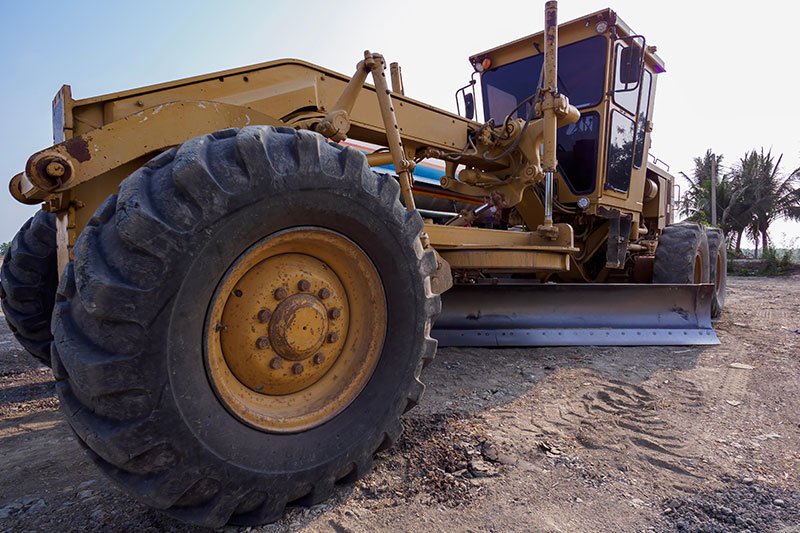
Fill dirt commonly shows up in site preparation, restoring excavated areas, establishing rough grade, landscape construction, and general non-structural filling applications where appropriate. For projects governed by engineered plans, geotechnical recommendations, building requirements, or other specifications, use the material and installation requirements stated for that project - generic guidance shouldn't override an engineer's plans, a permit condition, or an applicable code.
Ordering Bulk Fill Dirt in Florida
Before ordering, determine your required cubic yards, confirm the intended application, and check whether the project has any material specifications to meet. Enter your exact delivery ZIP code for availability and pricing, and plan ahead for a safe dump location and dump-truck access - larger projects may require multiple loads. See our guide on bulk landscape material delivery in Florida for more on the delivery process, and our guide on how much fill dirt costs in Florida for pricing factors.
Soils.com provides bulk fill dirt delivery throughout Florida. Visit our Florida delivery locations to find your area and check locally available materials.
Frequently Asked Questions About Fill Dirt for Florida Grading
What is fill dirt used for in Florida?
Fill dirt is commonly used to build or change grade, raise elevations, fill low areas, restore disturbed areas, and support general site preparation. The appropriate material depends on the application and any project specifications.
Is fill dirt the same as topsoil?
No. Fill dirt is generally used to build grade or fill volume, while topsoil is used where an upper growing layer is needed for lawns, gardens, or landscaping.
Can I use fill dirt to level a low area in my Florida yard?
Fill dirt may be appropriate for changing the elevation of a low area, but first consider why the area is low and how changing the grade will affect drainage. Adding material alone may not correct the underlying cause of standing water.
Does fill dirt need to be compacted?
It depends on the project. Settlement and compaction can matter in many fill applications, while engineered or structural work may have specific placement, density, moisture, or testing requirements.
How much fill dirt do I need for grading?
Quantity depends on the area and required change in elevation. Simple uniform areas can be calculated from length, width, and depth, while irregular grading projects may require more detailed site-volume estimates.
Need Fill Dirt Delivered in Florida?
Once you've determined the area and amount of fill your grading or sitework project requires, use our Fill Dirt Calculator to estimate cubic yards. Soils.com provides bulk fill dirt delivery throughout Florida, with availability and delivered pricing based on your location.