Florida Soil Types and What They Mean for Landscaping
Florida doesn't have one uniform soil type, and landscaping decisions should be based on the actual soil, grade, drainage, and site history at your property.
Table of Contents
- TL;DR - Understanding Florida Soil for Landscaping
- Why Florida Soils Vary So Much
- Sandy Soils in Florida
- Finer-Textured and Mixed Soils
- Organic and Wetland-Influenced Soils
- Disturbed Soil and Imported Fill on Developed Properties
- How Florida Soil Affects Lawn and Sod Projects
- How Florida Soil Affects Drainage
- How Florida Soil Affects Grading and Low Areas
- Choosing Materials Based on the Landscaping Problem
- Should You Test Your Soil?
- Ordering Bulk Landscaping Materials in Florida
- Frequently Asked Questions About Florida Soil Types
- Need Bulk Landscaping Materials in Florida?
Florida doesn't have one uniform soil type. Sandy soils are widespread, but soil conditions vary by region, drainage setting, development history, imported fill, and individual property. For landscaping, the important question isn't simply what Florida soil is called - it's how the soil at your site affects drainage, grading, plant establishment, and whether materials such as topsoil, fill dirt, sand, or aggregate are actually needed.
Evaluate the existing site before adding material. A sandy lawn, a compacted construction site, a low wet area, and a property built on imported fill may all require different landscaping approaches even when they're located in the same Florida community.
TL;DR - Understanding Florida Soil for Landscaping
- Florida doesn't have one universal soil type.
- Sandy soils are widespread, but texture and drainage vary by location and site.
- Developed properties may contain disturbed soil or imported fill rather than an undisturbed native profile.
- Sandy soil generally behaves differently from finer-textured soil in water and nutrient retention.
- Poor drainage isn't necessarily caused by the soil material alone; grade, groundwater, compaction, and drainage infrastructure can matter.
- Topsoil, fill dirt, sand, and aggregate solve different landscaping problems.
- Evaluate the actual property before choosing or ordering bulk material.
Why Florida Soils Vary So Much
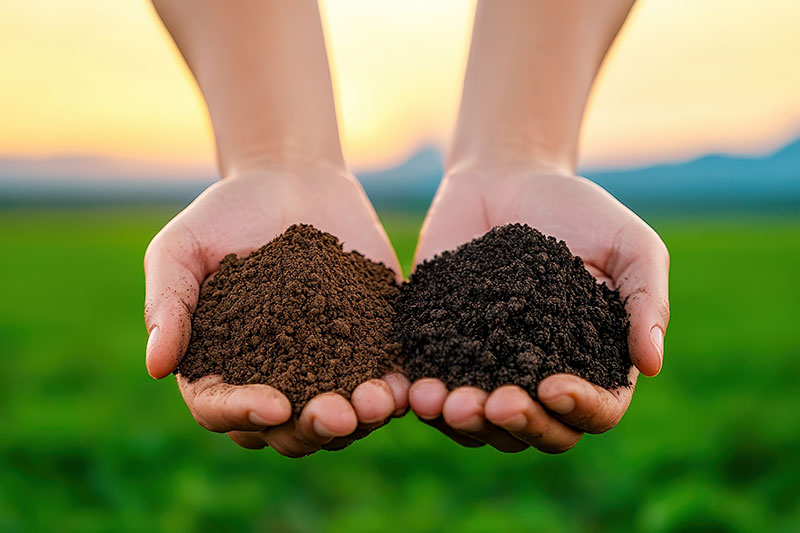
Florida's geography and geologic history, the difference between coastal and inland settings, drainage position and elevation, organic accumulation in wetter environments, and decades of development and land disturbance all contribute to the variation you'll find across the state. Imported soil and fill, construction, and grading can all reshape what's actually present at a given site.
The soil visible at the surface of a developed Florida property may not represent the property's original native soil at all - which is extremely relevant if you're trying to figure out what your yard actually needs.
Sandy Soils in Florida
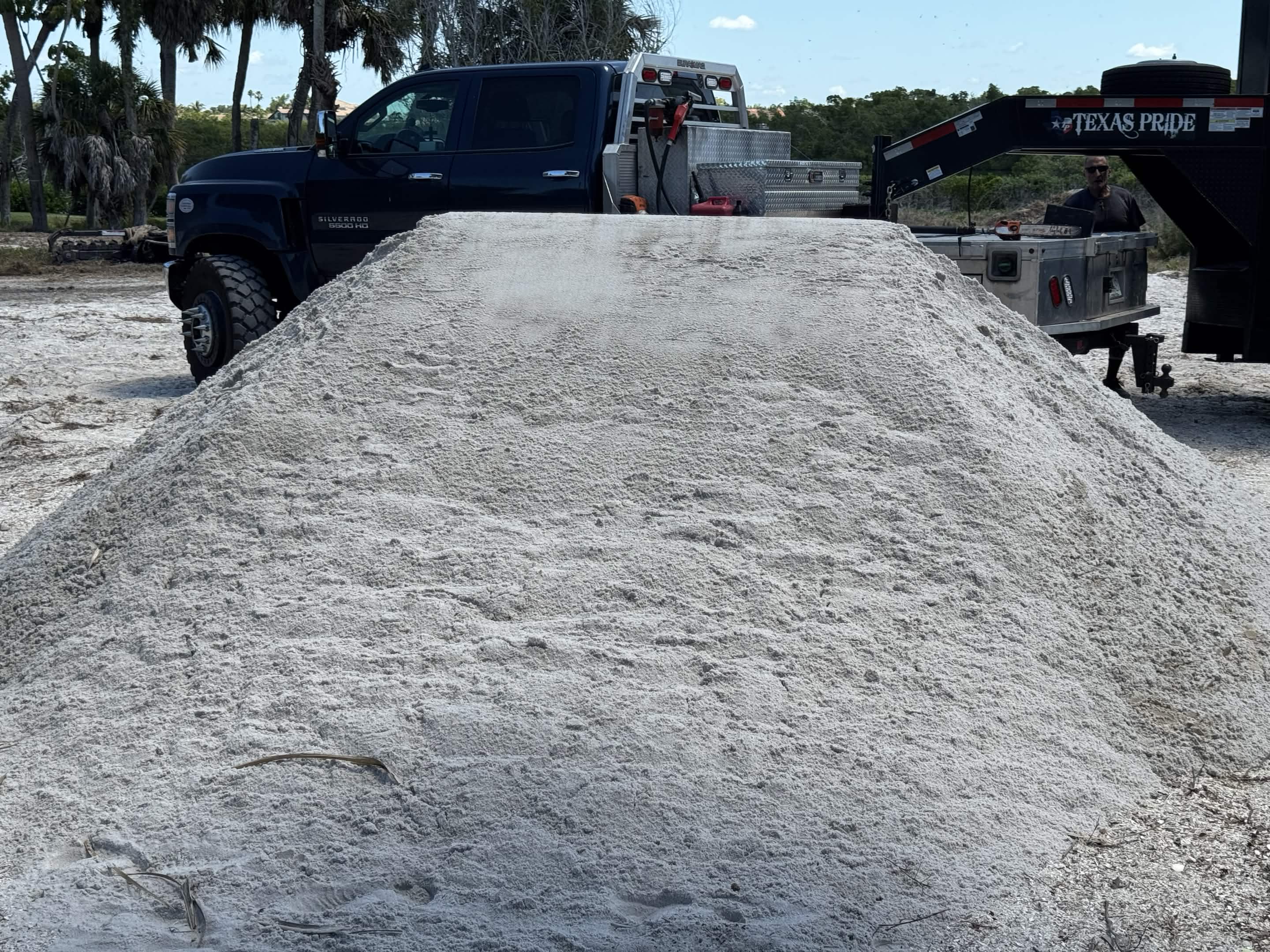
Sandy soils contain a relatively high proportion of coarser mineral particles, and water generally moves through coarse sandy material more readily than through finer-textured soils. That means sandy soils can have relatively low water- and nutrient-holding capacity compared with finer soils - though actual behavior still depends on the complete soil profile, organic matter, compaction, groundwater, and other site factors, not sand content alone.
For landscaping, that can mean different considerations around irrigation frequency, nutrient management, lawn establishment, and planting bed preparation. None of this means Florida sand can't grow grass, that sandy soil is inherently bad, that every Florida lawn needs topsoil, or that adding topsoil automatically "fixes" sand - those are all oversimplifications of a more site-specific picture. See our guide to choosing topsoil for Florida lawns for more on when additional topsoil actually helps.
Finer-Textured and Mixed Soils
Florida isn't uniformly sand. Some soils or site materials contain more silt and clay than coarse sandy soils, and finer particles can change water movement, water retention, workability, and compaction behavior. Mixed soils and imported materials are common on developed sites, and the soil profile can change with depth - what's on the surface isn't necessarily what's a foot below it.
Texture provides useful clues about how soil may behave, but landscaping decisions should consider drainage, compaction, grade, and the complete site rather than texture alone.
Organic and Wetland-Influenced Soils
Some Florida environments contain soils with substantial accumulated organic material, particularly in wetter settings. Landscaping implications can include moisture behavior, settlement, bearing and stability considerations, drainage, and site-specific restrictions or environmental considerations.
Projects involving wetlands, regulated areas, substantial filling, or major drainage changes may require professional evaluation and applicable permits or approvals - this isn't a situation where a reader should simply decide to excavate, fill, or drain the area on their own.
Disturbed Soil and Imported Fill on Developed Properties
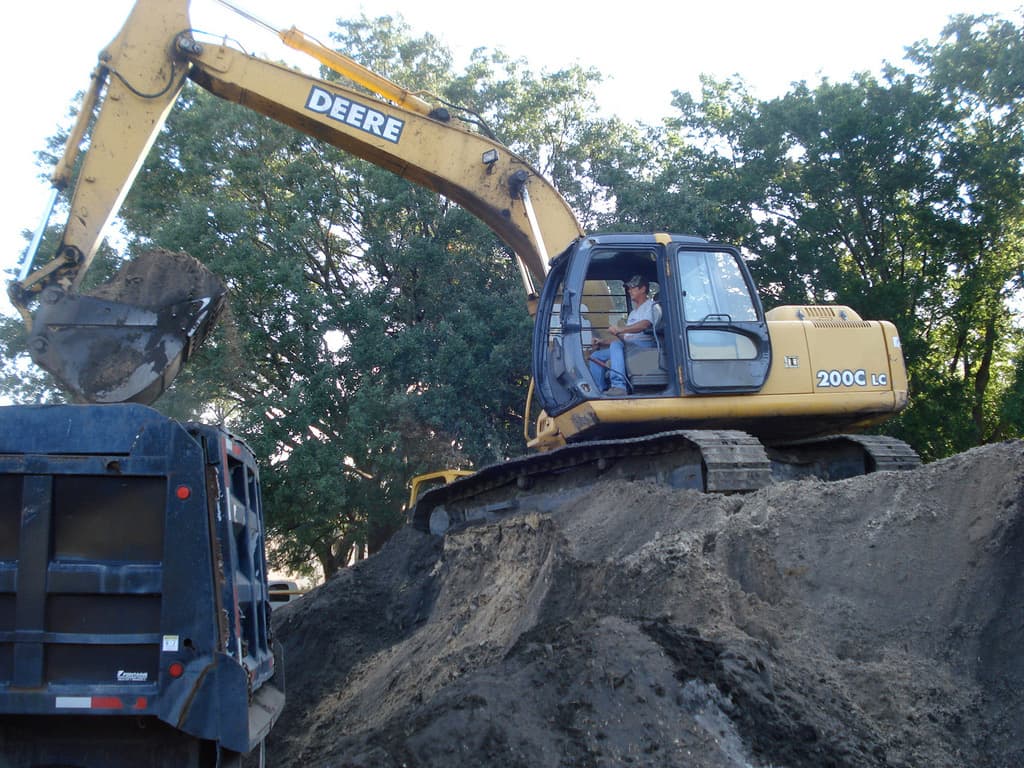
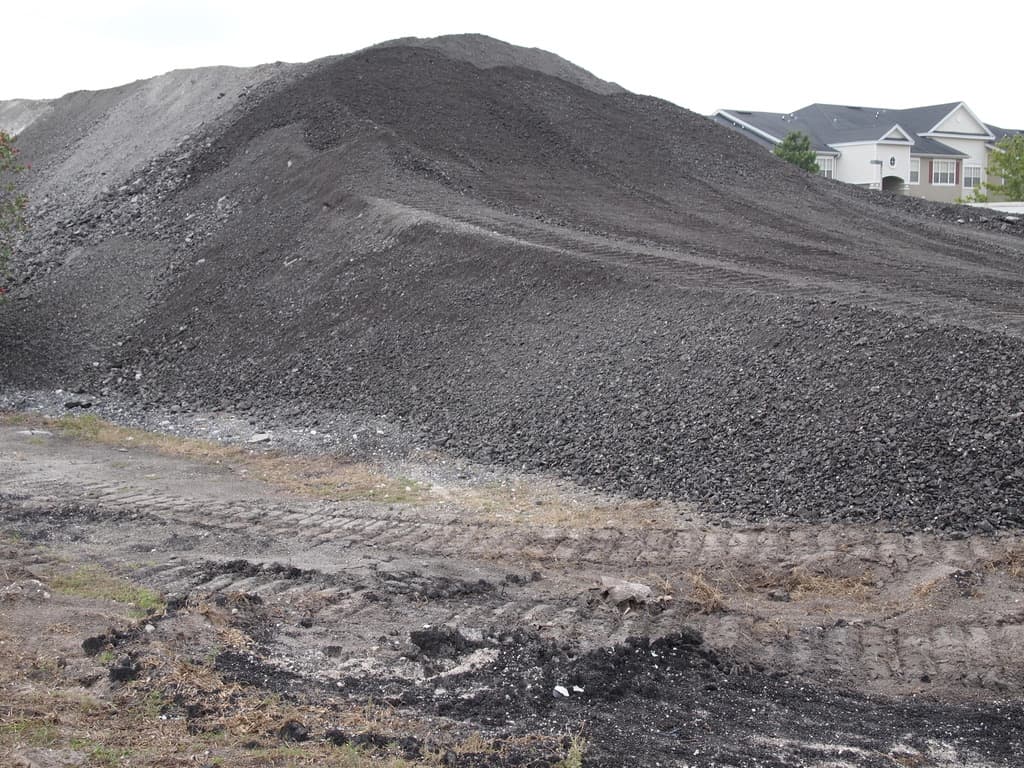
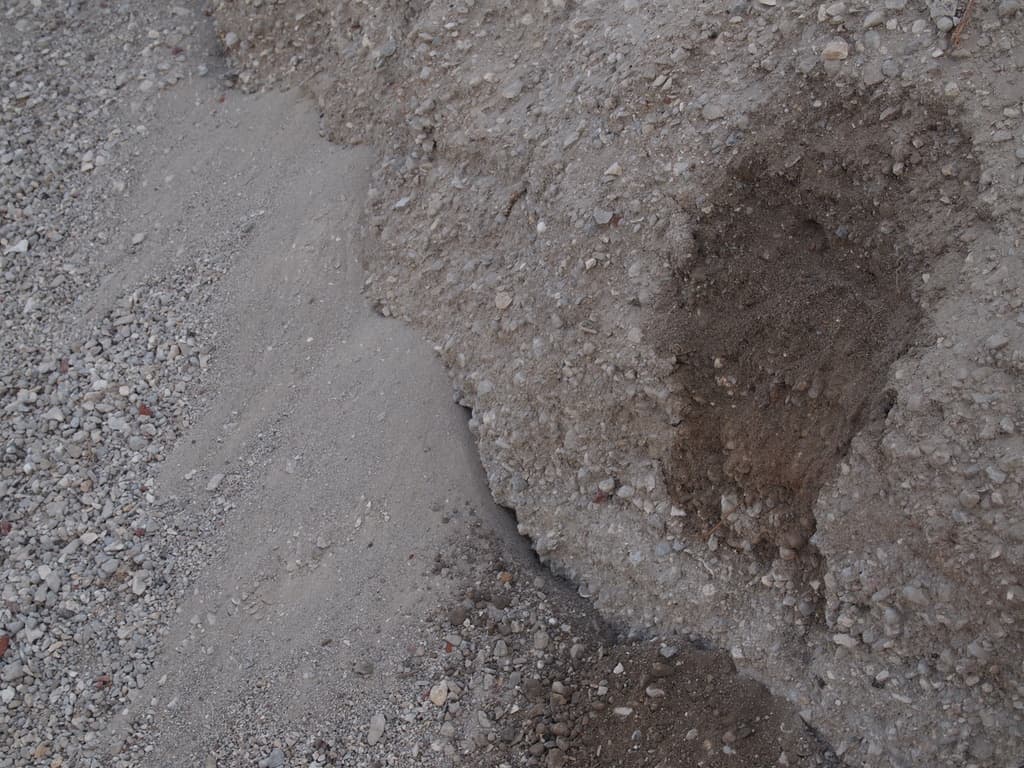
A developed property may contain imported fill, compacted soil, construction-disturbed soil, mixed soil horizons, buried material, altered grades, or areas where the original topsoil was removed entirely during construction. That means two neighboring homes, built around the same time in the same subdivision, can have meaningfully different practical soil conditions once you look past the surface.
This matters for sod, lawns, landscape beds, grading, drainage, and hardscaping alike - the "textbook" soil for your region may have little to do with what's actually beneath your feet. See our guide to fill dirt for Florida grading and sitework for more on working with disturbed or altered sites.
How Florida Soil Affects Lawn and Sod Projects
Existing soil should be evaluated before adding topsoil - sod doesn't automatically require a new layer of it. Sandy or disturbed sites may benefit from additional growing material depending on conditions, but final grade and drainage matter alongside soil selection, not instead of it. See our guides on choosing soil for Florida sod installation and choosing topsoil for Florida lawns for the fuller picture on each.
How Florida Soil Affects Drainage
Drainage isn't determined by surface soil texture alone. Soil texture, layered soil profiles, compaction, grade, low areas, groundwater, runoff, and drainage outlets or infrastructure all play a role.
A sandy surface doesn't guarantee that a property will drain well - water may encounter different material below the surface, groundwater may be high, or the site's grade may prevent effective drainage regardless of what the top few inches look like. See our guide on choosing materials for Florida yard drainage for more on addressing drainage directly.
How Florida Soil Affects Grading and Low Areas
Changing elevation affects how water moves across a property. Fill dirt may be appropriate when actual elevation needs to be added, but topsoil generally isn't the material to use simply because substantial volume is needed beneath a lawn. Where significant elevation needs to be added, fill dirt may be more appropriate for the underlying grade, with topsoil used where a suitable growing layer is needed above it. Low areas should be evaluated before being filled, and larger grading projects may come with specifications, permitting, drainage, or engineering requirements of their own. See our guides on fill dirt for Florida grading and sitework and how to fill low areas in a yard for more detail.
Choosing Materials Based on the Landscaping Problem
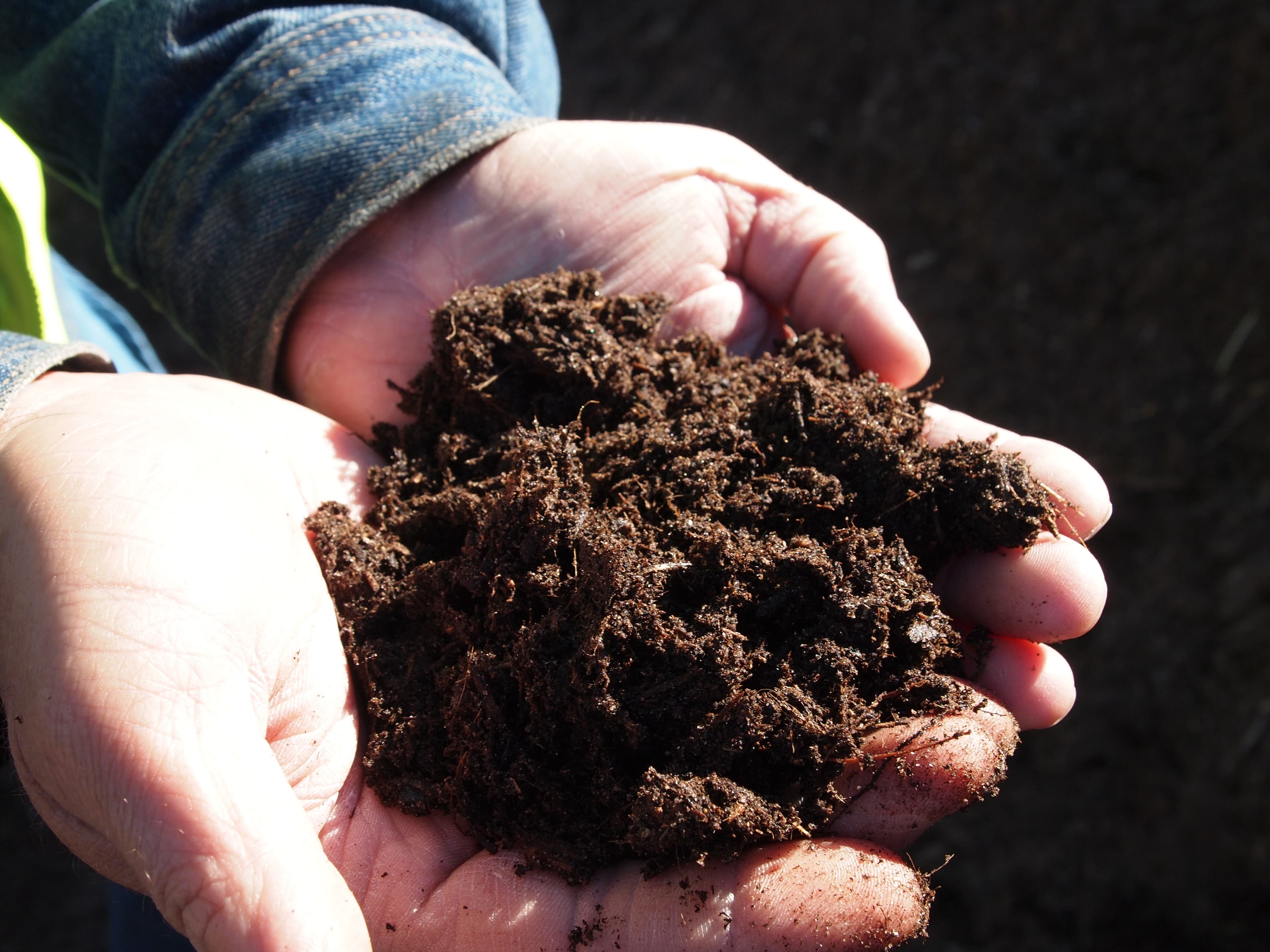
Topsoil is generally used where an upper growing layer is needed for lawns, sod, gardens, or landscaping. See our guide to what topsoil is for more.
Fill dirt is generally used to build grade, raise elevation, fill volume, or establish underlying site contours. See our guide to what fill dirt is for more.
Sand products have different characteristics and applications from one another - don't assume any sand product is interchangeable simply because the existing site happens to be sandy. See our Sand Guides for more on choosing the right one.
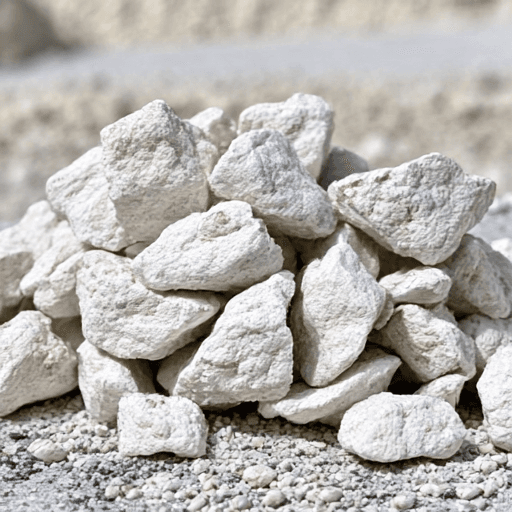
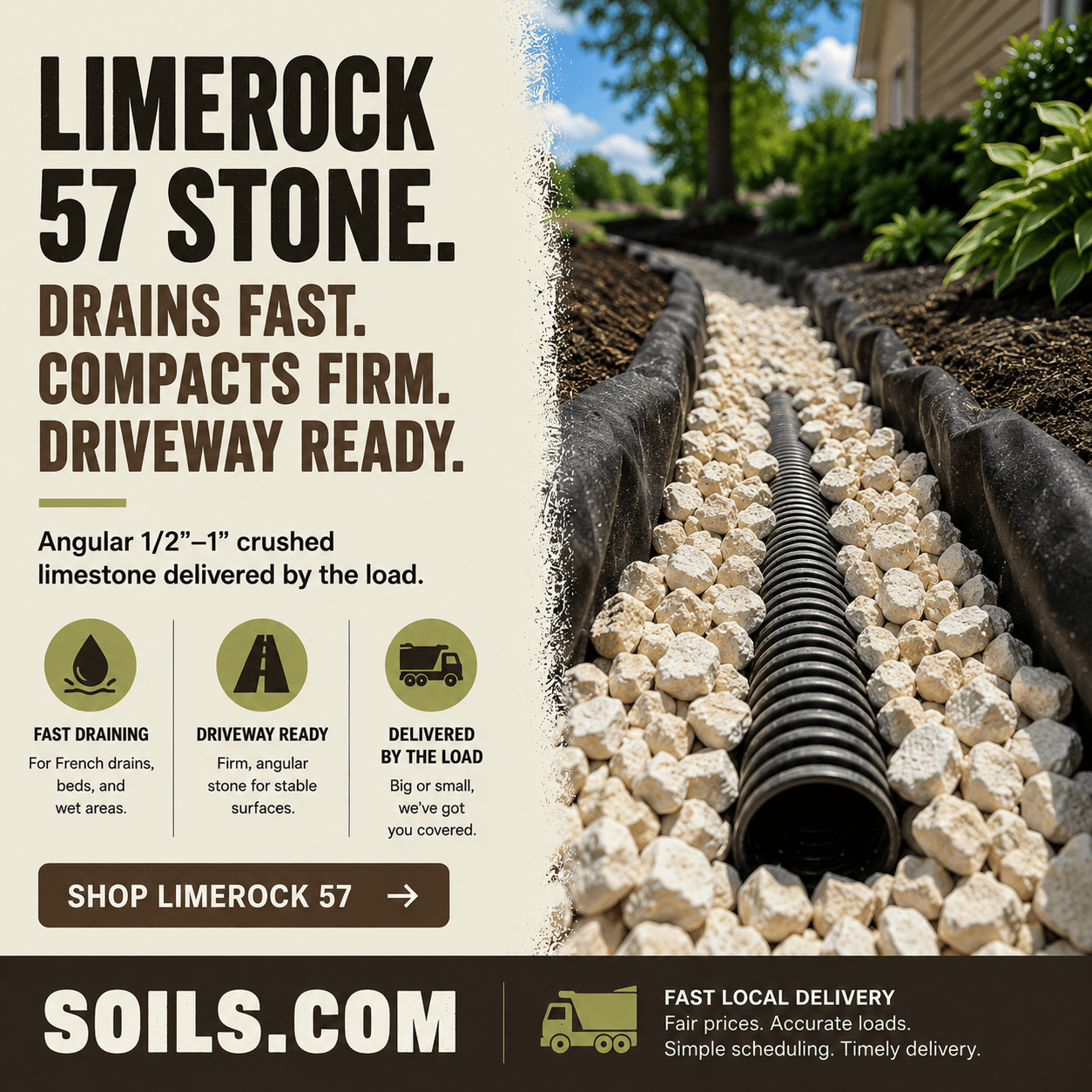
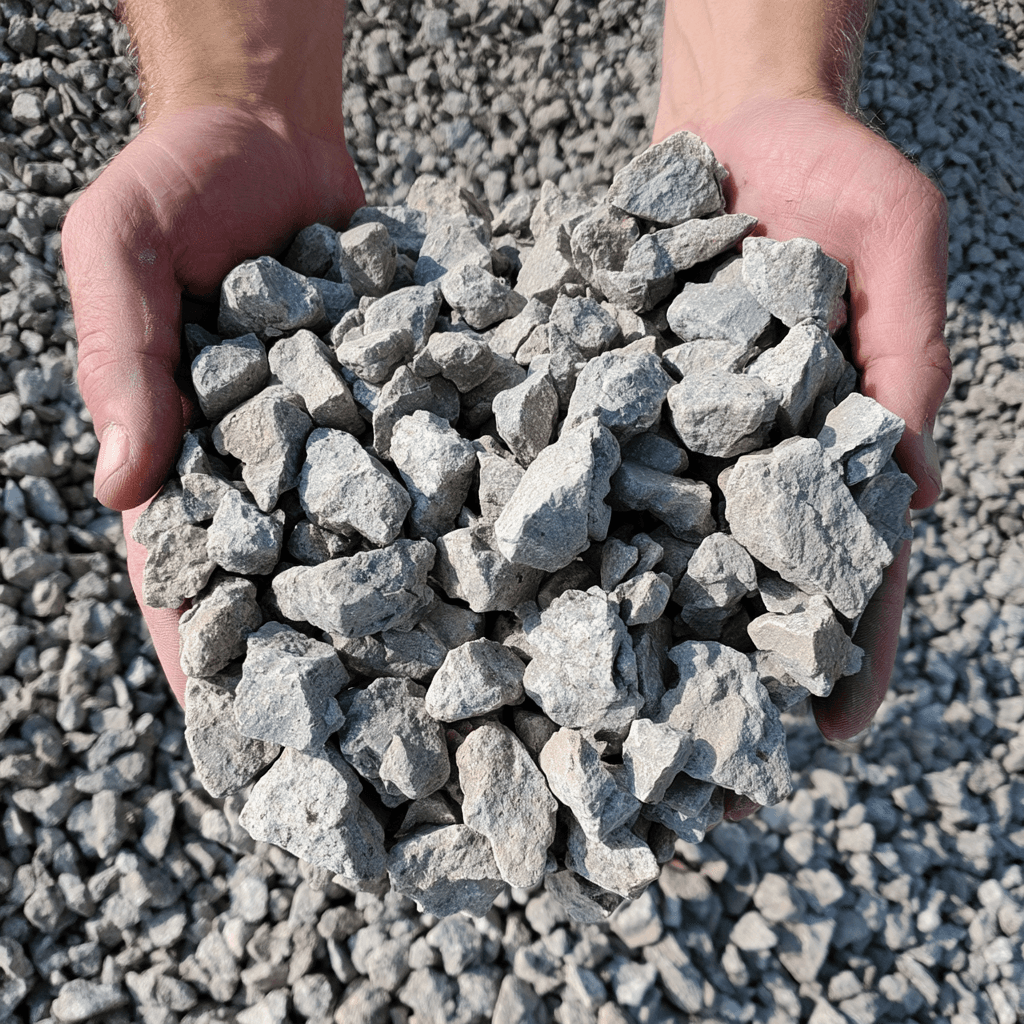
Aggregates may be appropriate for applications such as drainage, base construction, and hardscaping, depending on the specific product and project. See our Aggregate Guides for more.
Should You Test Your Soil?
Soil testing can be useful when you need information about factors like pH, nutrient status, or recommendations for turf or plants. But a fertility or pH soil test doesn't necessarily answer grading, drainage, compaction, groundwater, or structural-fill questions. Those issues may require a site evaluation or different types of professional testing or assessment.
Ordering Bulk Landscaping Materials in Florida
Before ordering, identify the actual project, evaluate existing site conditions, determine which material is appropriate, calculate the quantity you need, confirm your exact delivery location, and consider dump-truck access and a suitable dump location. See our guide on bulk landscape material delivery in Florida for more on how that process works.
Soils.com provides bulk soil, sand, and aggregate delivery throughout Florida. Visit our Florida delivery locations to find your area and check available materials and delivered pricing.
Frequently Asked Questions About Florida Soil Types
What type of soil is most common in Florida?
Sandy soils are widespread across Florida, but the state contains considerable soil variation. Actual conditions depend on region, drainage setting, soil profile, development history, and whether material has been imported or disturbed.
Is Florida soil good for landscaping?
It depends on the property and the intended landscaping. Some existing soils can support lawns and plants with appropriate management, while other sites may need preparation or additional material. There isn't one statewide answer.
Does sandy Florida soil need topsoil?
Not automatically. Additional topsoil may be useful where a suitable growing layer is needed, but the decision should be based on existing soil, the intended lawn or landscaping, grading, drainage, and project requirements.
Why does my Florida yard hold water if the soil is sandy?
Surface texture is only one part of drainage. Grade, compacted or layered soil, groundwater, runoff, low areas, and drainage outlets can all affect how water behaves on the property.
What material should I use to improve my Florida yard?
It depends on the problem. Topsoil may be appropriate for a growing layer, fill dirt for elevation or grading, and particular sand or aggregate products for specific drainage, hardscaping, or construction applications.
Need Bulk Landscaping Materials in Florida?
Once you've identified your site's conditions and the material your project requires, Soils.com can help you estimate quantity and check local availability. Bulk topsoil, fill dirt, sand, aggregates, and other landscaping materials are available for delivery throughout Florida.
[Explore Material Calculators ->](https://soils.com/guides/material-calculators)
[Find Your Florida Location ->](https://soils.com/florida)