What Is Topsoil? Uses, Types & What to Know
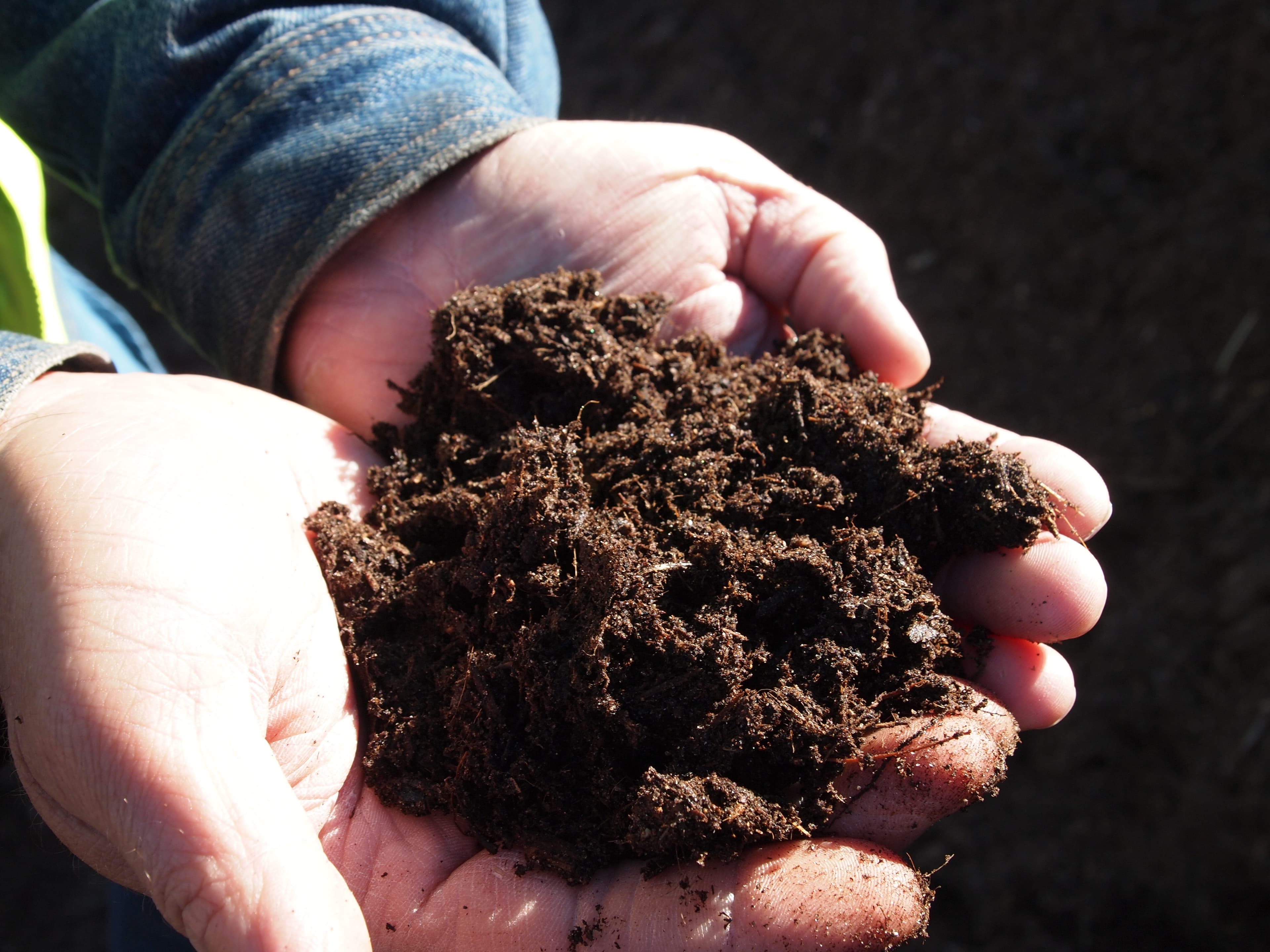
Topsoil is the upper layer of soil commonly used to establish lawns, improve planting areas, build garden beds, and finish landscaping projects.
Table of Contents
- TL;DR – Topsoil at a Glance
- What Is Topsoil?
- What Is Topsoil Made Of?
- What Is Topsoil Used For?
- Topsoil vs. Fill Dirt: What's the Difference?
- What Are the Different Types of Topsoil?
- How Deep Should Topsoil Be?
- How Much Topsoil Do I Need?
- What Should You Look for When Choosing Topsoil?
- How Much Does Topsoil Cost?
- How Does Bulk Topsoil Delivery Work?
- When Should You Use Topsoil — and When Shouldn't You?
- Frequently Asked Questions About Topsoil
- Final Thoughts
- Need Topsoil for Your Project?
Topsoil is the upper layer of soil commonly used to establish lawns, improve planting areas, build garden beds, and finish landscaping projects. It typically contains a mixture of mineral particles, organic matter, water, air, and biological activity that helps support plant growth.
But not all material sold as topsoil is identical. Its texture, organic content, screening, and composition can vary by source and intended use, which means choosing the right topsoil depends less on the label and more on what you're actually trying to accomplish. This guide walks through what topsoil is made of, what it's used for, how it compares to fill dirt, and what to look for before you order.
TL;DR – Topsoil at a Glance
- Topsoil is primarily used where plant growth and workable soil are important.
- Common applications include lawns, sod, gardens, planting beds, and finish landscaping.
- Topsoil and fill dirt serve different purposes; fill dirt is generally better suited for building grade and filling deeper areas.
- Calculate the area and desired depth before ordering bulk topsoil.
What Is Topsoil?
"Topsoil" generally describes the upper layer of naturally occurring soil, but bulk topsoil sold for landscaping is a commercial material, and its composition can vary from supplier to supplier. Most bulk topsoil is made up of some combination of mineral particles, organic matter, moisture, air, and biological activity, screened or processed to different degrees depending on how it's intended to be used.
That variation matters. Topsoil isn't a single, standardized product, and it isn't always naturally harvested surface soil in a pristine state. It's often a blended or screened material designed for a specific landscaping purpose. Understanding what's actually in the material you're buying is more useful than relying on the name alone.
What Is Topsoil Made Of?
Mineral Material
Sand, silt, and clay particles make up the mineral portion of topsoil. The ratio between them influences drainage, water retention, compaction, and how easy the material is to work with.
Organic Matter
Decomposed organic material can contribute to soil structure, moisture retention, and biological activity that supports plant growth. The exact organic content varies by product and source, so it's worth asking a supplier directly rather than assuming a specific percentage.
Water and Air
Healthy soil structure includes pore spaces that hold both moisture and air, both of which plant roots need to establish and grow.
Living Organisms
Natural soil can contain microorganisms and other biological activity involved in nutrient cycling and overall soil health. This biological component is part of what separates true soil from inert fill material.
What Is Topsoil Used For?
Establishing New Lawns and Sod
Topsoil can create a workable growing layer where grass roots can establish, particularly in areas where the existing soil is compacted, poor quality, or too shallow. The amount and depth needed will depend on the existing growing layer and whether you're preparing for seed or sod. See our guide to using topsoil for lawns and sod for more detailed planning guidance.
Garden and Planting Beds
Topsoil is commonly used to create or improve soil depth for flowers, shrubs, vegetables, and other plants that need a workable root zone. Because soil characteristics and growing requirements can vary by application, see our guide to choosing topsoil for gardens and raised beds for more on what to consider before selecting or ordering material.
Landscape Renovations
Where existing soil quality or depth falls short, topsoil provides a way to improve conditions before planting.
Finish Grading
Topsoil can be used as the upper growing layer after larger elevation changes have already been completed with appropriate fill material underneath. This distinction matters: topsoil finishes a grade; it doesn't build one.
Filling Shallow Landscape Areas
Topsoil can correct relatively shallow landscape areas where future plant growth is important. It's not intended for deep structural fill.
Topsoil vs. Fill Dirt: What's the Difference?
Topsoil and fill dirt are often confused, but they serve different purposes.
| Characteristic | Topsoil | Fill Dirt |
|---|---|---|
| Primary purpose | Growing/landscaping | Filling/grading |
| Organic matter | Typically present | Generally minimal |
| Plant growth | Better suited | Not primary purpose |
| Compaction | Not usually primary goal | Often desirable |
| Common uses | Lawns, gardens, planting | Grading, backfill, elevation |
For a full breakdown, see our guide on topsoil vs. fill dirt.
What Are the Different Types of Topsoil?
Classifications vary by supplier and region, but topsoil generally falls into a few categories:
Screened Topsoil
Material that's been passed through screening equipment to remove larger rocks, roots, debris, or clumps, resulting in a more consistent product.
Unscreened Topsoil
Less processed material that may contain larger particles and greater variability in texture and content.
Amended or Blended Topsoil
Topsoil that's been blended with organic material or other components for specific landscaping applications.
How Deep Should Topsoil Be?
The right depth depends heavily on the project. Lawn establishment, sod installation, garden beds, planting areas, and finish grading can all call for different depths, and site conditions like existing soil quality play a role too. Our guide to how deep topsoil should be explains the factors that affect depth for different applications. Once you've determined the appropriate depth for your project, use the Topsoil Calculator to estimate how much material you'll need.
How Much Topsoil Do I Need?
The basic formula is straightforward: area × depth = volume. Topsoil is commonly ordered by volume, so you'll want to know the length, width, and desired depth of the area before requesting a quote.
Once you have those numbers, the Topsoil Calculator can estimate exactly how much material you'll need, or use the Cubic Yard Calculator if you're working across multiple materials on the same project.
What Should You Look for When Choosing Topsoil?
Intended Application
Lawn, garden, planting bed, or finish grading: the application should drive the material choice, not the other way around.
Texture
The balance of sand, silt, and clay affects workability and drainage. There's no single "best" composition; it depends on what you're planting and your site conditions.
Organic Content
More relevant where plant growth is the primary goal, since organic matter supports root development and moisture retention.
Screening
Screened material may be preferable where consistency and ease of spreading matter, such as finish grading or garden beds.
Drainage
Soil characteristics should match your site conditions. A low-lying area with poor drainage calls for different considerations than a raised bed.
Existing Site Conditions
Native soil, drainage, grading, and existing vegetation all affect how much topsoil you need and how it should be applied.
How Much Does Topsoil Cost?
Topsoil pricing depends on several factors, including quantity, source, product characteristics, location, supplier availability, and delivery distance. Rather than relying on a generic national average, the most accurate way to get pricing is to check what's actually available in your area. See our guide on material costs for more detail, or enter your ZIP code on our site to view delivered pricing for your specific location.
How Does Bulk Topsoil Delivery Work?
The general process is simple:
- Choose the material.
- Estimate the quantity needed.
- Enter your delivery ZIP code.
- Review delivered pricing.
- Select an available delivery date.
- Prepare an accessible dump location.
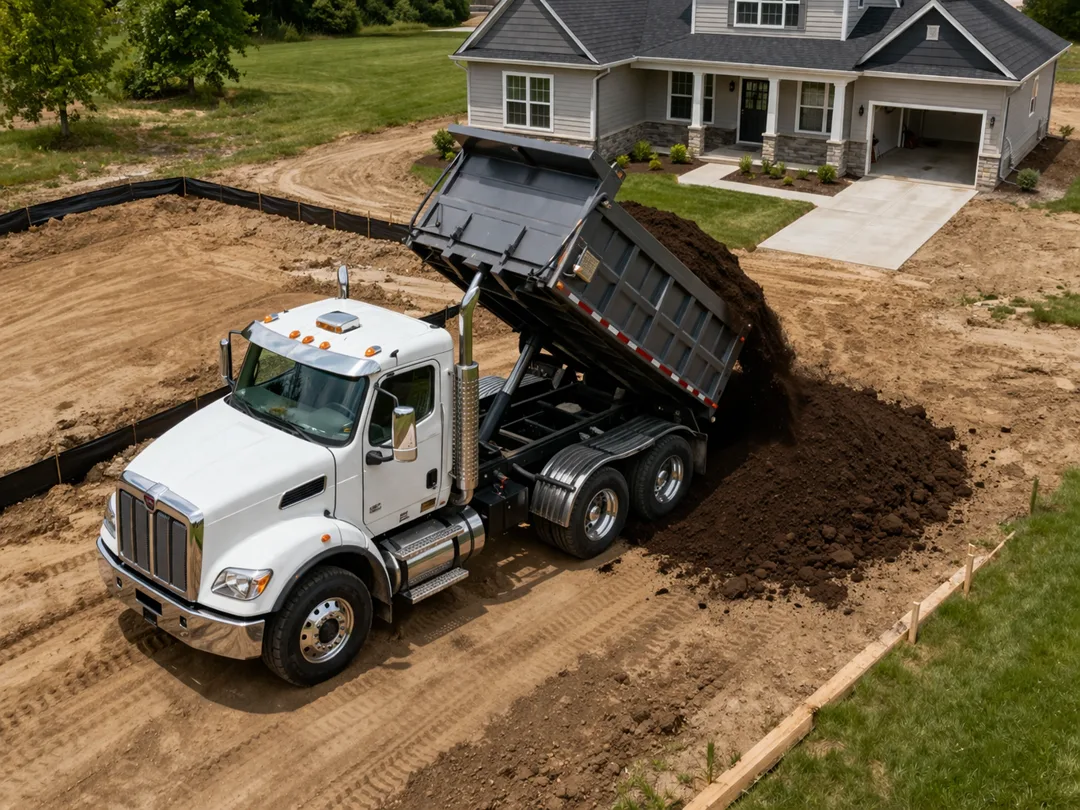
- Material arrives by dump truck.
For more detail on preparing your site and what to expect, see our guide to bulk material delivery.
When Should You Use Topsoil — and When Shouldn't You?
Use topsoil when you're:
- Establishing a lawn.
- Preparing planting beds.
- Improving growing areas.
- Completing finish landscaping.
- Adding a growing layer over appropriate fill.
Consider another material when you're:
- Building significant elevation.
- Performing structural backfill.
- Creating a compacted road or driveway base.
- Building drainage aggregate layers.
- Filling deep areas where plant growth isn't required.
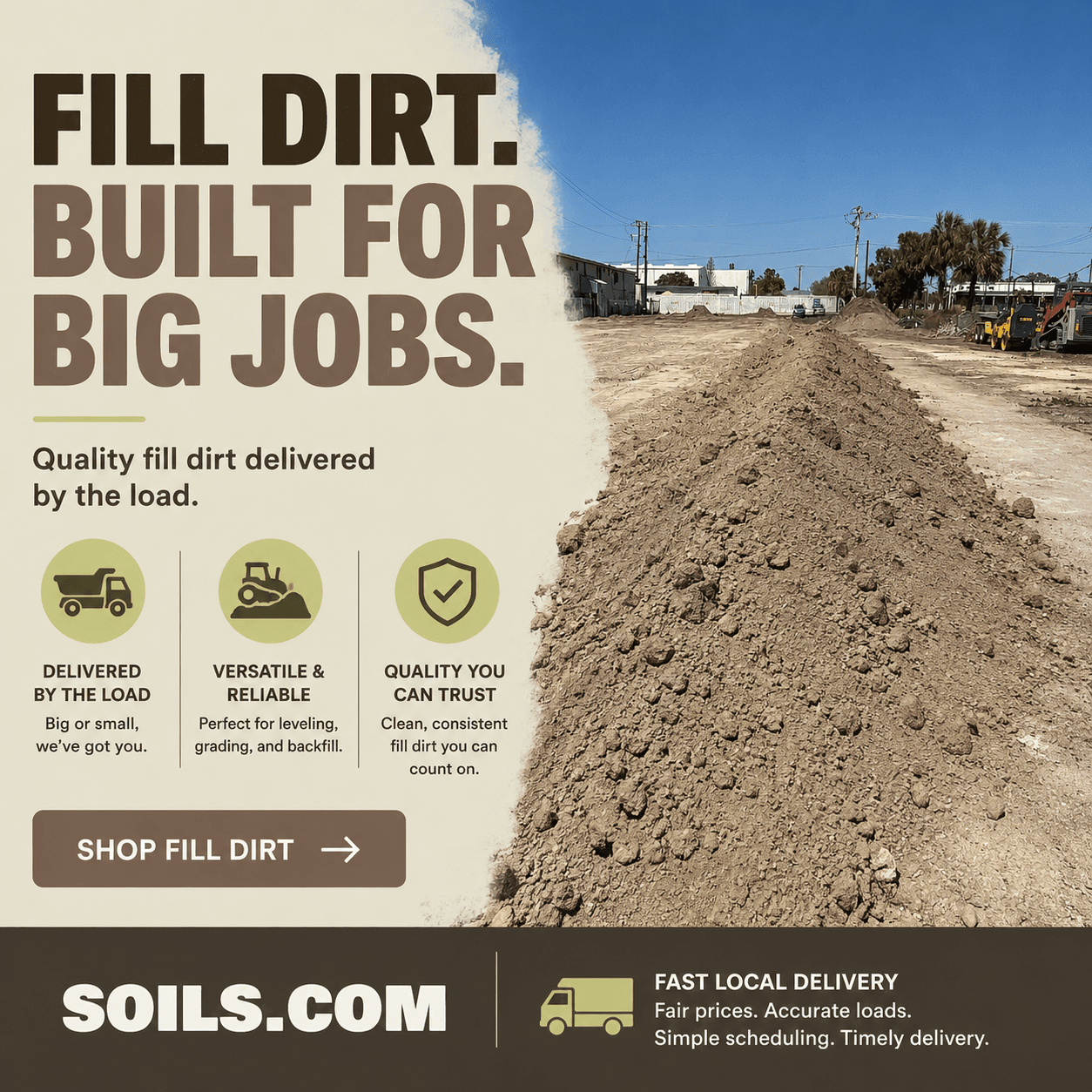
For deeper fill and grading needs, bulk fill dirt is typically the better-suited material.
Frequently Asked Questions About Topsoil
Is topsoil good for growing grass?
Yes. Appropriate topsoil can provide a workable growing layer for establishing grass or sod, particularly where existing soil conditions are poor or additional soil depth is needed.
Can you put topsoil over existing grass?
It can be used in thin applications for certain lawn improvement or leveling projects, but applying too much can smother existing grass. The appropriate approach depends on what you're trying to correct.
Is topsoil the same as garden soil?
Not necessarily. "Topsoil" generally refers to soil used as a growing or landscape layer, while products marketed as garden soil may contain additional amendments or blends designed for planting applications.
Can topsoil be used for grading?
Topsoil is useful for finish grading where the final surface will support grass or landscaping. For substantial elevation changes or deeper fills, fill dirt is generally more appropriate beneath the topsoil layer.
How much topsoil should I order?
The quantity depends on the area being covered and the desired depth. Measure the project dimensions and use the Topsoil Calculator to estimate the volume required before ordering.
Final Thoughts
Topsoil is primarily a growing and landscaping material, not simply dirt used to fill space. The right choice depends on your application, existing soil, required depth, drainage, and overall project goals, not on the name on the invoice.
Once you know what you're working with, the next step is figuring out how much you need and where to get it.
Need Topsoil for Your Project?
Whether you're installing a lawn, preparing planting beds, or completing a landscaping project, Soils.com makes it easy to estimate how much topsoil you need and view delivered pricing for your location.
Calculate How Much You Need → View Topsoil & Delivered Pricing