Topsoil for Lawns: How Much Do You Need for Grass or Sod?
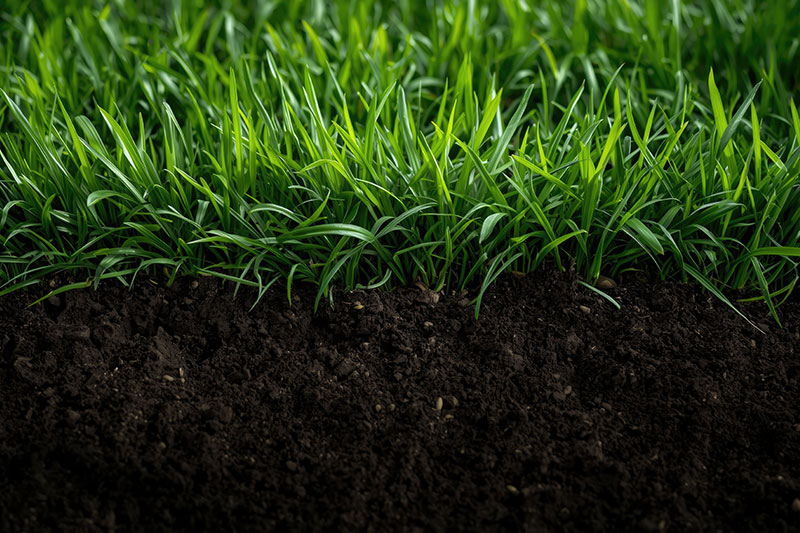
Topsoil can provide the growing layer needed to establish grass or sod, but how much you need depends on the condition of the existing soil, the size of the lawn, and the depth of new soil being added.
📌 TL;DR – Quick Summary
- Topsoil provides a workable growing layer for grass, seed, and sod where existing soil conditions need improvement.
- New lawns generally require more soil preparation than established lawns receiving light topdressing or minor leveling.
- A 4- to 6-inch suitable growing zone can be a useful general planning reference for establishing a lawn, but that doesn't necessarily mean adding 4 to 6 inches of new topsoil.
- If significant elevation needs to be added, fill dirt may be more appropriate underneath, with topsoil reserved for the final growing layer.
Table of Contents
- Is Topsoil Good for Lawns?
- How Much Topsoil Do You Need for a New Lawn?
- How Deep Should Topsoil Be for Grass?
- How Much Topsoil Do You Need for Sod?
- How Much Topsoil Do You Need for an Existing Lawn?
- Can Topsoil Be Used to Level a Lawn?
- When Should You Use Fill Dirt Under Topsoil?
- What Should You Look for in Topsoil for a Lawn?
- Should You Put Topsoil Over Existing Grass?
- How to Calculate Topsoil for Your Lawn
- Preparing a Lawn Before Adding Topsoil
- Topsoil for Lawns FAQs
- Ready to Prepare Your Lawn?
A new lawn on poor or disturbed soil may require substantially more topsoil than an existing lawn that only needs minor leveling or topdressing.
Before ordering, determine whether you're improving an existing lawn, preparing bare ground for seed or sod, or building up an area where the underlying grade also needs correction.
Once you know the area and intended depth, the Soils.com Topsoil Calculator can estimate the cubic yards required.
Is Topsoil Good for Lawns?
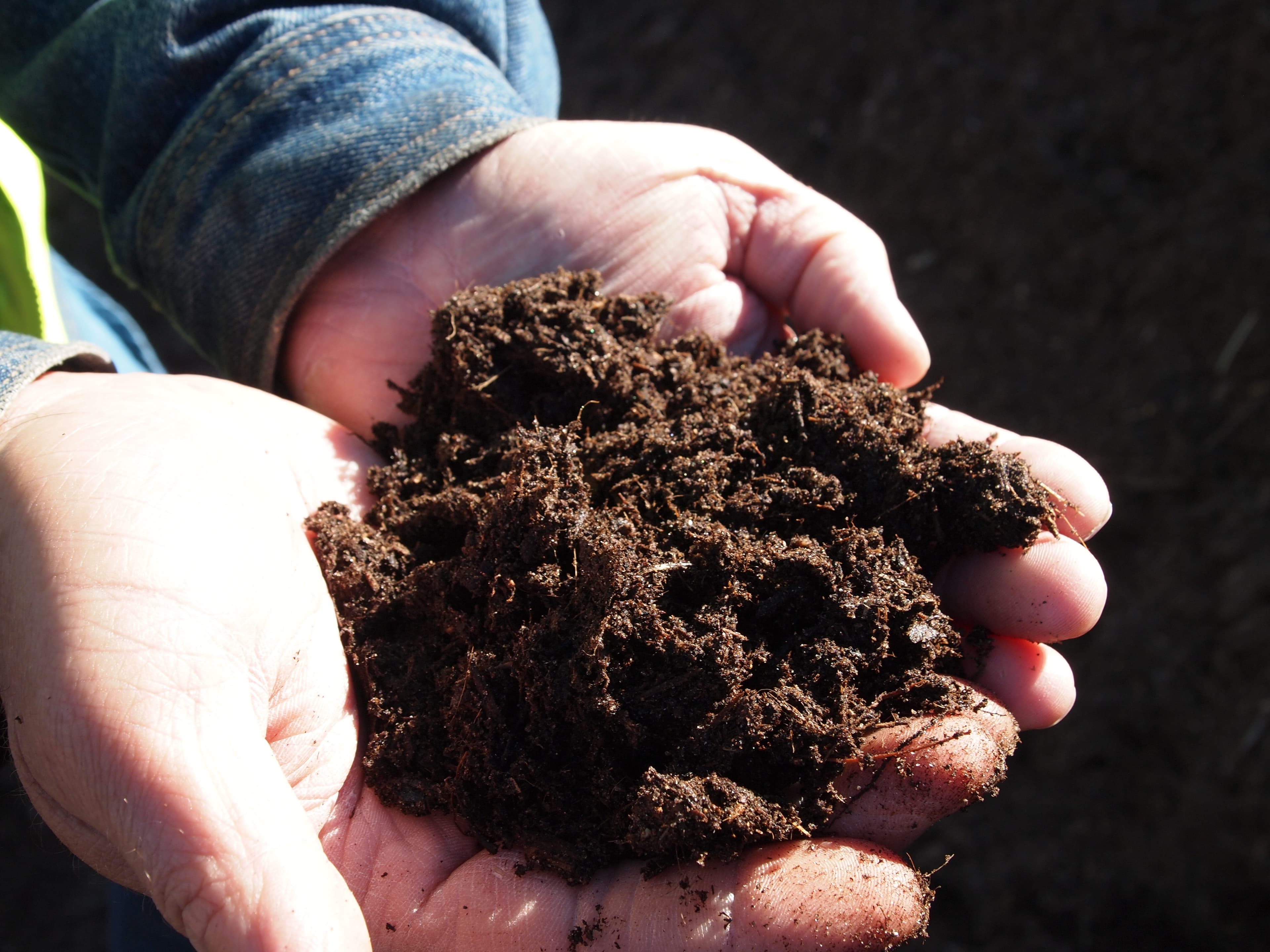
Yes, when it's used appropriately. Topsoil can provide a workable growing layer, improve poor surface soil, help prepare areas for seed or sod, assist with minor leveling, and supply soil where suitable growing material is otherwise lacking.
That said, adding topsoil isn't a cure-all. Lawn establishment also depends on drainage, soil preparation, grass species, water, nutrients, and overall climate and site conditions. If you're unfamiliar with the material itself, see our guide to what topsoil is and how it's used.
How Much Topsoil Do You Need for a New Lawn?
Quantity is driven by lawn area multiplied by the depth of soil being added -- but it's worth distinguishing between total suitable growing-soil depth and the depth of imported topsoil you actually need to purchase.
If suitable soil already exists on the site, you may only need additional material to supplement or improve the surface. If you're starting with heavily disturbed, rocky, compacted, or otherwise unsuitable ground, more site preparation and imported growing material may be required.
For the full calculation methodology, see our guide on how much topsoil you need.
How Deep Should Topsoil Be for Grass?
For establishing a lawn, roughly 4 to 6 inches of suitable, workable growing soil can be used as a general planning reference. However, this refers to the overall growing zone -- not necessarily 4 to 6 inches of newly purchased topsoil.
If there are already 3 to 4 inches of suitable soil on-site, you may not need to add another full 4 to 6 inches of imported topsoil. The amount to add depends on the existing growing layer and the needs of the project. If the site has little to no suitable growing soil, the situation calls for more material. For a more detailed breakdown, see our guide to how deep topsoil should be.
How Much Topsoil Do You Need for Sod?
Sod needs properly prepared soil beneath it, but the quantity of imported topsoil depends on existing soil quality, existing growing depth, grade, drainage, the area being covered, and how much soil is actually being added.
It's also worth accounting for the thickness of the sod itself, since it affects the finished elevation.
How Much Topsoil Do You Need for an Existing Lawn?
Established lawns are a different question from new ones. Topdressing, correcting minor depressions, fixing surface irregularities, and small repairs typically call for far less material than establishing a lawn from scratch. Light topdressing may only require approximately 1/4 to 1/2 inch at a time, depending on the objective and condition of the lawn.
Can Topsoil Be Used to Level a Lawn?
Yes -- for relatively minor surface corrections. Topsoil can be useful for shallow depressions, small uneven areas, finish grading, and general lawn repair.
If the property requires substantial elevation changes or deep filling, though, topsoil usually isn't the best material for the entire depth.
When Should You Use Fill Dirt Under Topsoil?
Many projects that need real elevation change follow a layered approach:
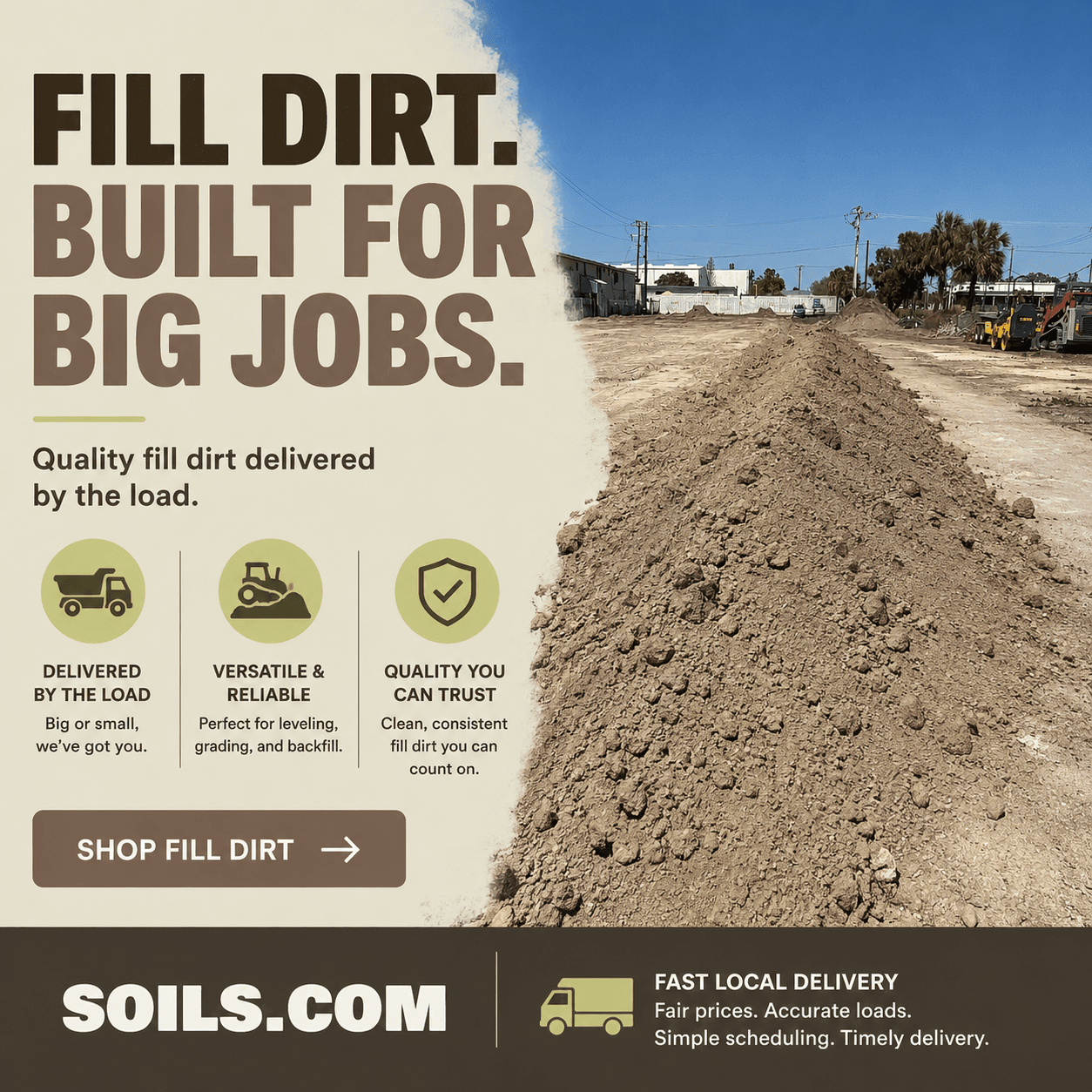
For example, if one section of a yard needs to be raised substantially before sod is installed, fill dirt may be used to establish the underlying elevation, followed by topsoil to create the growing layer. See our guide to topsoil vs. fill dirt for a full comparison.
What Should You Look for in Topsoil for a Lawn?
Rather than a fixed spec, look for characteristics that fit the job: a workable texture, reasonable consistency, appropriate organic content, freedom from excessive debris, and suitability for the intended landscaping application. Screened material may be preferable where consistency matters.
Not all topsoil for landscaping is identical -- characteristics can vary by supplier and source, so it's worth asking what you're actually getting.
Should You Put Topsoil Over Existing Grass?
Yes, thin topdressing applications can be used over established grass for certain purposes. But applying several inches over an existing healthy lawn can bury the turf.
If major reconstruction is needed, the project may instead involve removing or renovating the existing turf, correcting grade, preparing the soil, and reestablishing the lawn from the ground up.
How to Calculate Topsoil for Your Lawn
- Measure the lawn's length and width.
- Calculate the total square footage.
- Determine how much additional soil depth is actually needed.
- Convert the resulting volume to cubic yards.
- Account for irregular areas and site conditions.
For irregular lawns, break the area into smaller measurable sections and calculate each one separately. From there, the Topsoil Calculator can handle the conversion for you.
Preparing a Lawn Before Adding Topsoil
Proper preparation helps ensure the topsoil is being added to a site with suitable drainage, grade, and finished elevation rather than simply covering an underlying problem.
Before soil goes down, it helps to:
- Inspect existing soil and drainage
- Remove large debris as appropriate
- Address significant grade issues first
- Determine the final elevation
- Measure the area
- Spread soil appropriately
- Prepare the surface for seed or sod
Topsoil for Lawns FAQs
Can grass grow in topsoil?
Yes. Appropriate topsoil can provide a suitable growing layer for grass, but successful lawn establishment also depends on preparation, drainage, moisture, grass selection, and other site conditions.
How many inches of topsoil do I need for a new lawn?
A 4- to 6-inch suitable growing zone can be a useful general planning reference, but this doesn't necessarily mean adding 4 to 6 inches of new topsoil. Existing suitable soil contributes to the total growing depth -- see our guide on how deep topsoil should be for more detail.
Can I put topsoil over an existing lawn?
Yes, a relatively thin layer can be used for topdressing and minor leveling. Avoid burying established healthy grass beneath a heavy layer of soil.
Should I use topsoil or fill dirt to level my yard?
For minor finish grading where grass will grow, topsoil may be appropriate. For substantial low areas or elevation changes, fill dirt may be better for establishing the underlying grade, followed by topsoil where a growing layer is required.
How do I calculate how much topsoil I need for my lawn?
Measure the lawn area and determine the additional depth needed. You can then convert the volume to cubic yards or use the Soils.com Topsoil Calculator.
Ready to Prepare Your Lawn?
Whether you're preparing for seed, installing sod, or improving an existing lawn, start by determining how much topsoil your project needs. Use the Soils.com Topsoil Calculator to estimate cubic yards, then enter your ZIP code to view available topsoil and delivered pricing for your location.