Topsoil vs. Fill Dirt: What's the Difference?
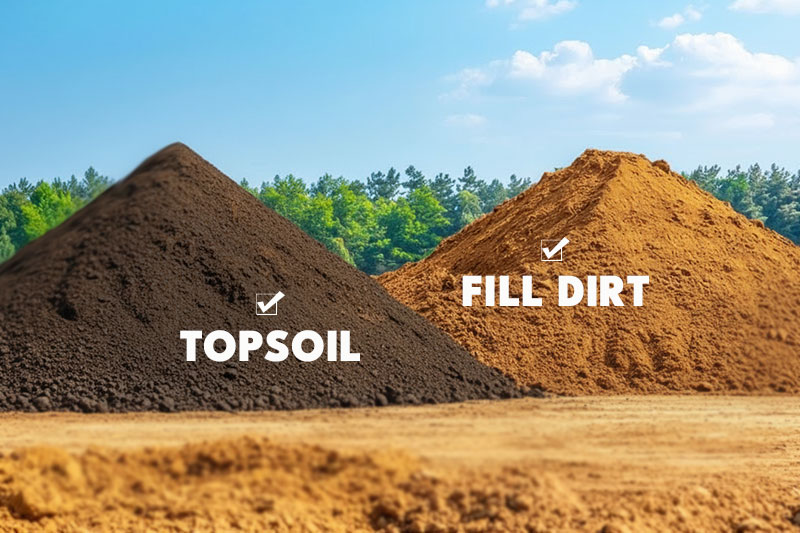
Topsoil and fill dirt serve different purposes. Topsoil is primarily used as a growing and landscaping material, while fill dirt is primarily used to fill deeper areas, build elevation, establish grade, and prepare sites.
Table of Contents
- TL;DR – Topsoil vs. Fill Dirt
- Topsoil vs. Fill Dirt at a Glance
- What Is Topsoil?
- What Is Fill Dirt?
- What's the Main Difference Between Topsoil and Fill Dirt?
- When Should You Use Topsoil?
- When Should You Use Fill Dirt?
- Can You Use Topsoil Instead of Fill Dirt?
- Can You Use Fill Dirt Instead of Topsoil?
- When Should You Use Both Topsoil and Fill Dirt?
- Topsoil vs. Fill Dirt for Grading
- Topsoil vs. Fill Dirt for Lawns and Landscaping
- How Much Topsoil or Fill Dirt Do You Need?
- Does Topsoil Cost More Than Fill Dirt?
- Which Material Does Your Project Need?
- Topsoil vs. Fill Dirt FAQs
- Need Topsoil or Fill Dirt for Your Project?
Topsoil and fill dirt serve different purposes. Topsoil is primarily used as a growing and landscaping material for lawns, gardens, planting beds, and finish grading. Fill dirt is primarily used to fill deeper areas, build elevation, establish grade, and prepare sites where plant growth isn't the immediate goal.
Many projects use both: fill dirt builds the grade, while topsoil creates the final growing layer.
This guide compares composition, uses, grading, landscaping, and cost considerations for each material, and walks through how to decide which one your project actually needs.
TL;DR – Topsoil vs. Fill Dirt
- Topsoil is primarily used where grass, plants, or landscaping need a suitable growing layer.
- Fill dirt is generally used to fill deeper areas, raise elevation, establish grade, and prepare sites.
- Topsoil typically contains more organic matter, while fill dirt is selected more for filling and grading characteristics.
- Many projects use fill dirt underneath and topsoil above it, but not every project requires both.
Topsoil vs. Fill Dirt at a Glance
| Topsoil | Fill Dirt | |
|---|---|---|
| Primary purpose | Growing & landscaping | Filling & grading |
| Organic matter | Typically higher | Generally lower |
| Plant growth | Better suited | Not the primary purpose |
| Compaction | Usually not the main goal | Often more important |
| Deep filling | Usually inefficient | Better suited |
| Finish landscaping | Common | Usually covered by another material |
| Typical uses | Lawns, sod, gardens, planting beds | Grading, low areas, backfill, site prep |
These are general functional differences, not fixed specifications — actual composition varies by source and supplier.
What Is Topsoil?
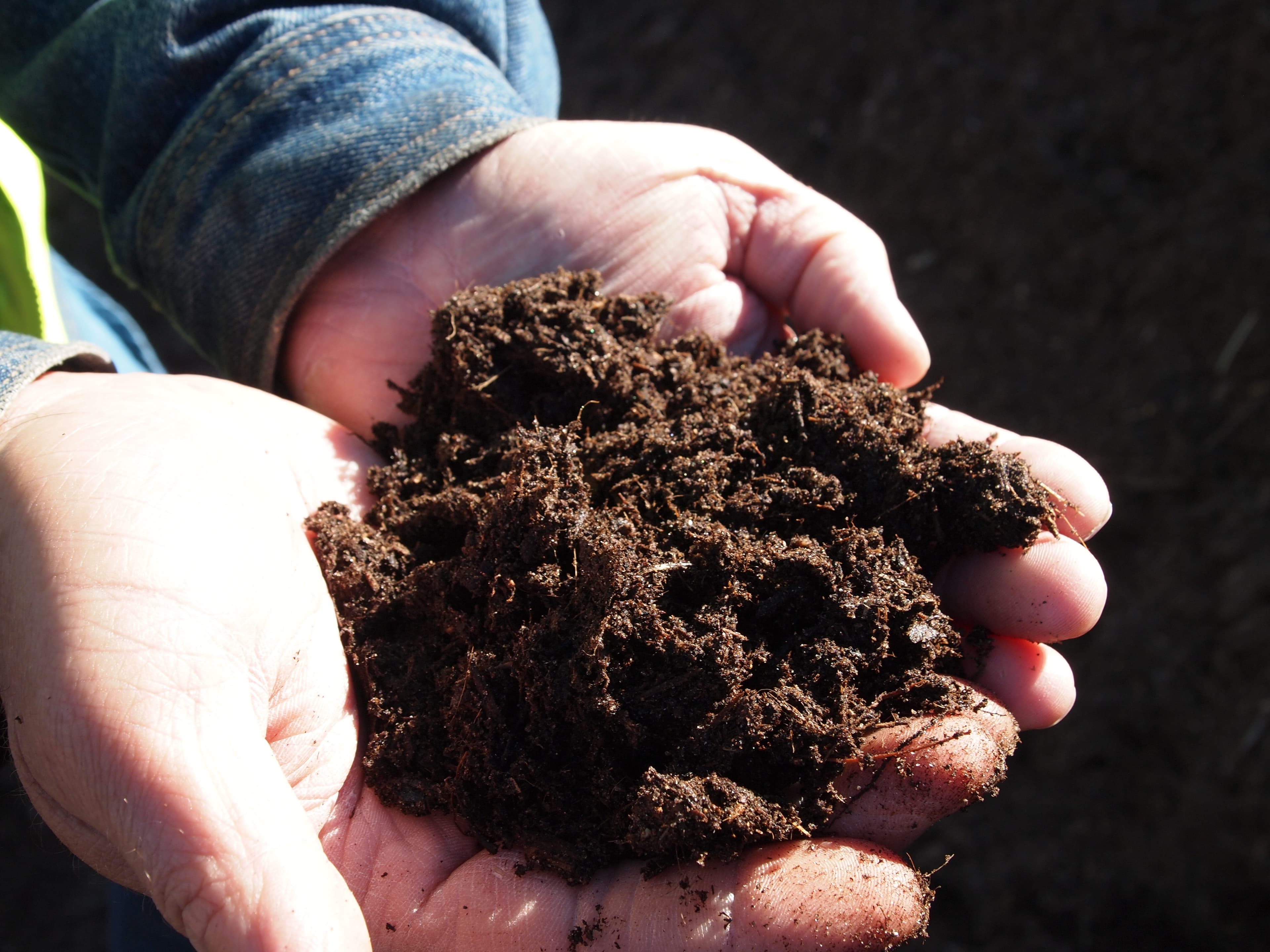
Topsoil is primarily a growing and landscaping material. It's made up of mineral particles combined with varying amounts of organic content, and may be screened or processed depending on the intended use. It's selected where the final surface needs to support vegetation, whether that's a new lawn, a garden bed, or a planting area.
For a deeper explanation of composition, types, and applications, see our guide to what topsoil is.
What Is Fill Dirt?
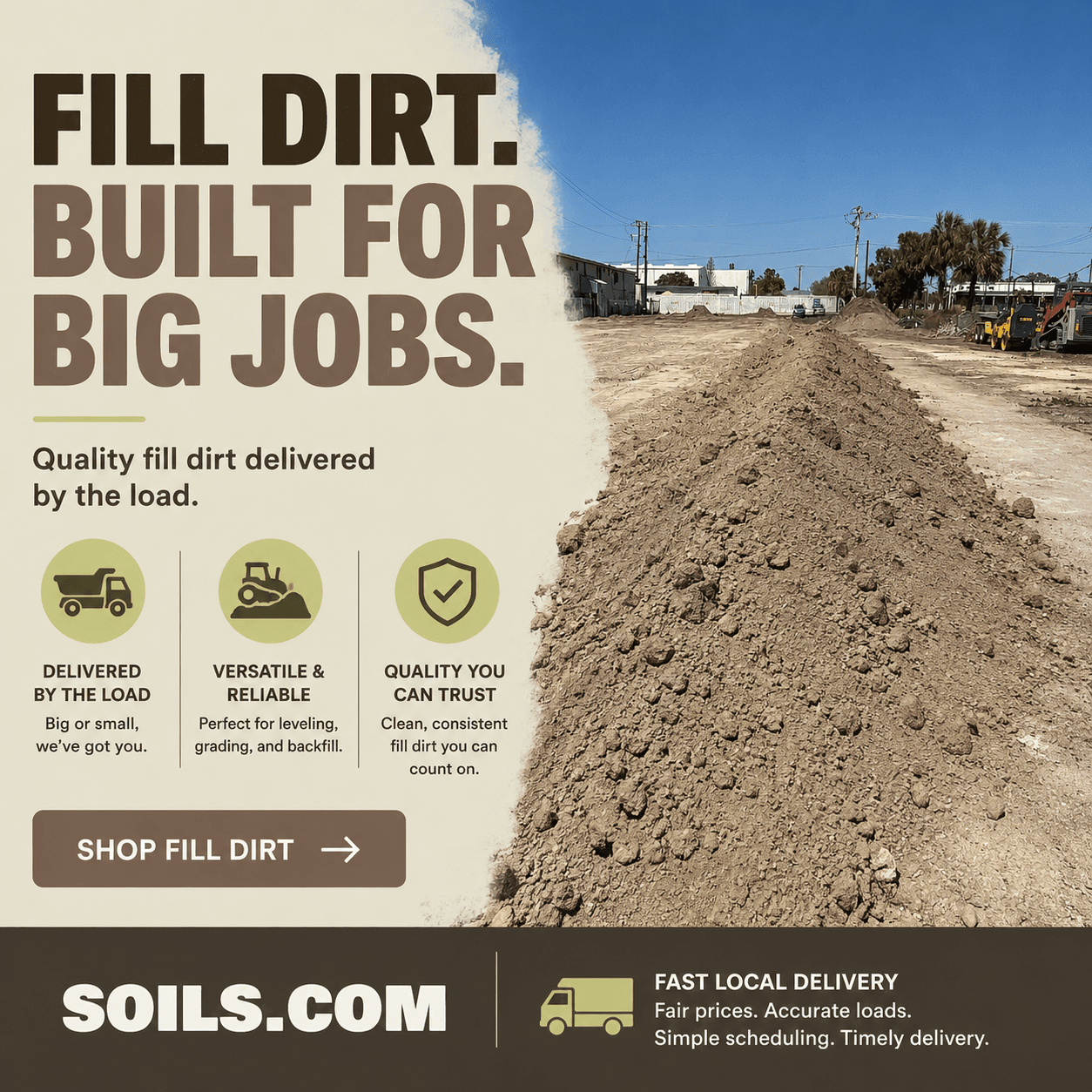
Fill dirt is selected primarily for adding volume, establishing grade, filling low areas, and preparing a site — not for its ability to support plant growth. It's generally a mineral-heavy material with lower organic content than topsoil, though composition still varies by source. Because fill dirt is often used to build up elevation or backfill excavated areas, stability and settling characteristics matter more than they do for a growing medium.
What's the Main Difference Between Topsoil and Fill Dirt?
Fill dirt builds the grade. Topsoil finishes the growing layer.
Topsoil Supports the Finished Landscape
Lawns, sod, planting beds, and gardens all depend on suitable growing soil to support root growth and plant health. For planting applications specifically, our guide to choosing topsoil for gardens and raised beds explains what to look for when selecting material and planning the growing layer.
Fill Dirt Adds Volume and Builds Grade
Elevation changes, deeper low areas, grading, site preparation, and appropriate backfill applications rely on fill dirt's stability and volume rather than its growing characteristics.
When Should You Use Topsoil?
Lawns and Sod — For the final growing layer where grass roots need to establish.
Gardens and Planting Beds — Where plant growth and workable soil matter most.
Finish Grading — As the upper landscape layer after major grading has already been completed.
Shallow Landscape Improvements — Where additional growing soil is needed without substantial elevation changes.
When Should You Use Fill Dirt?
Raising Low Areas — Where significant volume needs to be added.
Building or Correcting Grade — For establishing the underlying elevation or slope.
Backfilling — Where appropriate fill is needed around excavated areas or other sitework. Not all fill dirt meets engineered or structural-fill specifications, so confirm suitability for the application.
Site Preparation — Before final landscaping, aggregate, pavement, or other surface systems are installed.
Can You Use Topsoil Instead of Fill Dirt?
Technically, topsoil can add volume, but it's usually not the appropriate or economical material for substantial filling or grade changes. Its higher organic content can affect settling, you'd be paying for growing characteristics you don't need at depth, and deep areas often require more volume than makes sense to fill with a growing medium. Topsoil makes the most sense near the finished surface, where vegetation will actually grow.
Can You Use Fill Dirt Instead of Topsoil?
Fill dirt can establish the underlying grade, but it's generally not the preferred final growing layer for lawns, gardens, or planting beds. The finished surface typically needs an appropriate topsoil layer — or another growing medium — depending on what's being planted.
When Should You Use Both Topsoil and Fill Dirt?
This is often the most practical approach for projects that need both elevation and a finished growing surface:
For example, if a low section of a yard needs to be raised significantly before new sod is installed, fill dirt can establish the required elevation first. Topsoil is then placed over the finished grade to provide the growing layer for the lawn.
Topsoil vs. Fill Dirt for Grading
"Grading" can mean different things depending on the stage of a project:
- Rough or major grading — Fill dirt is generally more appropriate for building elevation and reshaping the site.
- Finish grading — Topsoil may be used near the surface where grass or landscaping will be established.
Topsoil finishes a grade; it generally doesn't build one.
Topsoil vs. Fill Dirt for Lawns and Landscaping
- If existing elevation is already correct, topsoil alone may be all that's needed.
- If significant elevation needs to be added, fill dirt may establish the grade first, followed by topsoil.
- If the project is purely structural or site preparation, topsoil may not be needed at all.
Not every landscaping project requires both materials — it depends on the starting conditions. If you're establishing grass or installing sod, our guide to using topsoil for lawns and sod explains how existing soil, growing depth, and site conditions affect how much topsoil you may need.
How Much Topsoil or Fill Dirt Do You Need?
Quantity for both materials depends on area, depth, existing elevation, final desired grade, and overall project conditions. Our guides to how much topsoil you need and how much fill dirt you need explain how to estimate each material based on your project's dimensions and required depth.
Use the Topsoil Calculator and Fill Dirt Calculator to estimate each layer. If your project requires both materials, calculate each one separately rather than combining them into a single volume estimate.
Does Topsoil Cost More Than Fill Dirt?
Cost for both materials varies based on characteristics, processing or screening, source, quantity, supplier availability, delivery location, and hauling distance. Topsoil may cost more than basic fill material in many markets due to material characteristics and processing, but that isn't a universal rule — pricing depends on your specific location and supplier. See our guide to bulk material costs for more on what affects pricing, or enter your ZIP code to view delivered pricing for your area.
Which Material Does Your Project Need?
Choose Topsoil If:
- You're establishing grass or sod
- You're building planting beds
- Plant growth matters
- You're completing finish landscaping
Choose Fill Dirt If:
- You're filling significant depth
- You're raising elevation
- You're establishing underlying grade
- You're performing appropriate backfill or site preparation
Consider Both If:
- You need to build elevation and create a finished growing surface
Topsoil vs. Fill Dirt FAQs
Is topsoil the same as fill dirt?
No. Topsoil is primarily selected for growing and landscaping applications, while fill dirt is primarily used for filling, grading, and establishing elevation.
Can grass grow on fill dirt?
Grass may grow in some fill materials, but fill dirt isn't generally selected as a growing medium. Where reliable lawn establishment is the goal, an appropriate topsoil layer is typically preferable.
Can I put topsoil over fill dirt?
Yes, this is a common approach when a project requires both elevation changes and a final growing layer. Fill dirt establishes the underlying grade, while topsoil provides the surface layer for grass or landscaping.
How much topsoil should go over fill dirt?
There isn't one universal depth. The appropriate amount depends on the vegetation being established, existing site conditions, soil characteristics, and project requirements. Our guide to how deep topsoil should be provides more detailed guidance for lawns, gardens, planting areas, and other applications.
Is topsoil or fill dirt better for leveling a yard?
It depends on the depth and purpose. Fill dirt is generally more appropriate for substantial low areas or grade changes, while topsoil may be appropriate for minor finish grading where grass or landscaping will be established.
Need Topsoil or Fill Dirt for Your Project?
Whether you're building up a low area, preparing for a new lawn, or completing a landscaping project, Soils.com makes it easy to estimate the material you need and compare delivered pricing for your location.
Estimate Your Project Topsoil Calculator · Fill Dirt Calculator