Topsoil for Gardens and Raised Beds: What to Look For
Topsoil can be useful for gardens, planting beds, and landscape areas, but choosing the right material depends on what you're planting and the condition of the existing soil.
📌 TL;DR – Quick Summary
- Topsoil can provide or improve the growing layer for gardens, planting beds, and landscaped areas.
- Look for workable material with characteristics appropriate for planting rather than assuming all topsoil is the same.
- Raised beds may use topsoil as part of the growing medium, but generic bulk topsoil isn't necessarily the best material to fill an entire raised bed by itself.
- Determine the actual depth being added before calculating quantity, especially where suitable soil already exists.
Table of Contents
- Is Topsoil Good for Gardens?
- What Should You Look for in Topsoil for a Garden?
- What's the Difference Between Topsoil and Garden Soil?
- Can You Use Topsoil in Raised Beds?
- Should You Fill a Raised Bed Entirely With Topsoil?
- How Deep Should Topsoil Be for a Garden?
- How Much Topsoil Do You Need for a Garden?
- How Do You Calculate Soil for a Raised Bed?
- Can You Add Topsoil to an Existing Garden?
- Topsoil vs. Fill Dirt for Garden Areas
- How to Choose Topsoil Before Ordering
- Topsoil for Gardens FAQs
- Ready to Plan Your Garden Project?
A workable topsoil can help establish or improve a growing layer, while garden and raised-bed applications may also benefit from compost, organic matter, or other amendments depending on the plants and project.
Raised beds require particular attention because bulk topsoil isn't necessarily intended to be used as the only growing medium throughout the entire bed. Before ordering, consider the existing soil, planting depth, drainage, bed construction, and whether the topsoil will be used alone or as part of a blend.
Once you determine the area and depth of material being added, the Soils.com Topsoil Calculator can help estimate how many cubic yards you need.
Is Topsoil Good for Gardens?
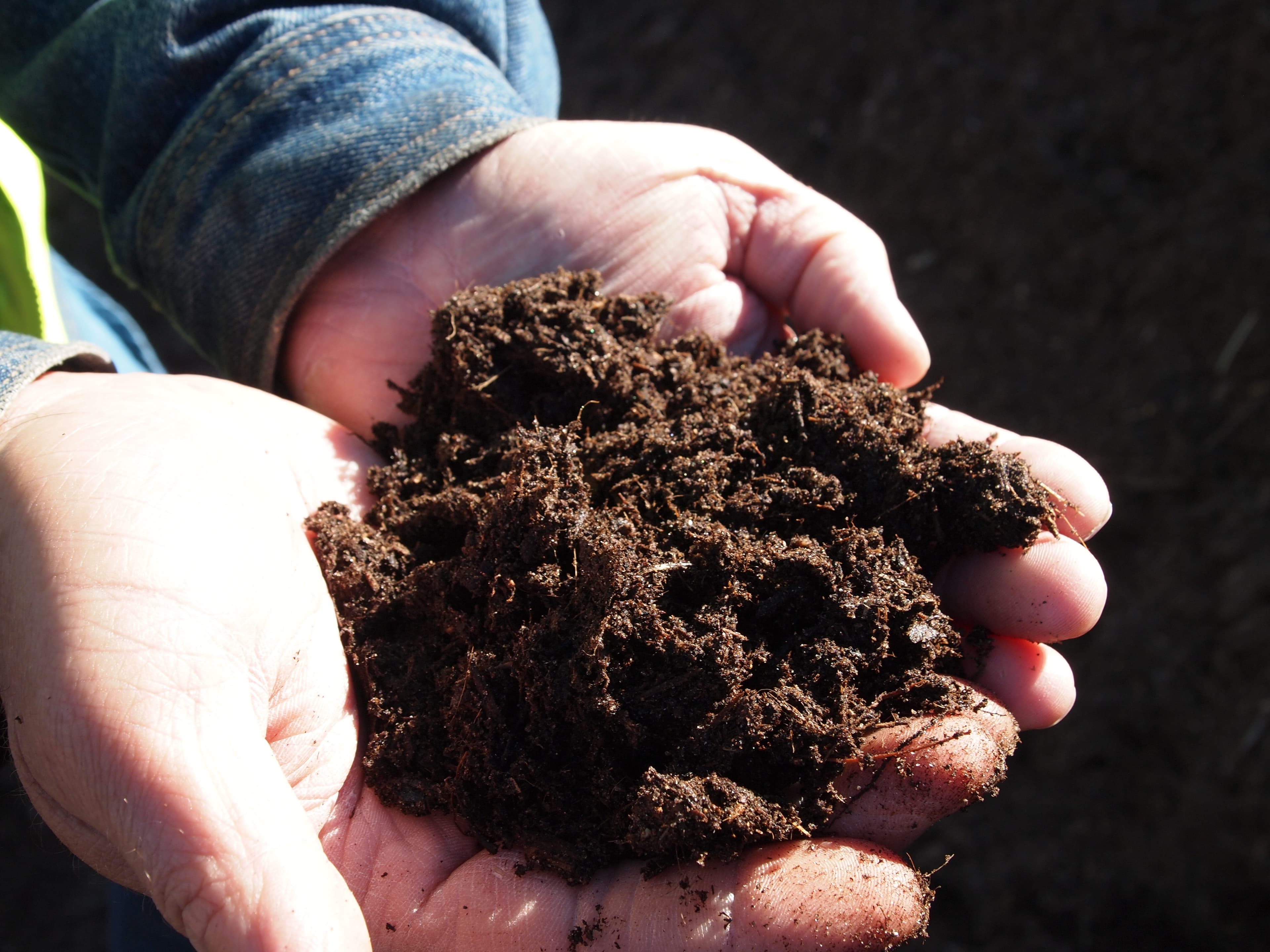
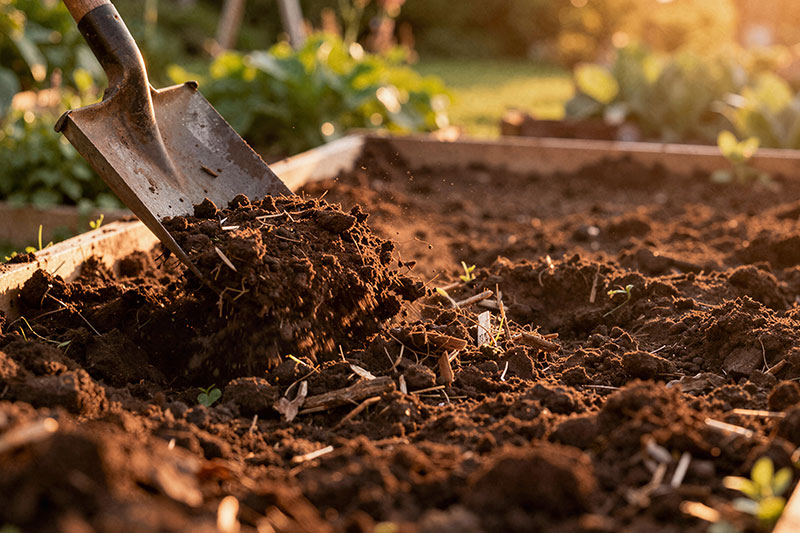
Yes, appropriate topsoil can be useful for many garden and planting applications, but suitability depends on the material and what you're growing. Topsoil can establish a new growing layer, improve shallow or poor existing soil, add soil to landscape beds, help establish finished grade around planting areas, and serve as a component of amended garden soil.
Gardening performance also depends on texture, drainage, organic matter, nutrients, pH, plant requirements, and the existing or native soil on-site. Understanding what topsoil is and how its composition can vary is useful before choosing material for a planting project -- see our foundational guide to topsoil for more.
What Should You Look for in Topsoil for a Garden?
Workable Texture -- Material should be reasonably workable for the intended planting application. There's no single sand/silt/clay ratio that's universally ideal -- it depends on what you're growing and your site conditions.
Organic Matter -- Organic content can support soil structure and growing conditions, but amounts vary considerably among topsoil products.
Drainage -- Garden soil needs to manage water appropriately for the plants being grown and the site itself.
Excessive Debris -- Rocks, roots, and construction debris can all affect workability and plant health.
Screened vs. Unscreened Topsoil -- Screening generally produces a more consistent particle size, removes larger debris, and makes the material easier to spread and work. That said, "screened" doesn't automatically mean nutrient-rich or perfect for every plant -- it's a processing characteristic, not a guarantee of fertility.
What's the Difference Between Topsoil and Garden Soil?
Topsoil generally refers to soil material used for landscaping, growing layers, grading, lawns, and planting applications. Garden soil is often a marketed or prepared growing product that may contain topsoil, compost, organic matter, amendments, or other ingredients -- though it isn't one universally standardized composition either.
| Bulk Topsoil | Garden Soil / Growing Blend | |
|---|---|---|
| Common use | Landscaping, growing layers, planting areas | Plant-focused garden applications |
| Composition | Varies by source | Often blended/amended |
| Bulk availability | Common | Depends on supplier/product |
| Raised-bed use | May be a component | May be formulated for planting |
| Organic content | Varies | Often intentionally amended |
Can You Use Topsoil in Raised Beds?
Yes, topsoil can be used as part of the growing medium in many raised beds, but filling an entire raised bed with generic bulk topsoil isn't automatically the best approach.
Raised beds create a contained growing environment, so it's worth considering drainage, root development, organic matter, compaction, bed depth, plant requirements, and the existing ground beneath the bed before deciding what goes in.
Should You Fill a Raised Bed Entirely With Topsoil?
Not necessarily. Many raised-bed systems use a growing blend rather than one material throughout the entire bed. Topsoil may be combined with appropriate compost, organic matter, or other growing media, depending on the plants and the bed's design -- there's no single ratio that works for every raised bed.
How Deep Should Topsoil Be for a Garden?
Garden and planting areas often benefit from a deeper workable growing zone than surface lawn applications. Around 6 to 12 inches of suitable soil can be a useful general planning range for many garden applications, but actual requirements depend heavily on what is being planted, existing soil conditions, and root depth.
As with lawns, total suitable growing depth isn't necessarily the same as the amount of new topsoil you need to purchase. For more detail, see our guide on how deep topsoil should be.
How Much Topsoil Do You Need for a Garden?
Quantity depends on the area you're covering multiplied by the depth being added.
Example: A 10 x 20 ft garden equals 200 sq. ft. Adding 6 inches (0.5 ft) of depth: 200 x 0.5 = 100 cubic feet, and 100 / 27 = approximately 3.7 cubic yards.
This is a volume estimate, not a guaranteed order quantity. For the full methodology, see our guide on how much topsoil you need, or use the Topsoil Calculator directly.
How Do You Calculate Soil for a Raised Bed?
Raised beds have straightforward dimensions, which makes the math simple: length x width x material depth, converted from cubic feet to cubic yards for larger bulk orders.
Example: An 8 ft x 4 ft raised bed with 1 ft of material: 8 x 4 x 1 = 32 cubic feet, and 32 / 27 = approximately 1.2 cubic yards.
That's the volume of the space -- not necessarily the amount of topsoil you should purchase if the bed will contain multiple growing materials.
Can You Add Topsoil to an Existing Garden?
Yes. Topsoil can be used to restore lost volume, correct minor grade issues, supplement an existing growing layer, or prepare expanded planting areas.
That said, simply covering poor soil isn't always the right solution -- existing soil may need loosening, amending, drainage correction, or testing depending on your planting objective.
Topsoil vs. Fill Dirt for Garden Areas
Topsoil is a growing and planting layer; fill dirt is for underlying elevation or grade where significant depth needs to be added. If you're constructing a large elevated landscape bed that requires substantial material depth, it may not make sense to use growing-quality topsoil for the entire underlying volume.
This is more relevant to landscape grading and large planting areas than to typical vegetable raised beds -- fill dirt generally isn't the right choice inside a raised bed simply because the bed is deep. See our guide to topsoil vs. fill dirt for the full comparison.
How to Choose Topsoil Before Ordering
- Determine what you're planting
- Evaluate the existing soil
- Determine the required growing depth
- Decide whether topsoil will be used alone or as part of a growing blend
- Measure the area
- Calculate only the material depth being added
- Confirm product characteristics and availability
- Check delivered pricing
Topsoil for Gardens FAQs
Is topsoil good for vegetable gardens?
Appropriate topsoil can be part of a vegetable garden's growing medium, but vegetable-growing conditions also depend on organic matter, drainage, fertility, pH, and the characteristics of the existing soil or blend.
Can I fill a raised garden bed with topsoil?
Topsoil can be part of a raised-bed growing medium, but generic bulk topsoil isn't necessarily intended to fill the entire bed by itself. The appropriate blend depends on the plants, bed design, drainage, and material characteristics.
How many inches of topsoil do I need for a garden?
Roughly 6 to 12 inches of suitable workable soil can be a useful general reference for many garden applications, but requirements vary by plant and existing conditions. This doesn't necessarily mean adding that entire depth as new topsoil -- see our guide on topsoil depth for more.
What's the difference between topsoil and garden soil?
Topsoil is a broad category of soil material commonly used for landscaping and growing layers. Products sold as garden soil are often blended or amended specifically for planting, although composition varies by supplier.
How do I calculate how much topsoil my garden needs?
Measure the length and width of the area and multiply by the depth of soil being added. Convert the resulting volume to cubic yards or use the Soils.com Topsoil Calculator.
Ready to Plan Your Garden Project?
Whether you're preparing a new garden, expanding a planting bed, or adding soil to an existing landscape, start by determining the material and depth your project needs. Use the Soils.com Topsoil Calculator to estimate cubic yards, then enter your ZIP code to view available topsoil and delivered pricing.