Sand for Florida Pavers and Hardscaping
Sand is used in several parts of paver and hardscape construction, but the right material depends on where the sand is being used.
Table of Contents
- TL;DR - Choosing Sand for Florida Pavers
- Where Is Sand Used in Paver and Hardscape Projects?
- Bedding Sand vs. Base Material
- Mason Sand vs. Concrete Sand for Pavers
- Florida Soil Conditions Beneath Pavers
- Drainage Matters in Florida Hardscaping
- How Deep Should Sand Be Under Pavers?
- How Much Sand Do You Need for a Florida Paver Project?
- Ordering Sand for a Florida Hardscape Project
- Frequently Asked Questions About Sand for Florida Pavers
- Need Sand Delivered for a Florida Hardscape Project?
- Explore Related Guides
Sand is used in several parts of paver and hardscape construction, but the right material depends on where the sand is being used. Bedding layers, joint material, leveling applications, and other hardscape uses can call for different products. In Florida, existing soil, drainage, base preparation, rainfall, and the specific paver system also affect material selection.
The best sand for a Florida paver project isn't determined by the word "sand" alone. Particle size, gradation, intended function, and installation specifications all matter. For the general, non-Florida-specific version of this topic, see our guide to what sand to use under pavers.
TL;DR - Choosing Sand for Florida Pavers
- Different layers of a paver system can require different materials.
- Bedding sand should be selected for the paver system and applicable specifications.
- Mason sand and concrete sand aren't automatically interchangeable.
- Sand shouldn't be expected to compensate for an inadequate or unstable base.
- Florida rainfall and site drainage make water management an important part of hardscape planning.
- Existing sandy soil isn't automatically a substitute for specified bedding or base materials.
- Calculate sand quantity based on the actual area and required layer depth.
Where Is Sand Used in Paver and Hardscape Projects?
Depending on the project, sand may be used for bedding beneath pavers, certain leveling applications, joints between pavers, masonry or hardscape work, and other specified construction uses. These uses shouldn't be treated as interchangeable - a sand suitable for one part of a hardscape project may not be the specified material for another.
Bedding Sand vs. Base Material
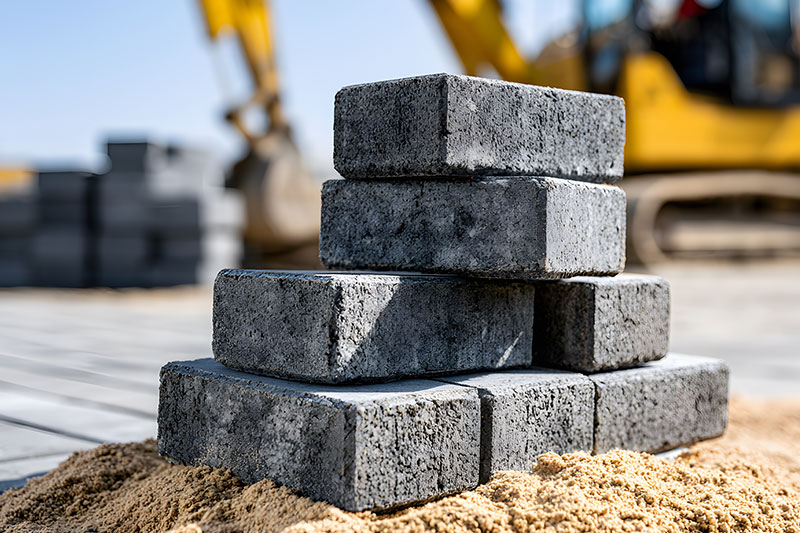
Sand generally isn't the structural base itself in a conventional paver assembly. A typical assembly looks something like this, conceptually:
Joint Material fills the spaces between paver units where required.
Bedding sand and driveway or paver base aggregate perform different jobs. A thicker layer of sand isn't necessarily a substitute for a properly prepared base - see our guide to best driveway base materials for Florida conditions for more on that structural layer, and our Pavers & Hardscaping Guides for the broader category.
Mason Sand vs. Concrete Sand for Pavers
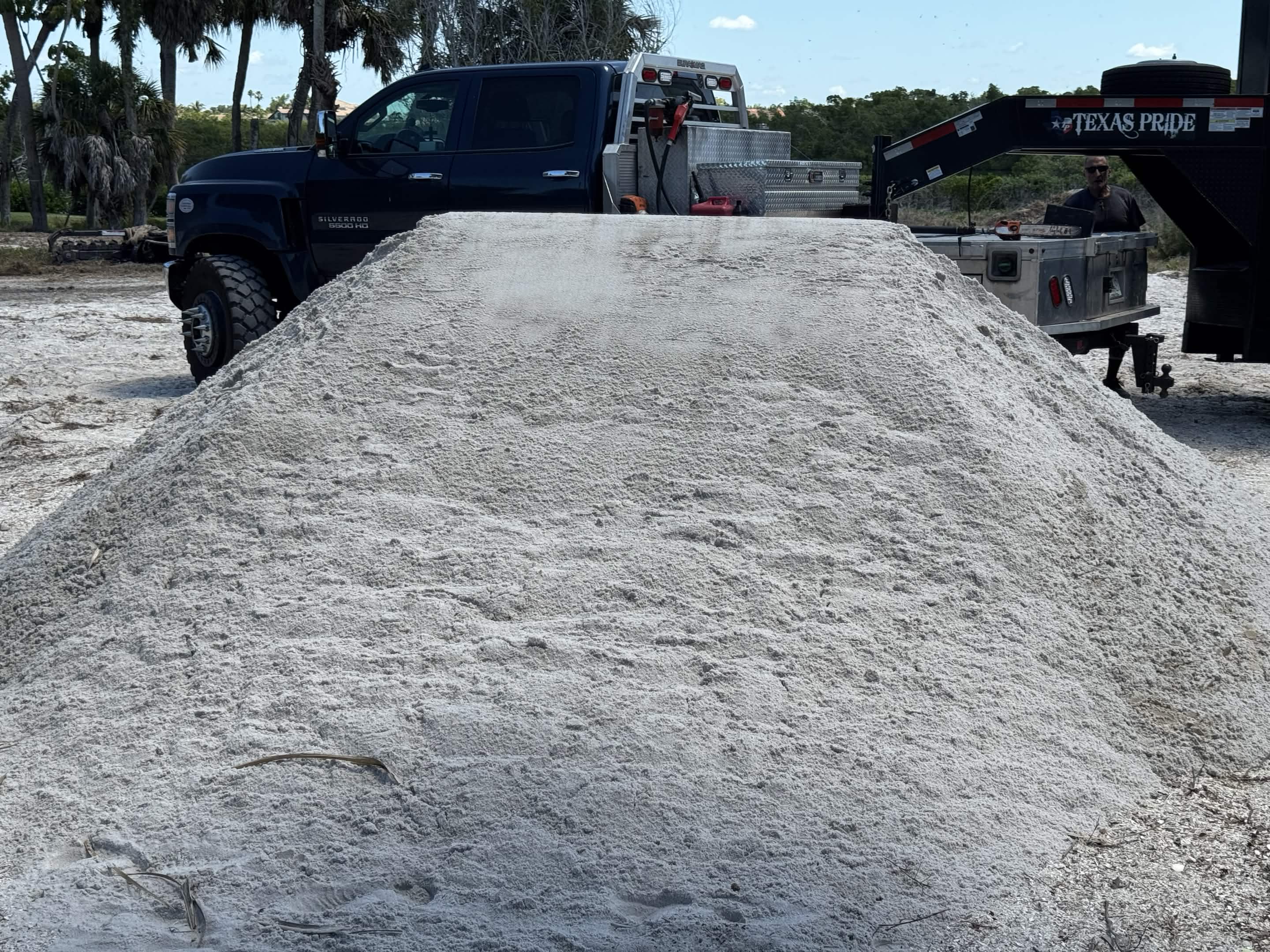
Mason sand is generally a finer, screened material commonly associated with masonry and similar applications. Concrete sand is generally coarser, with different particle characteristics and gradation. These are broad descriptions rather than universal specifications, since products can vary by supplier.
What matters most: the correct bedding material should follow the requirements of the paver system, manufacturer, contractor, or applicable specification rather than assuming that any product sold as "sand" will perform the same way. See our full comparison of mason sand vs. concrete sand for more detail. Soils.com also supplies bulk Mason Sand for projects where mason sand is the appropriate specified material.
Can Mason Sand Be Used for Pavers?
Mason sand can be used in some paver and hardscape applications, but it shouldn't automatically be assumed to be the correct bedding material for every paver system. Its suitability depends on where the sand is being used - bedding, leveling, masonry, or another role each carries its own requirements. See our guide on using mason sand for leveling for more on that particular application.
Florida Soil Conditions Beneath Pavers
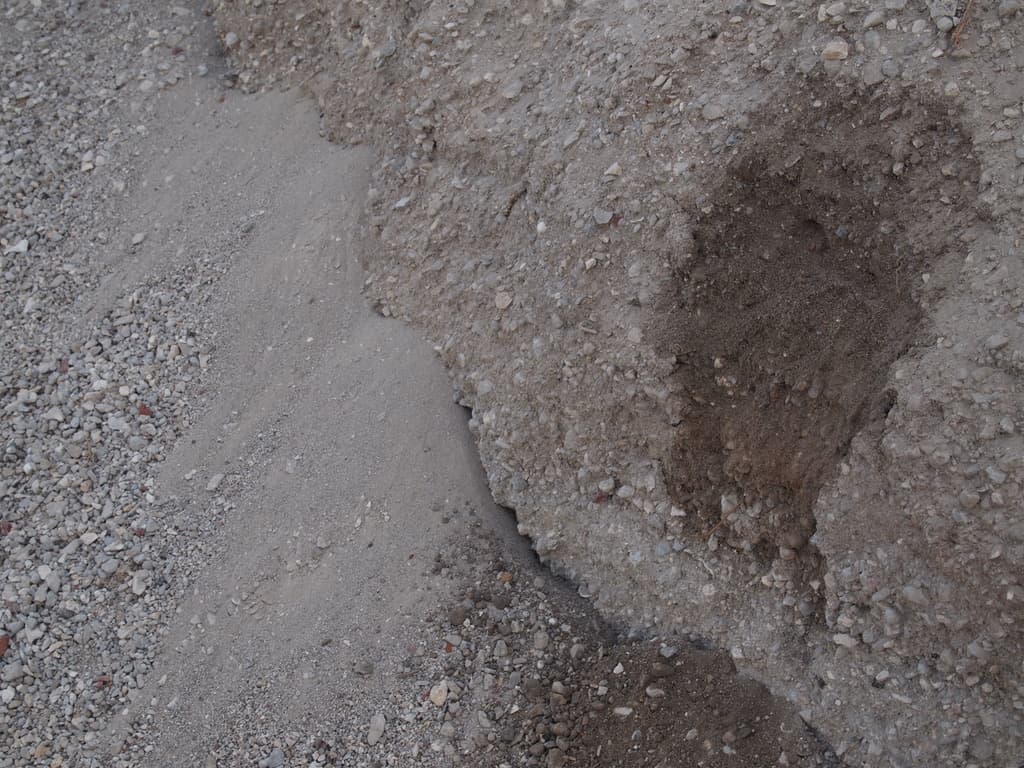
Sandy soils are common in Florida, but they aren't universal, and developed properties can contain fill and disturbed soil left over from earlier construction. Existing sand on a property isn't automatically construction-grade bedding sand - subgrade stability still matters, low or wet areas may point to a grading or drainage problem, and high groundwater can affect some sites. Soil conditions can even vary across a single property. See our guide to Florida soil types and what they mean for landscaping for more on that variation.
Drainage Matters in Florida Hardscaping
Florida rainfall makes it particularly important to think through surface slope, where runoff goes, adjacent grades, base and subgrade conditions, drainage systems where required, and water accumulation near structures before finalizing a hardscape project. Sand alone doesn't create a complete drainage solution - see our guide on choosing materials for Florida yard drainage for the broader picture.
How Deep Should Sand Be Under Pavers?
There isn't one sand depth that should be applied blindly to every paver installation. Bedding-layer requirements depend on the paver system, materials, base preparation, and applicable installation specifications - and a bedding layer isn't meant to compensate for major grade variation or an inadequate base. See our guide on how deep sand should be under pavers for a closer look at how that's determined.
How Much Sand Do You Need for a Florida Paver Project?
For simple rectangular areas, calculate volume using:
Length (ft) x Width (ft) x Depth (inches) / 324 = Cubic Yards
Calculate only the layer that actually requires sand, use the specified depth, and divide irregular areas into sections rather than treating them as one uniform shape.
There's no universal overage percentage or weight-per-yard conversion that applies to every sand product. See our guide on how much sand you need for the full methodology. If mason sand is the material your project requires, use our Mason Sand Calculator to estimate cubic yards.
Ordering Sand for a Florida Hardscape Project
Before ordering, identify exactly where the sand will be used, confirm the required sand or material specification, calculate the required volume, and enter your delivery ZIP code to confirm available product. It's worth preparing truck access and a dump location ahead of time as well. See our guide on bulk landscape material delivery in Florida for more on that process.
Soils.com provides bulk sand and hardscape material delivery throughout Florida. Visit our Florida delivery locations to find your area and check locally available materials and delivered pricing.
Frequently Asked Questions About Sand for Florida Pavers
What is the best sand to use under pavers in Florida?
The appropriate bedding sand depends on the paver system and installation requirements. Particle size, gradation, base preparation, and intended use matter more than simply choosing a product labeled "sand."
Can I use mason sand under pavers?
Mason sand may be appropriate for some paver or hardscape applications, but it isn't automatically the specified bedding material for every system. Confirm the requirements of the particular installation.
Is concrete sand better than mason sand for pavers?
Neither is universally "better." They have different particle characteristics and uses. The correct product depends on the application and applicable paver-system specifications.
Can I use Florida's existing sandy soil under pavers?
Existing sandy soil shouldn't automatically be treated as a substitute for specified bedding or base materials. Natural or disturbed site soil can differ significantly in gradation, fines, organic content, and stability.
How much sand do I need for pavers?
Quantity depends on the area receiving sand and the required layer depth. Calculate the sand layer separately from aggregate base or other materials.
Need Sand Delivered for a Florida Hardscape Project?
Once you've identified the type and quantity of sand your project requires, check local availability and delivered pricing. Soils.com provides bulk sand and other hardscape materials throughout Florida.