


Can Mason Sand Be Used for Leveling?
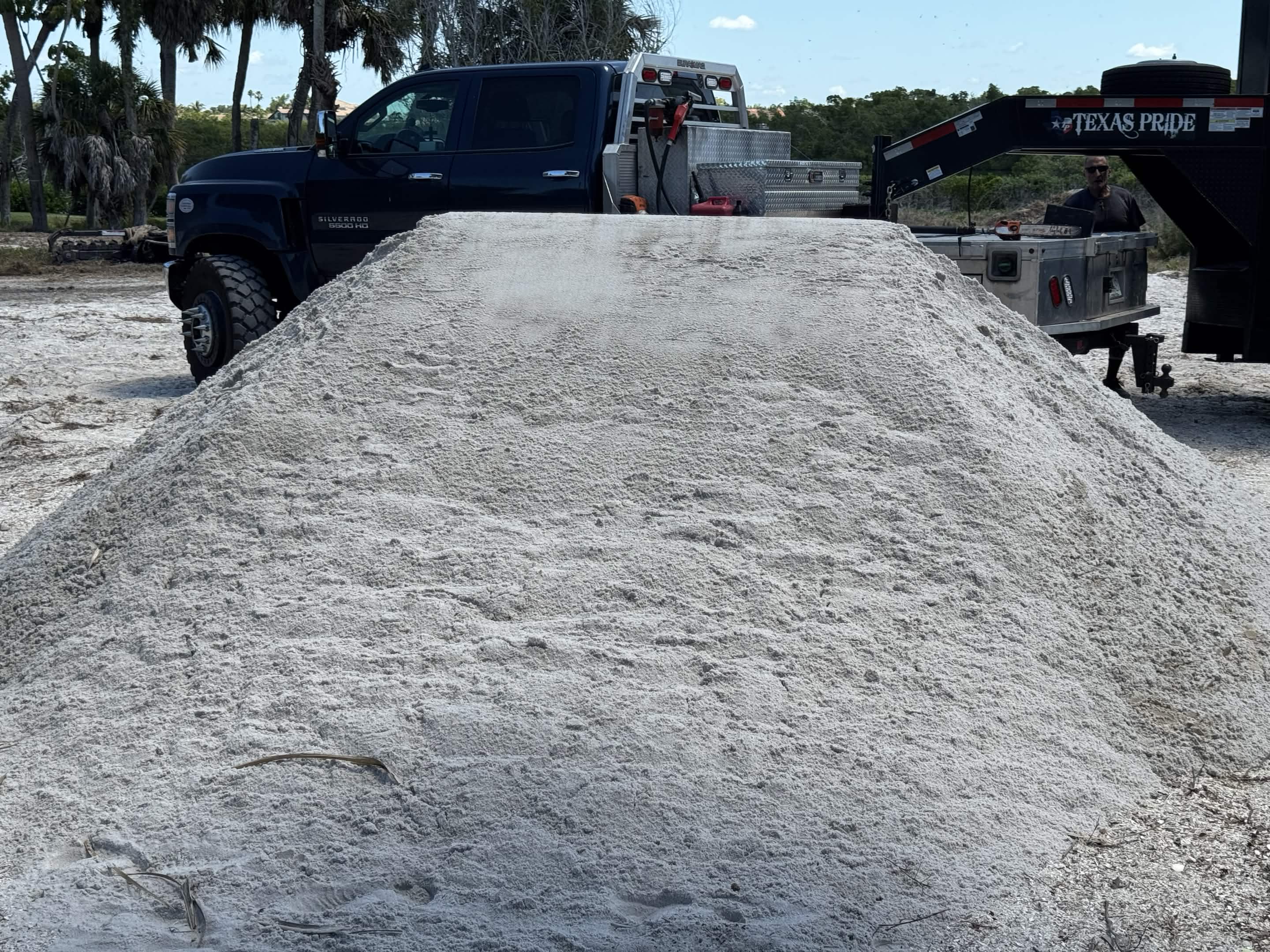
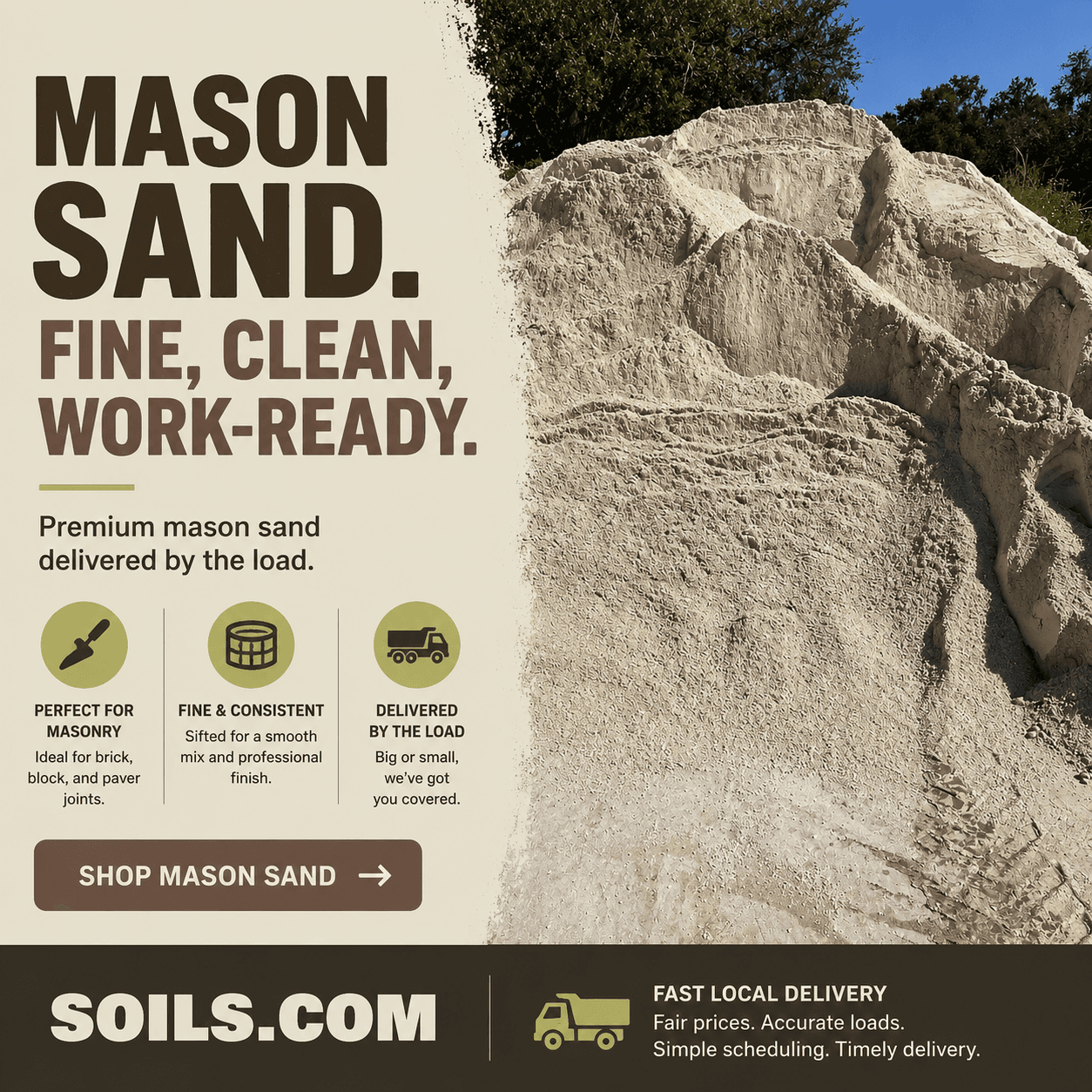
Yes, mason sand can be used for certain leveling applications where a relatively fine, workable sand is appropriate.
Table of Contents
- TL;DR - Using Mason Sand for Leveling
- What Does "Leveling" Actually Mean?
- Why Is Mason Sand Used for Leveling?
- What Can Mason Sand Be Used to Level?
- When Shouldn't Mason Sand Be Used for Leveling?
- Mason Sand for Leveling vs. Fill Dirt for Grading
- How Deep Can Mason Sand Be Used for Leveling?
- Mason Sand vs. Concrete Sand for Leveling
- Can Mason Sand Be Used to Level a Yard?
- Does Mason Sand Improve Drainage When Leveling?
- How Much Mason Sand Do You Need for Leveling?
- Before Using Mason Sand for Leveling
- Frequently Asked Questions About Mason Sand for Leveling
- Need Mason Sand for a Leveling Project?
Yes, mason sand can be used for certain leveling applications where a relatively fine, workable sand is appropriate. But "leveling" can describe very different projects, and mason sand isn't a universal material for correcting grade, filling deep low areas, or building substantial elevation.
Mason sand's fine, workable characteristics can make it useful for applications requiring a smooth or consistent setting surface - but suitability depends on what's actually being leveled and how much correction is required. See our guide to what mason sand is and how it's used for more background on the material itself.
TL;DR - Using Mason Sand for Leveling
- Mason sand can be suitable for certain fine-leveling and setting applications.
- It shouldn't automatically be used for every project described as "leveling."
- Minor surface adjustment is different from major grading or elevation correction.
- Mason sand shouldn't automatically replace base material or fill material.
- For pavers, follow the requirements of the specific paver system.
- Once you've established the appropriate material and depth, calculate quantity from project area x depth.
What Does "Leveling" Actually Mean?
Someone searching for leveling sand could mean several different things: establishing a consistent setting surface, making relatively minor surface adjustments, leveling beneath pavers or hardscape, filling shallow irregularities, correcting a low area in a yard, or changing the grade or elevation of a larger area. These aren't equivalent applications.
The deeper or more structural the correction becomes, the more important material selection, base preparation, compaction requirements, and drainage considerations become.
Why Is Mason Sand Used for Leveling?
Mason sand's relatively fine texture and workability can make it easier to spread and work with in certain fine-adjustment or setting applications. That doesn't mean it's universally "the best leveling material" - it's appropriate when those characteristics actually match what the application requires.
What Can Mason Sand Be Used to Level?
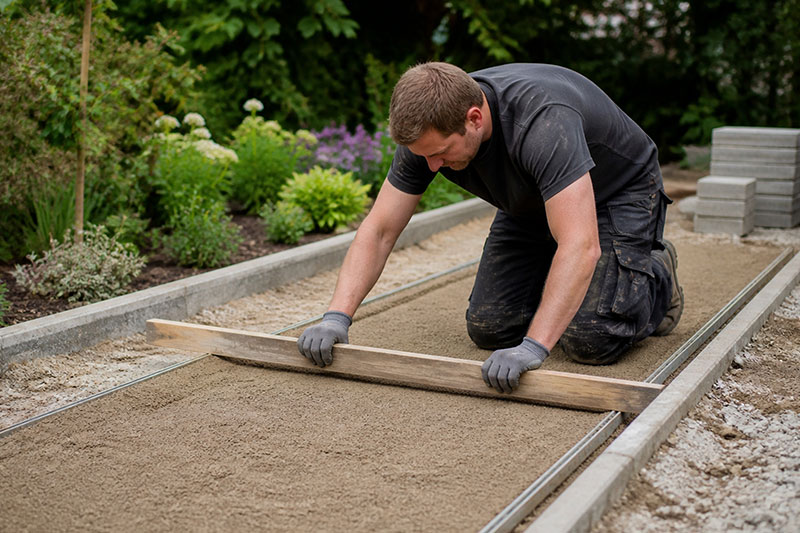
Paver and hardscape applications. Mason sand may be encountered in certain bedding, setting, or leveling-related roles depending on the paver system, though it isn't universally the recommended bedding sand for every installation. See our guide on what kind of sand to use under pavers for how that decision gets made.
Minor surface adjustments. Mason sand may be useful where relatively small adjustments and a workable material are appropriate.
Other project-specific leveling applications. Material selection should ultimately follow the requirements of whatever is being installed, rather than a generic assumption about what "leveling sand" means.
When Shouldn't Mason Sand Be Used for Leveling?
Mason sand shouldn't automatically be used to build substantial elevation, fill deep depressions, correct major grade differences, replace required structural or base material, correct an improperly prepared subgrade, solve drainage problems simply by adding sand, or serve as engineered or structural fill without an applicable specification calling for it.
This is where leveling and grading part ways as concepts.
Mason Sand for Leveling vs. Fill Dirt for Grading
Mason sand may be appropriate for certain relatively fine leveling or setting applications. Fill dirt is commonly used where a project involves building grade, changing elevation, filling larger volumes, or other earthwork where fill dirt is appropriate. Neither material should be assumed correct just because a project happens to be described as "leveling" or "grading" - the actual scope of the correction is what matters. See our guide to using fill dirt for grading and leveling for more on where that material comes into play.
How Deep Can Mason Sand Be Used for Leveling?
There's no universal depth here. Appropriate depth depends on the application, the role the sand is playing, the underlying surface or base, material requirements, and any installation specification that applies. For paver-specific applications, see our guide on how deep sand should be under pavers.
Regardless of application, increasing sand depth isn't automatically the correct way to compensate for major unevenness or elevation differences.
Mason Sand vs. Concrete Sand for Leveling
Mason sand is generally finer and smoother, while concrete sand is generally coarser, with different working characteristics between the two. Neither is universally "the better leveling sand" - selection depends on what's being leveled and what characteristics the project actually requires. See our comparison of mason sand vs. concrete sand for more detail.
Can Mason Sand Be Used to Level a Yard?
For minor surface adjustments, the correct material depends on what's being corrected and what the finished surface needs to support. For deep low spots, significant elevation changes, broad regrading, or drainage problems, mason sand shouldn't automatically be assumed to be the appropriate material - those situations may call for fill material, grading work, drainage correction, or another project-specific approach. See our guide on how to fill low areas in a yard for a closer look at that distinction.
Does Mason Sand Improve Drainage When Leveling?
Adding mason sand doesn't automatically solve a drainage problem. Drainage depends on existing grade, surface slope, underlying soil and material, drainage pathways, material characteristics, compaction, and overall site design. If water is collecting because of a broader drainage or grading problem, simply leveling the area with sand may not address the underlying cause.
How Much Mason Sand Do You Need for Leveling?
Once the material has been determined appropriate, calculate quantity from area x average required depth. For varying surfaces, take several representative depth measurements rather than automatically using the deepest point across the entire area. See our guide on how much sand you need for the full calculation, or use the Mason Sand Calculator directly.
Before Using Mason Sand for Leveling
- Identify what you're actually trying to level.
- Determine whether the project involves fine adjustment or significant elevation correction.
- Confirm the appropriate material.
- Check installation or project requirements.
- Determine required depth.
- Measure the area.
- Calculate quantity.
- Address underlying grading or drainage problems separately where necessary.
Frequently Asked Questions About Mason Sand for Leveling
Is mason sand good for leveling?
It can be appropriate for certain fine-leveling or setting applications because it is relatively fine and workable. Suitability depends on what is being leveled and the project requirements.
Can you use mason sand to level under pavers?
Mason sand may be used in certain paver or hardscape applications, but it isn't universally the correct material for every paver system. Follow the applicable material and installation requirements.
Can mason sand be used to level a yard?
It may be appropriate for certain minor surface adjustments, but significant low areas, elevation changes, grading work, or drainage problems may require different materials or approaches.
Can you use mason sand to fill low spots?
That depends on the depth and purpose of the correction. Shallow surface adjustment is different from filling a deeper depression or changing the grade of an area.
Does mason sand help with drainage?
Not automatically. Drainage depends on grade, slope, underlying materials, material characteristics, compaction, and the overall drainage system.
Need Mason Sand for a Leveling Project?
If mason sand is appropriate for your leveling project, use our Mason Sand Calculator to estimate the quantity you need, then explore mason sand for bulk delivery to your location.