
Best Aggregate for Florida Drainage Projects
The best aggregate for a Florida drainage project depends on the drainage system design, soil conditions, and what the stone needs to do.
Table of Contents
- TL;DR - Choosing Drainage Aggregate in Florida
- Why Aggregate Is Used for Drainage
- What Makes an Aggregate Suitable for Drainage?
- Is #57 Limestone Good for Florida Drainage?
- #57 Limestone vs. Recycled Concrete for Drainage
- Drainage Aggregate for French Drains and Drainage Trenches
- Aggregate for Florida Yard Drainage
- Florida Soil Conditions and Drainage Aggregate
- Aggregate, Fill Dirt, and Grading Solve Different Problems
- Separation and Filter Materials Matter
- How Much Drainage Aggregate Do You Need?
- Ordering Drainage Aggregate in Florida
- Frequently Asked Questions About Florida Drainage Aggregate
- Need Drainage Aggregate Delivered in Florida?
- Explore Related Guides
The best aggregate for a Florida drainage project depends on how the drainage system is designed and what the stone needs to do. Clean, open-graded aggregate that allows water to move through void spaces between particles is commonly used in drainage applications. #57 stone is a common option for many drainage projects, but the exact material, size, depth, and installation requirements should match the application and any project specifications.
Aggregate helps create a permeable drainage layer; it doesn't solve every drainage problem by itself. Grade, soil conditions, groundwater, drainage outlets, pipe design, and filter or separation materials can all affect whether the overall system works. For the broader, non-Florida-specific version of this topic, see our guide to choosing aggregate for drainage.
TL;DR - Choosing Drainage Aggregate in Florida
- Clean, open-graded aggregate is commonly used where water needs to move through a stone layer.
- #57 stone is a common drainage aggregate, but it isn't automatically the correct material for every project.
- Aggregate size and gradation matter because they affect void space and water movement.
- Florida drainage problems can involve grade, soil layers, groundwater, runoff, or inadequate outlets - not simply the absence of drainage rock.
- Aggregate around pipe may also require appropriate separation or filtration depending on system design and surrounding soil.
- Don't assume every product called "gravel," "limestone," or "#57" has identical characteristics.
- Engineered or permitted drainage systems should follow the specified materials and design.
Why Aggregate Is Used for Drainage
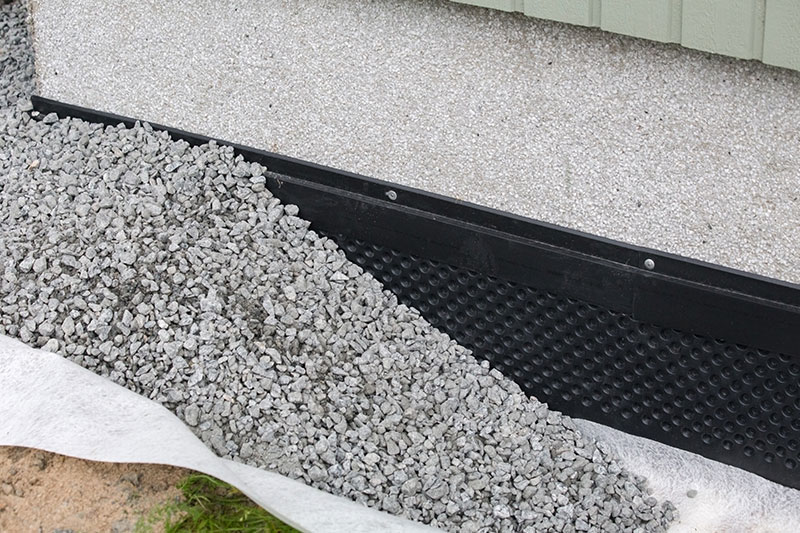
Aggregate can create interconnected void spaces, allow water to move through a drainage layer, surround certain drainage pipes, provide drainage beneath or alongside landscape and hardscape features, and help separate drainage zones from surrounding material when it's part of a properly designed system.
Aggregate doesn't "absorb" or make water disappear - it provides space and a pathway for water movement. Water still needs somewhere appropriate to go once it moves through the stone.
What Makes an Aggregate Suitable for Drainage?
Gradation - Gradation describes the distribution of particle sizes. Open-graded materials contain enough interconnected void space to facilitate water movement, while dense-graded materials contain a broader distribution of particle sizes that pack more tightly and are generally selected for different purposes. Not every material marketed as drainage stone is perfectly open-graded - it's worth confirming.
Fines - Excessive fine particles can occupy void spaces and reduce permeability compared with cleaner coarse aggregate, though there's no single fines percentage that applies to every drainage application.
Particle Size - Stone size affects void structure, handling, compatibility with pipe and system components, and the specific application. There's no single stone size that fits every drainage project.
Material Source - Limestone and other stone materials can be used depending on local supply and project requirements, but rock type alone doesn't determine whether an aggregate is appropriate for drainage. Gradation, particle size, void structure, and project requirements also matter.
Is #57 Limestone Good for Florida Drainage?
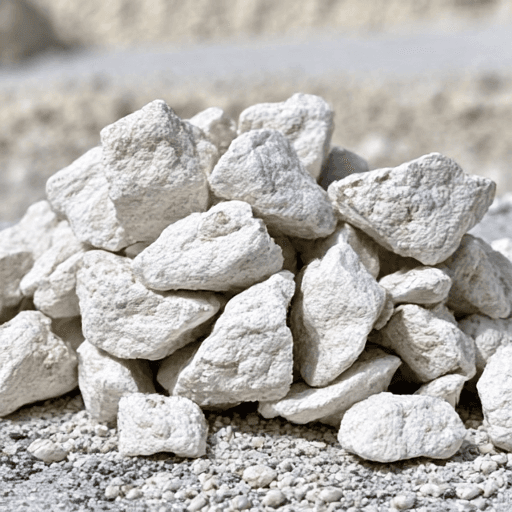
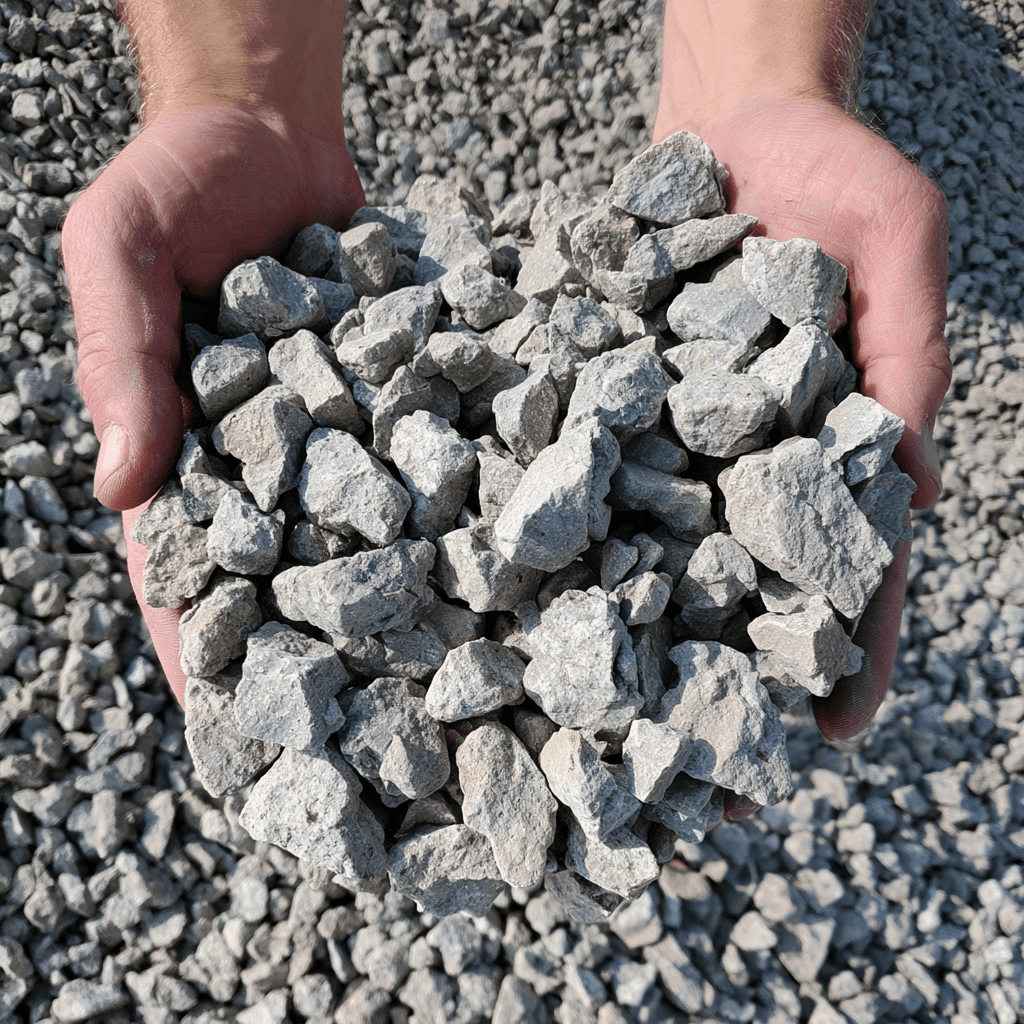
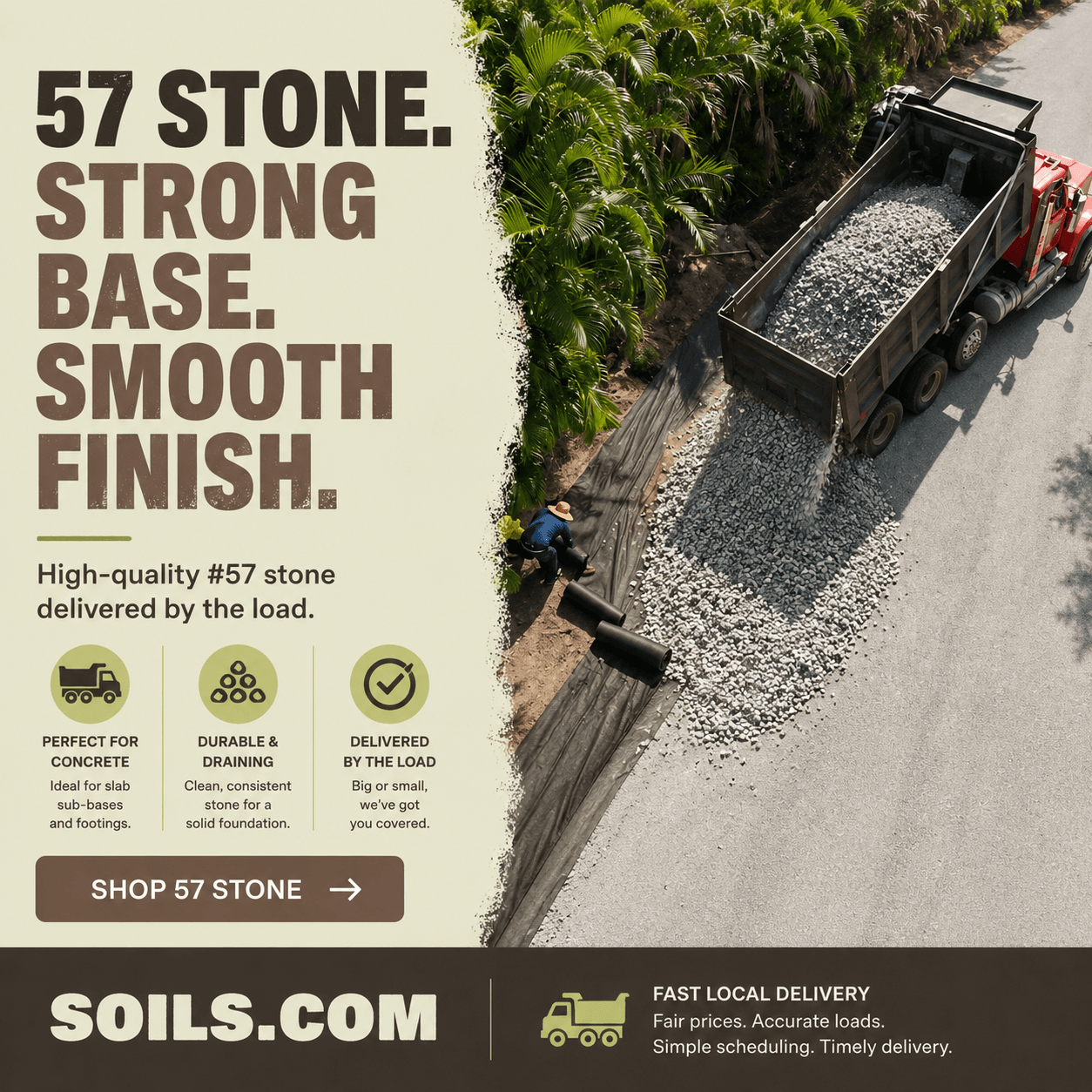
#57 limestone is commonly used for drainage applications because the nominal size range and relatively open structure of appropriately produced material can allow water to move through the stone layer. However, "#57" is a size and gradation designation - not a guarantee that every supplier's product has identical characteristics.
Potential applications include drainage trenches, areas around certain perforated drainage pipes, landscape drainage areas, drainage layers, and other projects where appropriately specified coarse aggregate is required. It's worth keeping the terminology straight here: "#57" describes a size and gradation designation, while "limestone" describes the source rock - the two aren't the same thing. See our guide to what #57 limestone is for more detail, or explore #57 Limestone / Limerock #57 Stone if it's the right fit for your project.
#57 Limestone vs. Recycled Concrete for Drainage
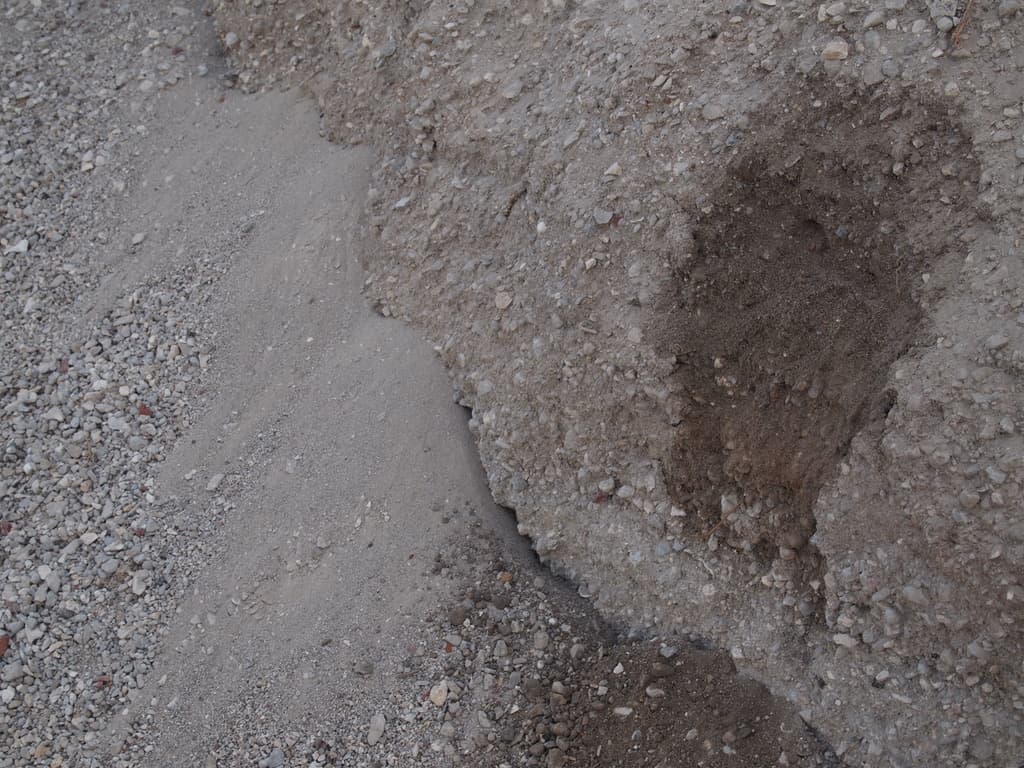
Both limestone aggregate and processed recycled concrete can be useful construction materials, but their suitability for drainage depends on the particular product and application. Recycled concrete products can vary in gradation and fines, and a material that's appropriate as a compactable base isn't automatically the best choice where high permeability is the primary objective. Evaluate the actual supplied material rather than choosing based solely on "limestone" versus "recycled." See our full comparison of #57 limestone vs. recycled concrete for more.
Drainage Aggregate for French Drains and Drainage Trenches
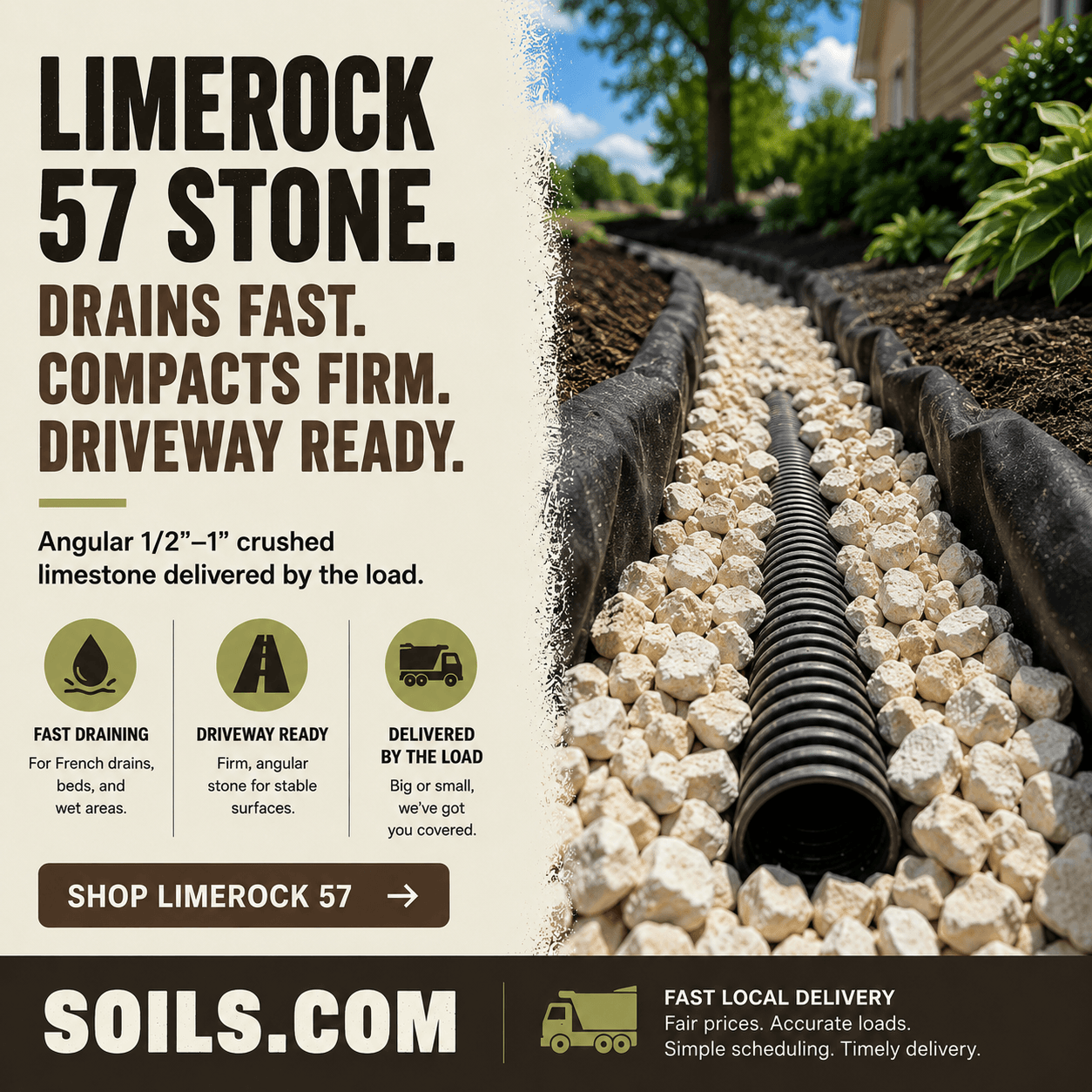
A drainage system may include appropriate drainage aggregate, perforated drainage pipe where the design calls for it, separation or filter material where appropriate, suitable grade, and a viable outlet or discharge strategy. The aggregate provides a permeable zone around the drainage system, but it doesn't compensate for a pipe installed at an inappropriate elevation, an inadequate outlet, or a drainage system that isn't suited to the actual water problem on-site. Trench width, stone depth, pipe slope, and fabric specifications all vary by system design rather than following one universal figure.
Aggregate for Florida Yard Drainage
Homeowner drainage projects can involve drainage trenches, areas surrounding certain drain systems, drainage layers, landscape drainage features, and managing water around hardscaping where the design calls for aggregate. It's worth distinguishing aggregate selection - what stone to use - from drainage diagnosis - whether the underlying problem is even one that aggregate addresses. See our guide on choosing materials for Florida yard drainage for the broader question of whether your project needs aggregate, fill dirt, grading, or pipe work.
Florida Soil Conditions and Drainage Aggregate
Sandy surface soil can allow relatively rapid infiltration but doesn't guarantee good site drainage overall. Finer or compacted layers below the surface can affect water movement, high groundwater can affect some Florida sites, and low grades or inadequate outlets can cause standing water regardless of what the surface soil looks like. Disturbed or imported soils on developed properties can also behave differently from native soil. See our guide to Florida soil types and what they mean for landscaping for more on that variation.
Aggregate, Fill Dirt, and Grading Solve Different Problems
Aggregate provides a permeable layer or path where appropriate. Fill dirt changes grade and elevation. Topsoil provides a growing layer. These materials can appear within the same overall landscaping project, but they perform different jobs - a low yard doesn't automatically need drainage rock. If the underlying issue is improper elevation, grading may be the actual problem to solve first. See our guide to fill dirt for Florida grading and sitework for that side of the equation.
Separation and Filter Materials Matter
When coarse drainage aggregate is placed adjacent to finer soil, migration of fine particles into the aggregate can reduce void space over time. Depending on the system design, a properly selected geotextile or graded filter layer may be used to separate materials while still allowing water movement.
Whether separation or filtration is needed - and what material should be used - depends on the surrounding soil and drainage-system design. It's not a case of landscape fabric always or never belonging in the installation; that call depends on the specific project.
How Much Drainage Aggregate Do You Need?
For simple rectangular areas, calculate volume using:
Length (ft) x Width (ft) x Depth (inches) / 324 = Cubic Yards
For trenches, irregular drainage zones, and changing depths, calculations may need to be broken into sections rather than treated as one uniform area.
Keep in mind that stone density varies, so cubic yards and tons aren't universally interchangeable - converting volume to weight depends on the specific supplier and product, and there's no universal tons-per-cubic-yard figure to rely on. See our guide on how much #57 limestone you need for the full methodology.
Ordering Drainage Aggregate in Florida
Before ordering, identify the drainage application, confirm the aggregate specification if one exists, calculate the required volume, and confirm what's actually being supplied. Enter your delivery ZIP code for availability and pricing, and plan your dump location and truck access ahead of time. See our guide on bulk landscape material delivery in Florida for more on that process.
Soils.com provides bulk aggregate delivery throughout Florida. Visit our Florida delivery locations to find your area and check locally available materials and delivered pricing.
Frequently Asked Questions About Florida Drainage Aggregate
What is the best aggregate for drainage in Florida?
Clean, appropriately graded aggregate that maintains interconnected void space is commonly used for drainage. #57 stone is a common option, but the best material depends on the drainage system, surrounding soil, and project specifications.
Is #57 limestone good for drainage?
#57 limestone is commonly used in drainage applications because appropriately produced material can provide void space for water movement. Confirm the actual product characteristics and project requirements rather than relying only on the #57 label.
Can I use gravel for a French drain in Florida?
Some aggregate products commonly described as gravel or drainage stone may be suitable, but "gravel" is a broad term. The aggregate should be selected according to the drainage-system design and required gradation.
Does drainage rock fix standing water in a Florida yard?
Not necessarily. Standing water may result from grade, compacted or layered soil, groundwater, runoff, or inadequate drainage outlets. Aggregate is one component of some drainage solutions, not a universal fix.
How much drainage stone do I need?
Quantity depends on the dimensions of the drainage zone and required stone depth. Simple areas can be calculated by volume, while trenches and irregular systems may need to be divided into sections.
Need Drainage Aggregate Delivered in Florida?
Once you've identified the drainage application and aggregate your project requires, calculate the material quantity and check local availability. Soils.com provides bulk aggregate delivery throughout Florida, including #57 limestone and other materials for drainage, landscaping, and sitework applications.