


What Is 57 Limestone? Uses & Applications
#57 limestone is a crushed limestone aggregate commonly used in drainage, construction, hardscaping, driveways, and sitework applications where its size and material characteristics are appropriate.
Table of Contents
- TL;DR - Understanding #57 Limestone
- What Does "57" Mean in 57 Limestone?
- What Is 57 Limestone Made From?
- What Does 57 Limestone Look Like?
- What Is 57 Limestone Used For?
- Is 57 Limestone Good for Drainage?
- Is 57 Limestone Good for a Driveway Base?
- 57 Limestone vs. Recycled Concrete
- How Much 57 Limestone Do You Need?
- Is 57 Limestone the Same as Gravel?
- How to Choose 57 Limestone for a Project
- Frequently Asked Questions About 57 Limestone
- Need #57 Limestone for Your Project?
#57 limestone is a crushed limestone aggregate commonly used in drainage, construction, hardscaping, driveways, and sitework applications where its size and material characteristics are appropriate. The "57" refers to an aggregate size or gradation designation rather than the stone being exactly 57 millimeters or another single dimension.
Actual gradation, processing, terminology, and product characteristics can vary by supplier, region, and specification, so the supplied material should always be confirmed against your project's requirements. For a broader look at the category this material belongs to, see our guide to what aggregates are and how they're used.
TL;DR - Understanding #57 Limestone
- #57 limestone is a crushed limestone aggregate used in many construction, drainage, hardscape, driveway, and sitework applications.
- "57" is a size/gradation designation, not a measurement stating that every stone has one exact dimension.
- Actual product gradation and characteristics can vary by supplier and specification.
- #57 limestone may be useful for drainage and other applications where its characteristics meet project requirements.
- It shouldn't automatically be treated as a compacted base, bedding material, or universal aggregate for every project.
- Calculate quantity only after determining the required area and depth.
What Does "57" Mean in 57 Limestone?
"#57" is an aggregate sizing or classification designation - it does not mean each stone is exactly the same size. Aggregate products sold under this designation contain particles within an applicable gradation or range, and that range can vary somewhat by supplier and specification. When exact gradation matters for a project, check the supplier's actual product data or the governing specification rather than relying on the "#57" label alone.
What Is 57 Limestone Made From?
#57 limestone specifically is produced from limestone that's been crushed and processed or sized into the applicable aggregate product. It's worth keeping two ideas separate here: "#57" describes an aggregate size or classification, while "limestone" describes the source rock or material. That means "#57 stone" isn't necessarily synonymous with "#57 limestone" everywhere - the same size designation can be applied to aggregate produced from other source rock depending on the region and supplier.
What Does 57 Limestone Look Like?
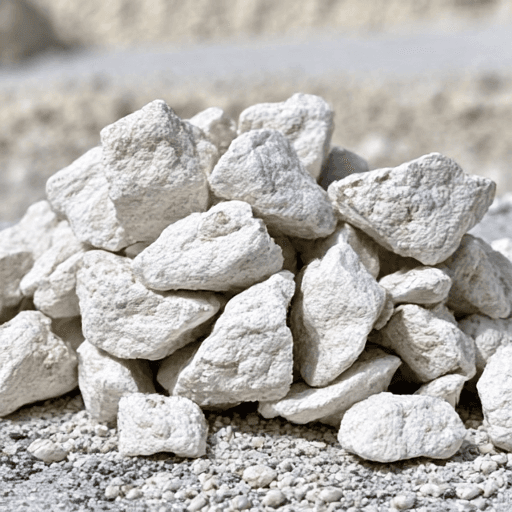
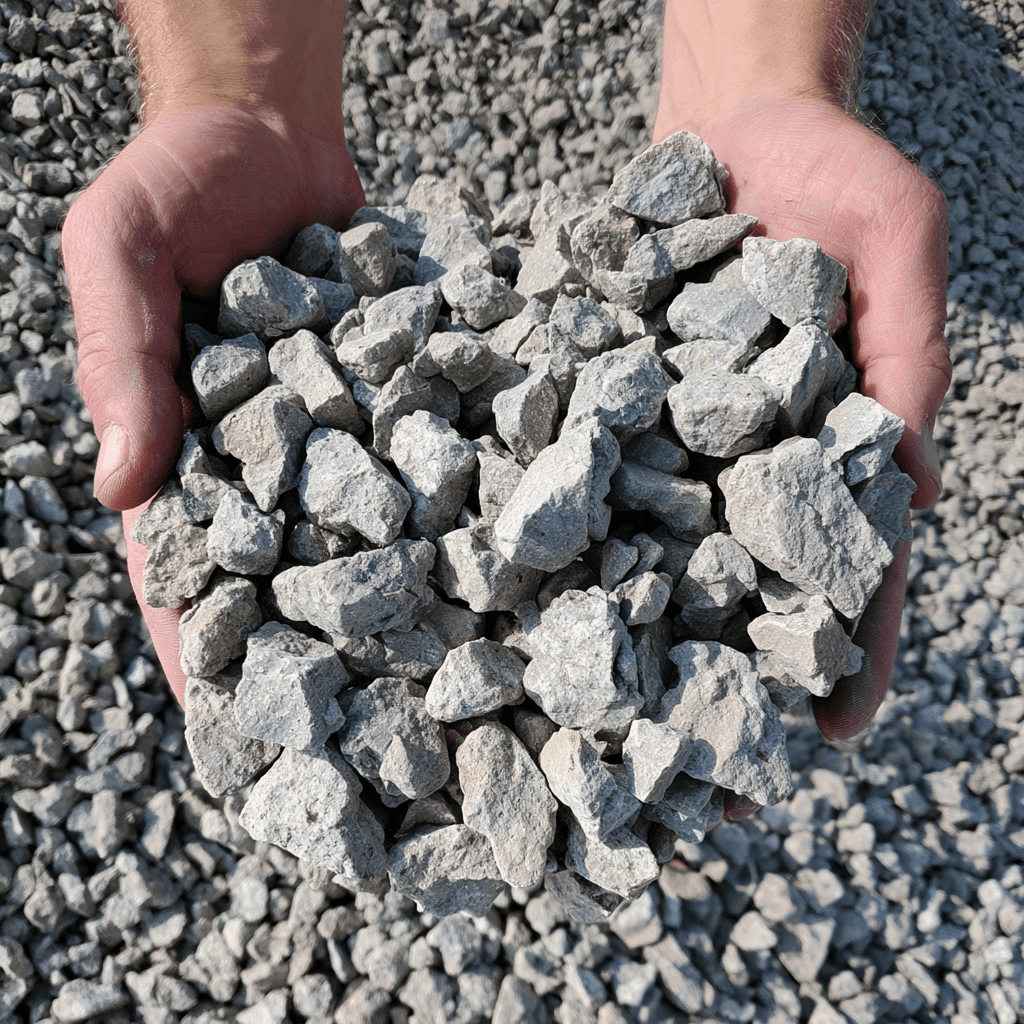
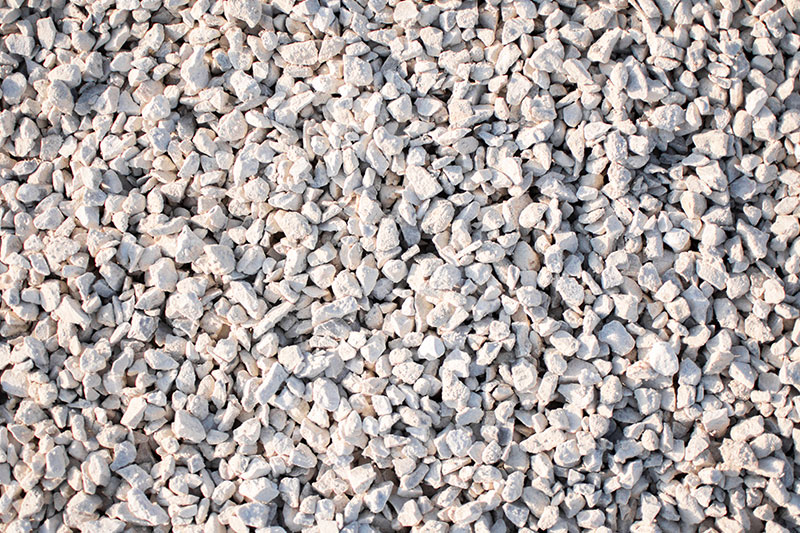
Generally, #57 limestone is a crushed stone with irregular, angular pieces and relatively consistent sizing compared with more broadly graded materials. Natural limestone coloration can vary by source, and actual appearance and cleanliness depend on the specific product and supplier.
What Is 57 Limestone Used For?
Drainage Applications
#57 limestone is commonly selected for certain drainage applications where the aggregate's gradation and resulting void spaces are appropriate for water movement through the system. That doesn't mean #57 limestone is always the best drainage stone for every situation; suitability depends on the drainage system and project requirements.
Driveways
#57 limestone may be used in driveway construction depending on the specific layer or system involved. A material suitable for a drainage layer, surface layer, or other driveway application isn't automatically the same material specified for a compacted driveway base. A material suitable for a drainage layer, surface layer, or other driveway application isn't automatically the same material specified for a compacted driveway base.
Pavers and Hardscaping
#57 limestone may be used in certain hardscape systems, drainage layers, base-related applications, or surrounding sitework, depending on the specification. It isn't universally paver bedding, paver base, or joint material - those are different functions that may call for different products.
Construction and Sitework
Possible applications include drainage, site preparation, backfill applications where specified, aggregate layers, utility and sitework applications, and general construction uses - with suitability depending on the specific project.
Landscaping
#57 limestone can also show up in paths, landscape drainage, stone areas, and other functional or decorative applications, though appearance varies by source and shouldn't be oversold as a decorative product.
Is 57 Limestone Good for Drainage?
#57 limestone is commonly selected for certain drainage applications because appropriately graded stone can maintain void spaces that allow water to move through the material. But drainage performance depends on the entire system - gradation, fines content, surrounding soil, geotextile or filter requirements where applicable, slope and grade, the drainage outlet, and installation all play a role.
Using #57 limestone doesn't by itself fix an underlying drainage problem. See our guide on choosing the best aggregate for drainage for more on how material selection fits into a broader drainage plan.
Is 57 Limestone Good for a Driveway Base?
It depends on the driveway design and the role the aggregate is intended to perform. #57 limestone and dense-graded base aggregates aren't automatically interchangeable - some systems may have an appropriate role for #57 stone, while others call for aggregate containing a broader range of particle sizes and fines, or another specified base material entirely. See our guide to choosing aggregate for a driveway base for more detail.
57 Limestone vs. Recycled Concrete
Both #57 limestone and recycled concrete aggregate may appear as options for construction and sitework projects, but they differ in source material and potentially in processing, gradation, consistency, availability, performance characteristics, specification acceptance, and cost. Neither is universally the better option - the right choice depends on the project. See our comparison of 57 limestone vs. recycled concrete for a closer look.
How Much 57 Limestone Do You Need?
The basic workflow is the same as with other bulk materials: area plus required depth gives you volume, which then translates into an appropriate ordering unit. There's no universal tons-per-cubic-yard conversion to rely on here - aggregate bulk density can vary based on the material, gradation, moisture, and compaction or placement condition, as well as supplier-specific product characteristics. See our guide on how much 57 limestone you need for the full calculation methodology.
Is 57 Limestone the Same as Gravel?
People often use "gravel," "rock," "stone," and "aggregate" loosely and somewhat interchangeably in everyday conversation. Technically, though, these terms describe different things: aggregate is the broad material category, limestone is the source rock or material, "#57" is an aggregate size or classification designation, and "gravel" is terminology that gets used differently across consumer and supplier contexts. Understanding that distinction helps you know what you're actually ordering, even if the terminology isn't always used precisely everywhere you encounter it.
How to Choose 57 Limestone for a Project
- Identify the application.
- Determine what function the aggregate needs to perform.
- Confirm that #57 limestone is appropriate.
- Check required gradation or specification where applicable.
- Determine required depth.
- Measure the project area.
- Calculate quantity.
- Confirm the supplier's product characteristics before ordering.
Frequently Asked Questions About 57 Limestone
What is #57 limestone?
#57 limestone is a crushed limestone aggregate produced to a commonly referenced size or gradation classification and used in various drainage, construction, hardscape, driveway, and sitework applications.
What does 57 mean in limestone?
The "57" refers to an aggregate size or classification designation. It doesn't mean every piece of stone measures exactly 57 millimeters or another single dimension.
Is 57 limestone good for drainage?
It can be appropriate for many drainage applications, but suitability depends on gradation, drainage design, surrounding materials, and project requirements.
Can 57 limestone be used for driveways?
It can have roles in certain driveway systems, but it shouldn't automatically be assumed to be the correct compacted base material for every driveway.
How much 57 limestone do I need?
Quantity depends on project area and required depth. Calculate the volume first, then determine the appropriate ordering quantity for the specific product - see our guide on how much 57 limestone you need for the full walkthrough.
Need #57 Limestone for Your Project?
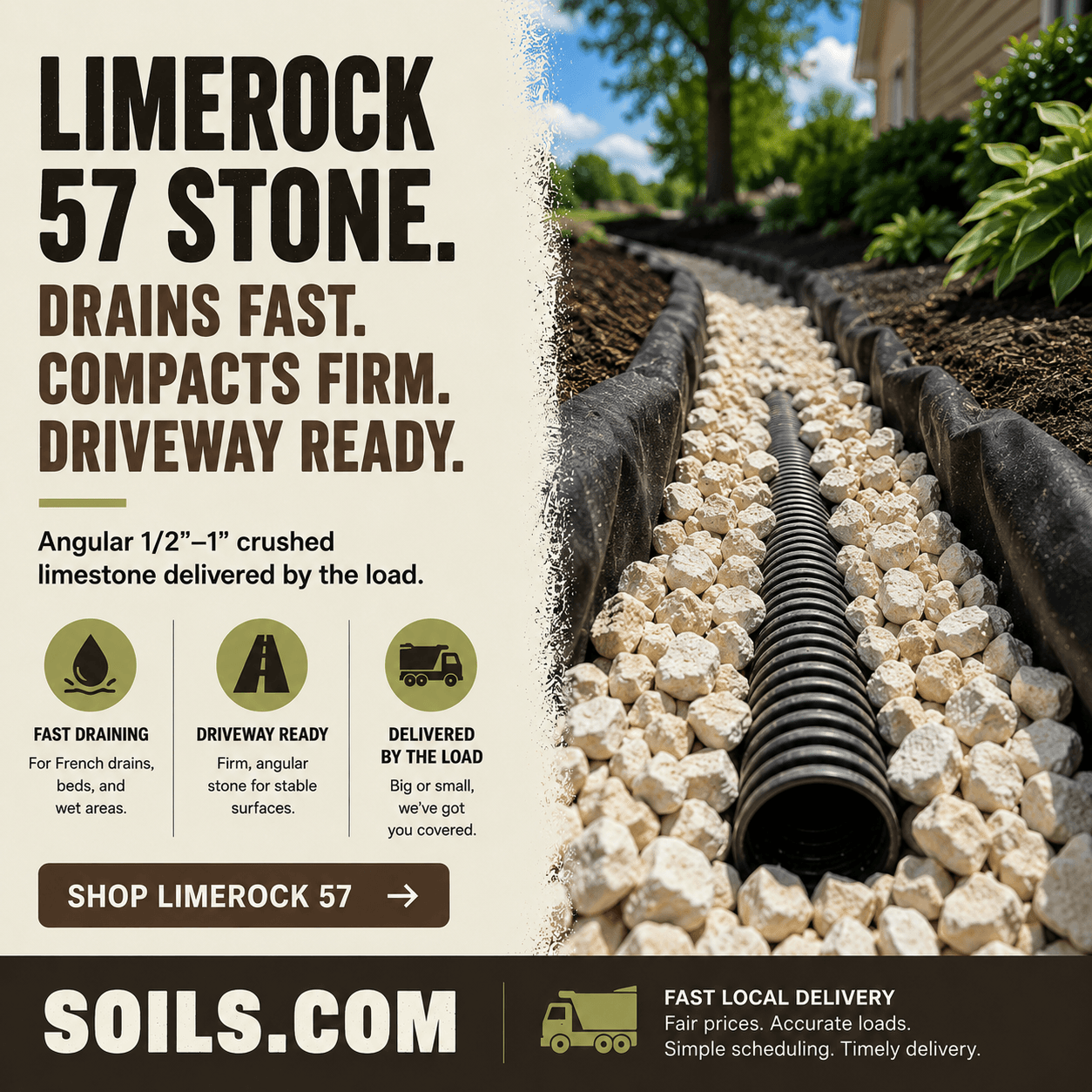
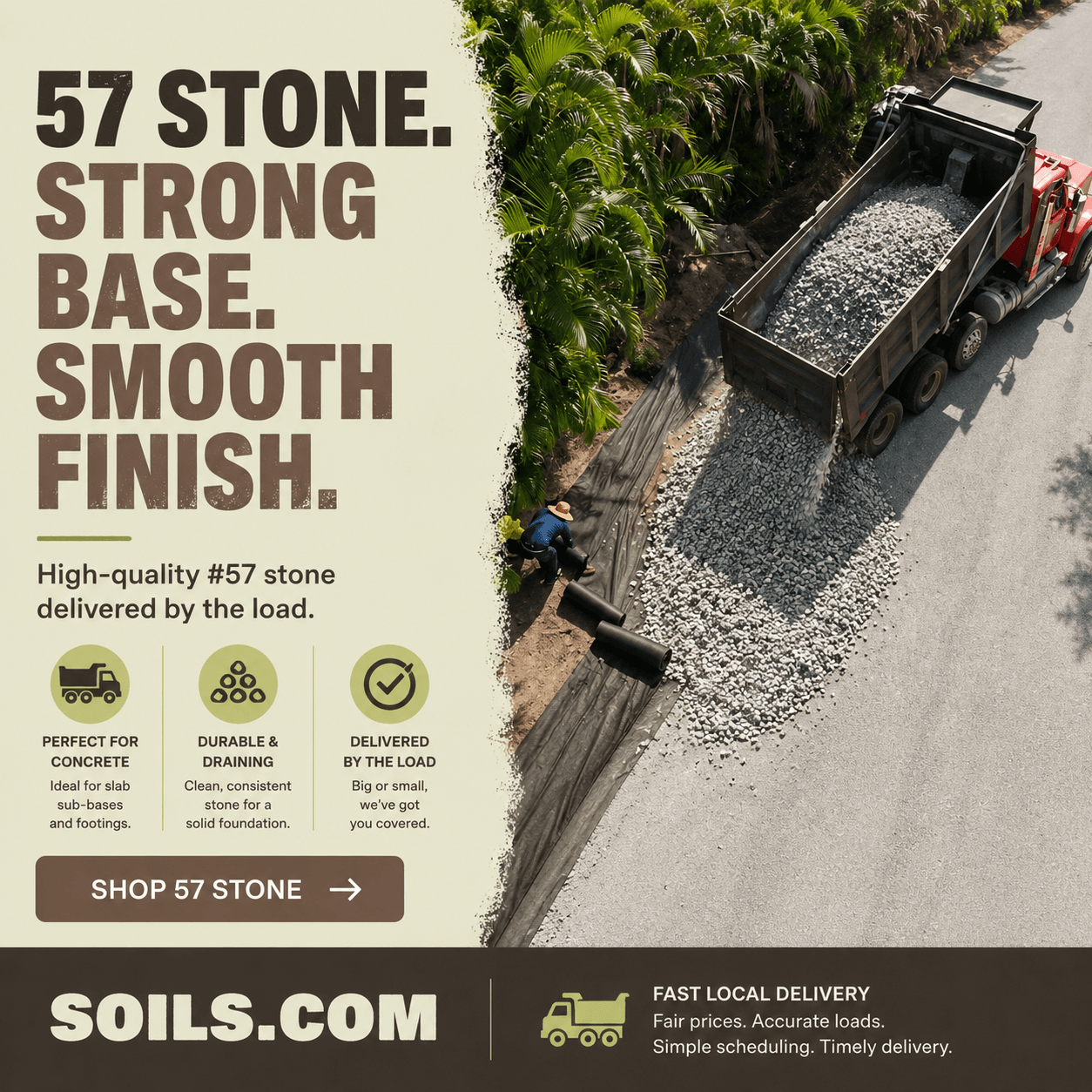
If #57 limestone is appropriate for your project, confirm the area and required depth to determine how much material you need. Then explore our #57 Limestone / Limerock 57 Stone for bulk delivery to your location.