

57 Limestone vs. Recycled Concrete: What's the Difference?
#57 limestone is a crushed aggregate produced from limestone, while recycled concrete aggregate is produced by crushing and processing recovered concrete. Both can be used in construction, drainage, driveway, and sitework applications, but they aren't automatically interchangeable.
Table of Contents
- TL;DR - 57 Limestone vs. Recycled Concrete
- What Is 57 Limestone?
- What Is Recycled Concrete Aggregate?
- 57 Limestone vs. Recycled Concrete: Key Differences
- Which Is Better for Drainage?
- Which Is Better for a Driveway Base?
- 57 Limestone vs. Recycled Concrete for Construction and Sitework
- Does Recycled Concrete Perform Differently From Limestone?
- Is Recycled Concrete Cheaper Than 57 Limestone?
- Is Recycled Concrete More Environmentally Friendly?
- Can Recycled Concrete Replace 57 Limestone?
- How to Choose Between 57 Limestone and Recycled Concrete
- Frequently Asked Questions About 57 Limestone vs. Recycled Concrete
- Need Aggregate for Your Project?
#57 limestone is a crushed aggregate produced from limestone, while recycled concrete aggregate is produced by crushing and processing recovered concrete. Both can be used in construction, drainage, driveway, and sitework applications, but they aren't automatically interchangeable. The right choice depends on the material's gradation and characteristics, the function it needs to perform, project specifications, availability, and cost.
The useful comparison here is between the actual products and your project's requirements - not simply "limestone vs. recycled concrete" as broad material labels.
TL;DR - 57 Limestone vs. Recycled Concrete
- #57 limestone is produced from crushed limestone; recycled concrete aggregate is produced from processed recovered concrete.
- Both are aggregate materials, but source material alone doesn't determine suitability.
- Gradation, fines content, processing, consistency, and other characteristics can differ between products.
- Either material may be appropriate for certain construction, driveway, drainage, or sitework applications depending on specifications.
- Recycled concrete shouldn't automatically be considered a direct substitute for #57 limestone.
- Compare the actual supplied products, project requirements, availability, and delivered cost before choosing.
What Is 57 Limestone?
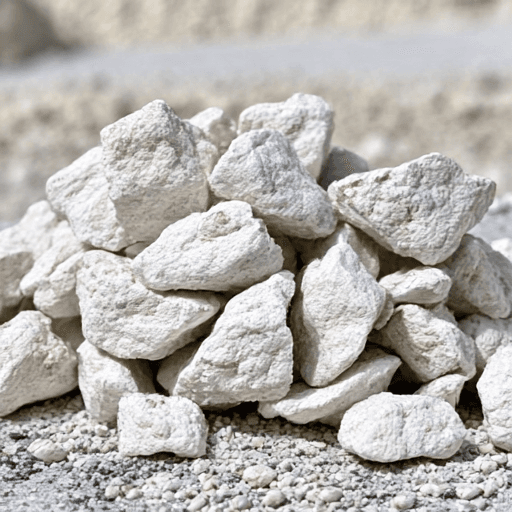
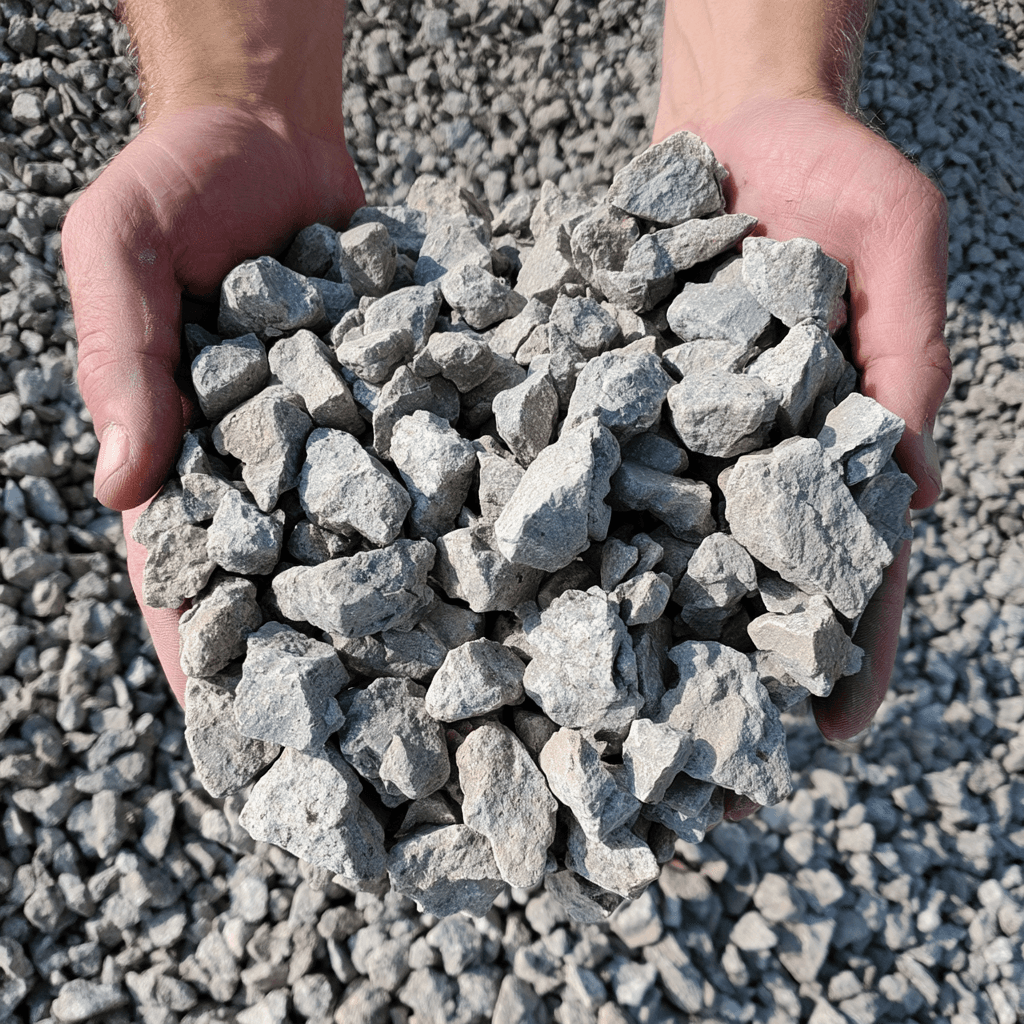
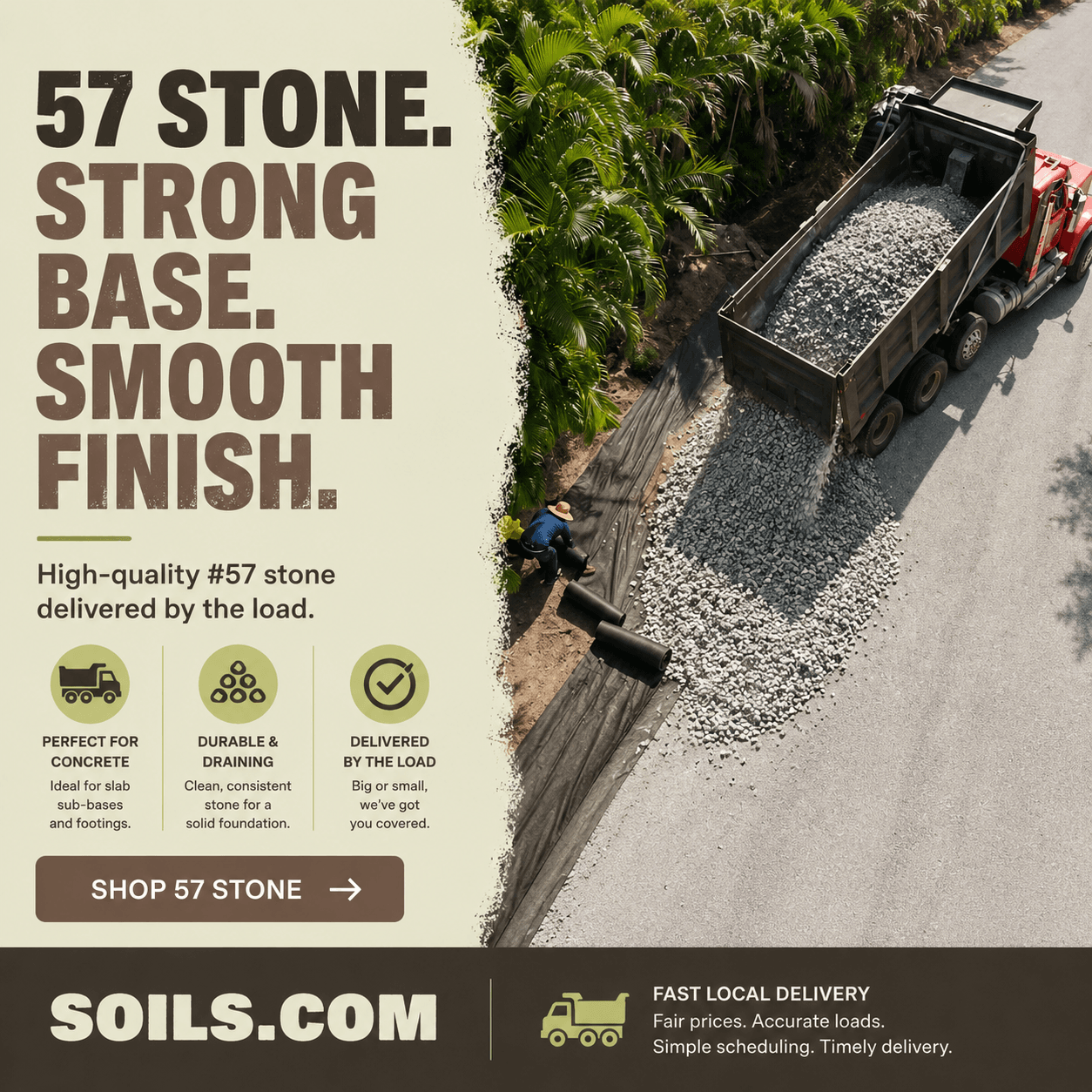
#57 limestone is a crushed limestone aggregate. "#57" refers to a sizing or classification designation rather than one exact dimension, and actual gradation and product characteristics can vary by supplier. It's commonly encountered in drainage, construction, hardscaping, driveway, and sitework applications. See our full guide to what #57 limestone is and how it's used for more detail.
What Is Recycled Concrete Aggregate?
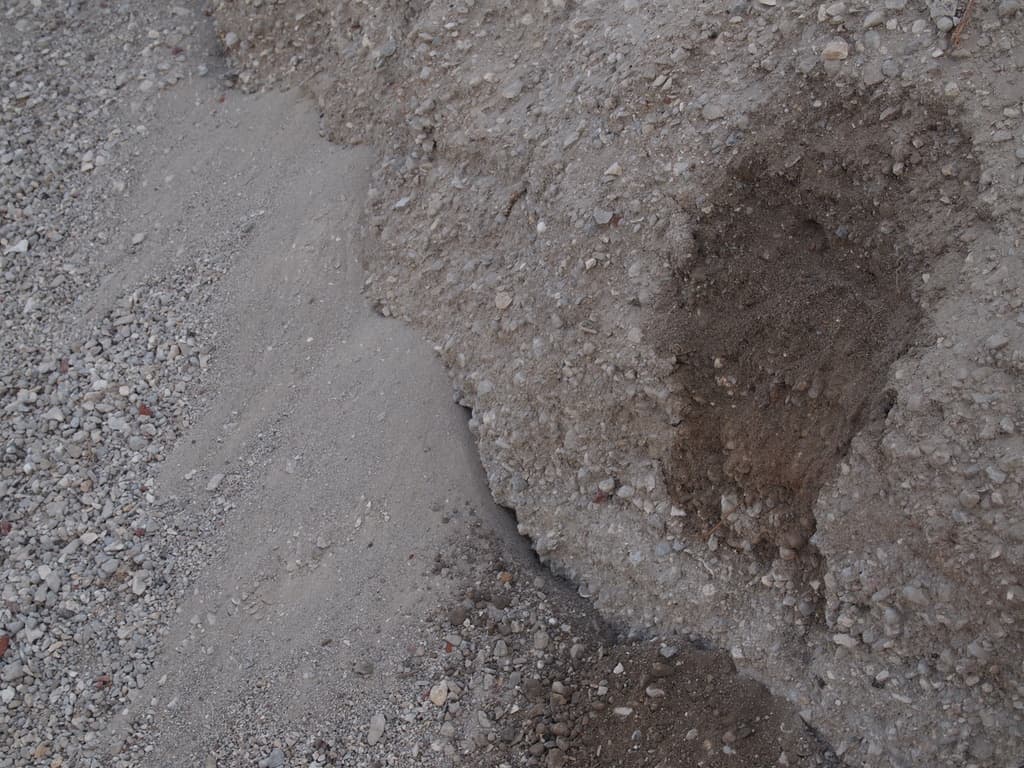
Recycled concrete aggregate - often abbreviated RCA - is produced by processing concrete recovered from demolition, construction, or other concrete waste streams. Depending on the product and process, the material may be crushed, screened, sized or graded, and processed to remove unwanted materials.
Not all RCA is processed identically, and composition, cleanliness, gradation, and performance can vary between products and processors. It's more accurate - and more useful for project planning - to think of RCA as a category of processed material rather than simply "old concrete crushed into gravel."
57 Limestone vs. Recycled Concrete: Key Differences
| Factor | #57 Limestone | Recycled Concrete Aggregate |
|---|---|---|
| Source | Limestone | Processed recovered concrete |
| Material type | Virgin/mined aggregate | Recycled aggregate |
| Gradation | Depends on supplied #57 product/specification | Depends on RCA product and processing |
| Appearance | Typically reflects source limestone | Can vary based on source concrete/material |
| Consistency | Product-specific | Product/process-specific |
| Applications | Drainage, construction, hardscape, sitework, driveway uses where appropriate | Construction, base, fill, driveway/sitework and other approved uses depending on product |
| Specification acceptance | Must meet applicable requirements | Must meet applicable requirements; recycled material may face additional restrictions in some projects |
| Cost | Varies by market and delivery | Varies by market and delivery; not automatically cheaper |
The sections below unpack what these differences actually mean for specific applications, rather than declaring a universal winner.
Which Is Better for Drainage?
Neither material is universally better for drainage based on source material alone. Drainage performance depends heavily on gradation, fines content, void structure, surrounding materials, drainage-system design, installation, and project specifications. A particular #57 limestone product may be appropriate for a drainage application, while a particular recycled-concrete product may or may not be, depending on its gradation and characteristics. See our guide on choosing the best aggregate for drainage for more on how that decision is made.
Which Is Better for a Driveway Base?
Driveway-base performance isn't determined simply by whether the material is limestone or recycled concrete. Gradation, fines content, compaction characteristics, the layer's function, subgrade and site conditions, expected loads, and overall driveway design all matter more than the source material alone.
#57 limestone shouldn't automatically be treated as synonymous with dense-graded driveway base, and recycled concrete shouldn't automatically be assumed to have more suitable compaction characteristics or perform better in every base application. See our guide to choosing aggregate for a driveway base for a closer look at that decision.
57 Limestone vs. Recycled Concrete for Construction and Sitework
Both materials may show up in site access, aggregate layers, backfill where appropriate, general sitework, construction applications, and stabilization or base-related applications where specified.
Project specifications can determine whether virgin aggregate is required, whether recycled aggregate is allowed, whether a specific gradation is required, or whether the material must meet another standard. A recycled product being available doesn't mean it's automatically permitted as a substitute for specified virgin stone - that's a project-specific determination, not a general rule.
Does Recycled Concrete Perform Differently From Limestone?
It can, because these materials differ in source material and processing, but performance should be evaluated based on the actual products and intended application rather than broad assumptions. Potential differences may include gradation, particle characteristics, fines content, moisture behavior, consistency, compaction behavior, contaminant or foreign-material limits, and specification acceptance. Hard performance comparisons should be tied to a particular tested product and specification rather than a general statement about the two categories.
Is Recycled Concrete Cheaper Than 57 Limestone?
It may be, but not always. Cost depends on local material availability, quarry or source proximity, recycling facility proximity, processing, quantity, transportation, delivery distance, and market conditions. For bulk materials, delivered cost often matters more than nominal material price - the same product can cost meaningfully more or less depending on how far it has to travel to your site.
Is Recycled Concrete More Environmentally Friendly?
Using recycled concrete aggregate can provide an outlet for recovered concrete and may reduce the amount of virgin aggregate required for a project, which can offer environmental benefits in appropriate applications. That said, environmental impact depends on factors such as processing, transportation distance, material sourcing, and the specific project - it isn't automatically the greener option in every case, since transportation distance alone can meaningfully change the comparison.
Can Recycled Concrete Replace 57 Limestone?
Sometimes, but not automatically. A substitution depends on what function the specified #57 limestone is performing, the gradation and characteristics of the proposed RCA, project requirements and specifications, whether recycled aggregate is permitted, and site or application conditions.
Matching a general application doesn't mean two aggregate products are equivalent.
How to Choose Between 57 Limestone and Recycled Concrete
- Identify the application.
- Determine the function the aggregate needs to perform.
- Check required gradation and material specifications.
- Determine whether recycled aggregate is permitted.
- Compare the actual available products.
- Consider site and installation conditions.
- Compare availability and delivered cost.
- Calculate the required quantity.
- Confirm product suitability before ordering.
If #57 limestone turns out to be the right fit, see our guide on how much #57 limestone you need for the next step.
Frequently Asked Questions About 57 Limestone vs. Recycled Concrete
Is recycled concrete the same as 57 limestone?
No. #57 limestone is an aggregate produced from limestone, while recycled concrete aggregate is produced from processed recovered concrete. Their gradation and characteristics also depend on the specific products.
Is 57 limestone or recycled concrete better for drainage?
Neither is universally better based on material name alone. Drainage suitability depends on gradation, fines, drainage-system design, surrounding materials, and project requirements.
Is recycled concrete good for a driveway base?
It can be suitable in some driveway-base applications, depending on the RCA product, gradation, site conditions, driveway design, and project requirements.
Is recycled concrete cheaper than limestone?
It can be, but not always. Material availability, processing, quantity, transportation, delivery distance, and local market conditions all affect delivered cost.
Can recycled concrete replace 57 limestone?
Sometimes, but it shouldn't be treated as an automatic substitution. Compare the actual material characteristics and confirm that recycled aggregate meets the project's requirements.
Need Aggregate for Your Project?
Once you've determined which aggregate fits your project requirements, compare available materials and calculate the quantity you'll need. If #57 limestone is the right fit, explore our #57 Limestone / Limerock 57 Stone for bulk delivery to your location.