




Best Aggregate for Driveway Base
The best aggregate for a driveway base depends on the driveway design, subgrade conditions, expected loads, and project requirements. Base materials are typically selected for characteristics such as gradation, stability, and compaction rather than simply by a stone name or size.
Table of Contents
- TL;DR - Choosing Aggregate for a Driveway Base
- What Does the Driveway Base Actually Do?
- What Makes an Aggregate Good for Driveway Base?
- What Size Gravel Is Best for a Driveway Base?
- Dense-Graded Aggregate vs. Open-Graded Stone
- Is 57 Limestone Good for a Driveway Base?
- Is Recycled Concrete Good for Driveway Base?
- 57 Limestone vs. Recycled Concrete for Driveway Base
- Driveway Base vs. Driveway Surface Gravel
- How Deep Should a Driveway Base Be?
- Does Driveway Base Need to Be Compacted?
- Does Driveway Base Help With Drainage?
- How to Choose Aggregate for Your Driveway Base
- Frequently Asked Questions About Driveway Base Aggregate
- Need Aggregate for a Driveway Project?
The best aggregate for a driveway base depends on the driveway design, subgrade conditions, expected loads, and project requirements. Base materials are typically selected for characteristics such as gradation, stability, and compaction rather than simply by a stone name or size. Dense-graded aggregates and other materials designed for base applications are commonly used, while #57 limestone may serve different roles depending on the driveway system.
Choose driveway base aggregate by the function the layer needs to perform and the actual material specification - not simply by whether a product is called gravel, limestone, or crushed concrete. The driveway surface is only part of the system; the underlying base can affect stability and long-term performance, and "gravel" alone is too broad a specification to determine what that base actually needs. For a broader look at the aggregate category, see our guide to what aggregates are and how they're used.
TL;DR - Choosing Aggregate for a Driveway Base
- The best driveway-base aggregate depends on the driveway system, subgrade, expected loads, and project requirements.
- Base aggregate is generally selected to create a stable supporting layer.
- Gradation and compaction characteristics are important when choosing base material.
- Materials containing a range of particle sizes and fines may be used where dense compaction is required, but this isn't a universal specification.
- #57 limestone shouldn't automatically be treated as synonymous with dense-graded driveway base.
- Recycled concrete aggregate can be appropriate for some driveway-base applications when the actual product meets project requirements.
- Drainage aggregate and driveway-base aggregate may perform different functions and aren't automatically interchangeable.
What Does the Driveway Base Actually Do?
Depending on the driveway design, the base may help provide a stable supporting layer, distribute loads, create a suitable foundation for overlying material, reduce movement or deformation, and provide appropriate structural support for the driveway system as a whole.
That said, a proper base doesn't guarantee against potholes, and a specific aggregate depth doesn't automatically prevent settling on its own - base performance depends on the entire system, including the subgrade beneath it. The driveway base works as part of the overall pavement or driveway system rather than as an isolated layer.
What Makes an Aggregate Good for Driveway Base?
Gradation - Gradation describes the distribution of particle sizes. A range of particle sizes can allow smaller particles to occupy spaces between larger ones, contributing to a denser aggregate structure when that's what the base specification requires. That doesn't mean every good base always contains fines - it depends on the specific system.
Compaction Characteristics - Some aggregates are selected specifically because their gradation and material characteristics allow them to form a stable compacted layer. But compaction isn't determined by material name alone - moisture, equipment, lift thickness, subgrade, and specification all play a role.
Particle Characteristics - Shape, texture, and material characteristics can affect aggregate behavior, though it's an oversimplification to say angular stone always compacts better than rounded gravel - actual performance depends on the specific materials involved.
Stability - The material needs to remain suitable for the loads and function expected of the base layer.
Drainage - Drainage still matters, but a driveway base isn't simply a drainage layer. Water management should be considered as part of the complete driveway design.
What Size Gravel Is Best for a Driveway Base?
There's no single universal stone size here. Driveway base is generally specified by a gradation or material specification rather than one individual stone size, and a base product may contain multiple particle sizes rather than uniformly sized stone.
"What size gravel should I use?" isn't quite the right question - the better one is "what aggregate gradation does this driveway base require?"
Dense-Graded Aggregate vs. Open-Graded Stone
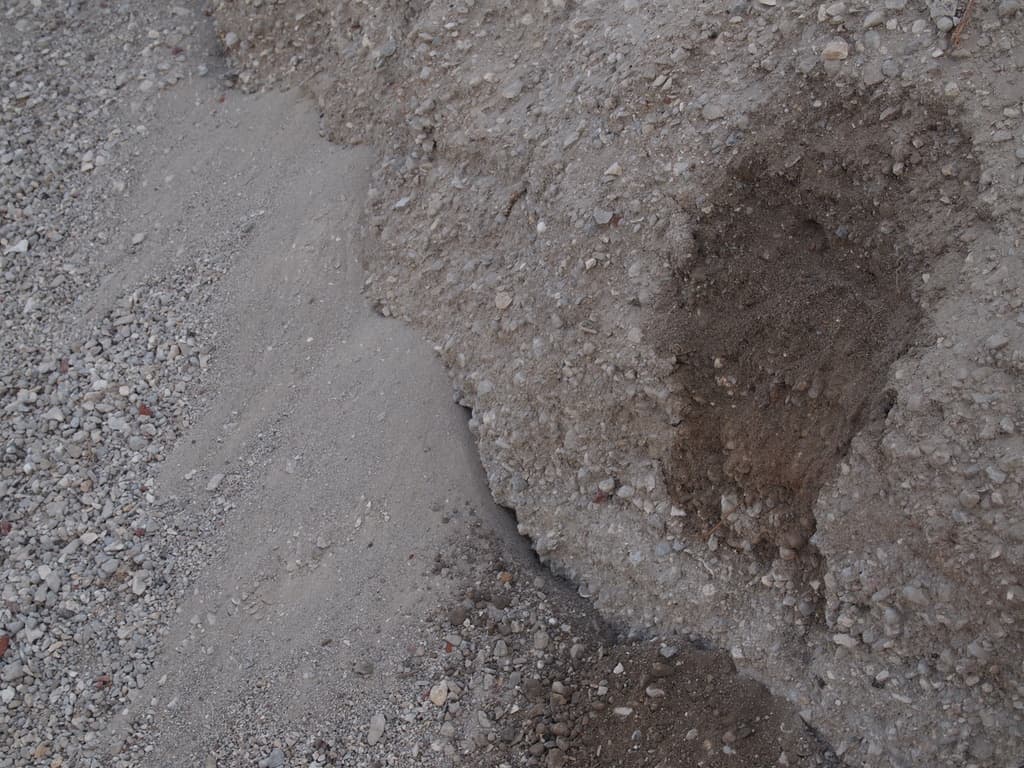
Dense-graded aggregate generally contains a broader distribution of particle sizes, potentially including fines, designed to create a relatively dense aggregate structure when placed and compacted as required.
Open-graded aggregate generally has a gradation with fewer intermediate particle sizes, resulting in a structure with more interconnected void space when properly selected and placed. It may be used where water movement through the aggregate layer is part of the design.
Not every driveway requires dense-graded aggregate - permeable pavement systems are an obvious example where that wouldn't hold true. A material optimized for drainage isn't automatically the material you want for a conventional compacted driveway base, and vice versa. See our guide to choosing aggregate for drainage for more on that side of the comparison.
Is 57 Limestone Good for a Driveway Base?
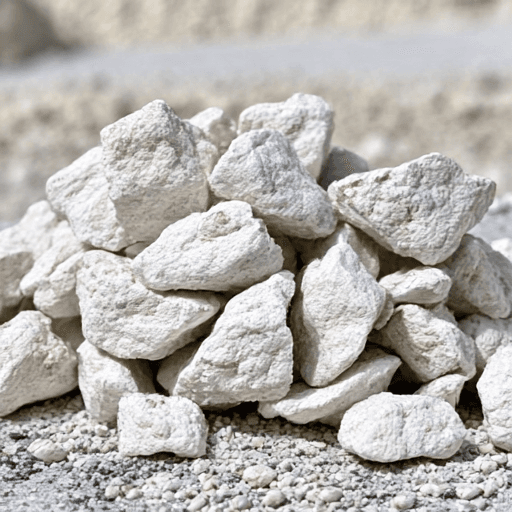
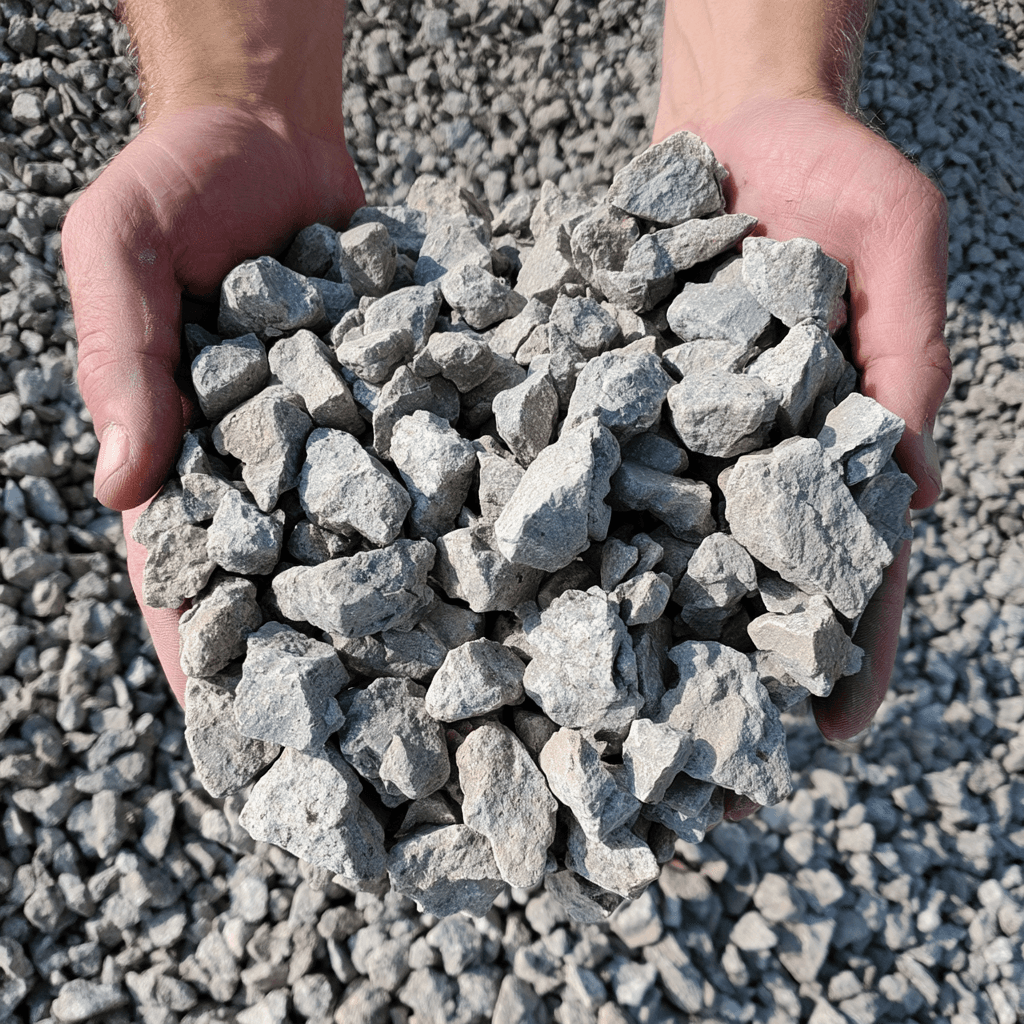
#57 limestone can be used in driveway-related applications, but it shouldn't automatically be treated as a direct substitute for a dense-graded base material. Whether it's appropriate for the base layer depends on the driveway design, the supplied #57 product, subgrade conditions, layer function, and project requirements.
"#57" refers to an aggregate size or gradation designation - it isn't synonymous with "road base." #57 limestone may have roles in some driveway systems, while others may require a different gradation for the primary structural or base layer. Confirm what the specific layer actually requires before assuming. See our guide to what #57 limestone is and how it's used for more background.
Is Recycled Concrete Good for Driveway Base?
Recycled concrete aggregate can be suitable for some driveway-base applications when the supplied material's gradation, processing, characteristics, and specification acceptance meet the project's requirements. RCA products vary - processing, gradation, and foreign-material or contaminant limits can all differ between suppliers, and project requirements may permit or restrict recycled aggregate depending on the application.
57 Limestone vs. Recycled Concrete for Driveway Base
Neither material is universally better for driveway base. The relevant comparison is between the actual #57 limestone and RCA products, their gradations and characteristics, and what the driveway design requires. See our full comparison of 57 limestone vs. recycled concrete for more detail.
Driveway Base vs. Driveway Surface Gravel
Base aggregate and surface aggregate don't necessarily serve the same function. The surface may prioritize traffic surface characteristics, appearance, maintenance, traction, and surface drainage, while the base is primarily part of the supporting structure. A gravel driveway may use different materials in different layers.
The material you see at the surface isn't necessarily the same material that should make up the underlying base.
How Deep Should a Driveway Base Be?
There isn't one universal depth here. Required base thickness depends on subgrade and soil conditions, expected traffic and load, the driveway design, the material selected, drainage conditions, local or project specifications, and whether the driveway is residential, commercial, or otherwise heavily loaded. Determine the required base depth from the driveway design and site conditions before calculating material quantity.
Does Driveway Base Need to Be Compacted?
Where the driveway design calls for a compacted aggregate base, placement and compaction should follow the applicable project requirements to achieve the intended layer characteristics. Compaction percentages, lift thicknesses, roller types, moisture targets, and number of passes all belong to the specific project specification or installation procedure rather than a generic figure - and it's worth distinguishing materials designed to form a compacted base from more open aggregate layers used for other purposes.
Does Driveway Base Help With Drainage?
Driveway base and site drainage interact, but base aggregate shouldn't be expected to correct an underlying drainage problem by itself. Poor grading, water concentration, inadequate outlets, groundwater, and unsuitable subgrade conditions can still create problems regardless of which aggregate you select for the base.
How to Choose Aggregate for Your Driveway Base
- Identify the driveway type and surface system.
- Evaluate the existing subgrade and site conditions.
- Determine the function of the aggregate layer.
- Check the required base gradation or specification.
- Consider expected traffic and loads.
- Account for drainage and water management.
- Compare the actual available aggregate products.
- Determine whether recycled aggregate is permitted or appropriate.
- Determine the required base depth.
- Calculate material quantity.
- Confirm delivery and site access.
If #57 limestone turns out to be appropriate for a layer in your project, see our guide on how much #57 limestone you need for the next step.
Frequently Asked Questions About Driveway Base Aggregate
What is the best aggregate for a driveway base?
There isn't one universal material for every driveway. Choose a base aggregate according to the driveway design, required gradation, subgrade conditions, expected loads, drainage conditions, and project specifications.
Is 57 limestone good for a driveway base?
It can be appropriate for some driveway-related applications, but #57 limestone isn't automatically equivalent to a dense-graded base material. Its suitability depends on the specific driveway system and layer requirements.
Is recycled concrete good for a driveway base?
It can be suitable for some driveway-base applications when the actual recycled aggregate product meets the required gradation, material characteristics, and project specifications.
What size gravel should I use for a driveway base?
Driveway base is often selected according to an aggregate gradation or material specification rather than one individual stone size. The correct material depends on the driveway design.
How deep should aggregate be for a driveway base?
There isn't one universal depth. Required base thickness depends on factors such as subgrade conditions, expected loads, driveway design, drainage conditions, material selection, and project requirements.
Need Aggregate for a Driveway Project?
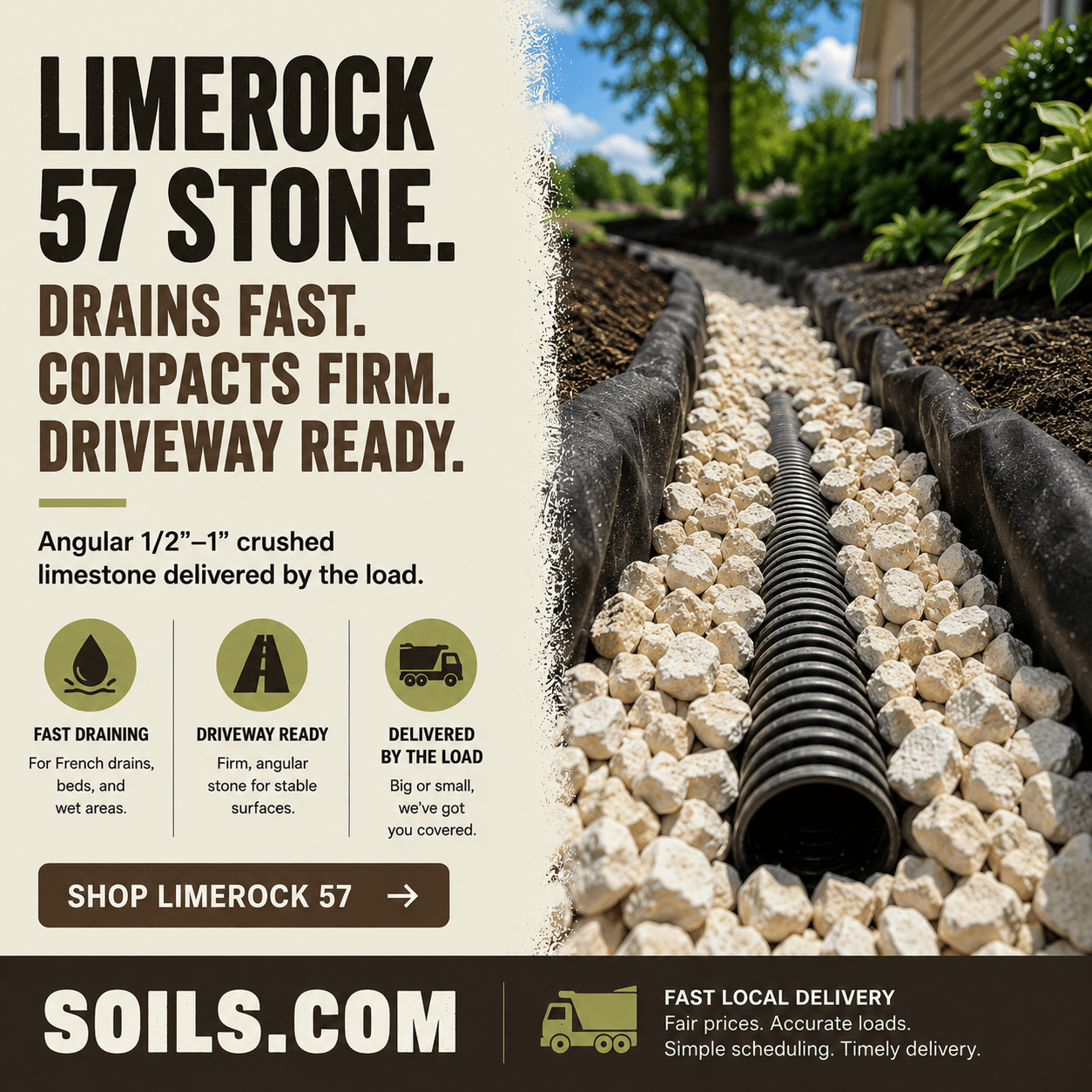
Once you've determined the aggregate and layer requirements for your driveway, calculate the quantity needed based on the project area and required depth. If #57 limestone is appropriate for your application, explore our #57 Limestone / Limerock 57 Stone for bulk delivery to your location.